When the alarm sounds
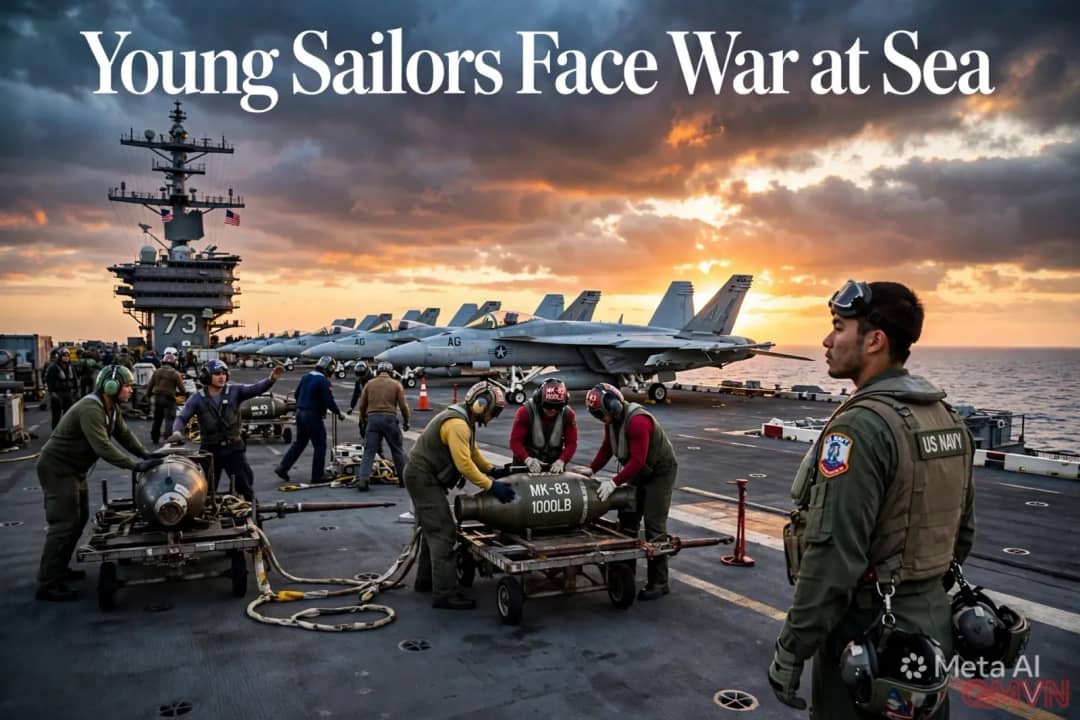
An emergency alert blares over the loudspeaker, and on deck Damon Dennard, 23, and his crewmates rush to their stations. His job as an aviation ordnance sailor is to ready bombs for loading onto aircraft. When the alert ends, he sits briefly on one of the bombs, catches his breath and jokes that he probably expected an easier deployment. However crazy it gets, he says, in the end it is just work.
The tension has a reason. In early September, Iran’s Islamic Revolutionary Guard Corps (IRGC) fired ballistic missiles toward US warships, and US Central Command (CENTCOM) responded by destroying a series of Iranian oil tankers. Tehran claimed it had hit American ships, which the United States denied. On September 25, Iran’s foreign minister said insecurity in the strait was the direct result of aggressive actions by the United States and Israel.
*“No U.S. Navy warship has been struck; all IRGC attempted attacks failed.” — CENTCOM*
A floating city of 5,000
On board, everyone has a role: from Majesta Ochoa, who runs a cash register, to Lieutenant Commander Brody Samaha, a “shooter” who oversees catapult launches. Samaha likens flight-deck operations to a dance in which people constantly check on one another, but also calls the deck an extremely dangerous place that forgives no mistakes.