A life ended, a question left open
The official announcement came on August 27, nearly two weeks after her death, from the Yayoi Kusama Museum, foundation, studio and company. According to the statement, Kusama kept painting until her final days, continuing to explore the themes of eternal love and the everlasting soul that shaped her entire career.
Obituaries around the world have often told her life as a series of triumphant moments. But as Ce Jamieson argues in The Japan Times, that smoothness can mislead. Behind the global fame lay decades of neglect, misunderstanding and marginalisation, both abroad and at home.
New York: genius on the margins
Born in 1929 in Matsumoto, Nagano Prefecture, Kusama studied traditional Japanese painting in Kyoto but soon felt stifled by a conservative environment and a family that opposed her artistic path. In 1957 she moved to the United States and quickly joined New York’s avant-garde. Key milestones include:
- The Infinity Net paintings, whose endlessly repeated loops opened a radically new pictorial language.
- Soft sculptures, mirrored environments and anti-war happenings in the late 1960s.
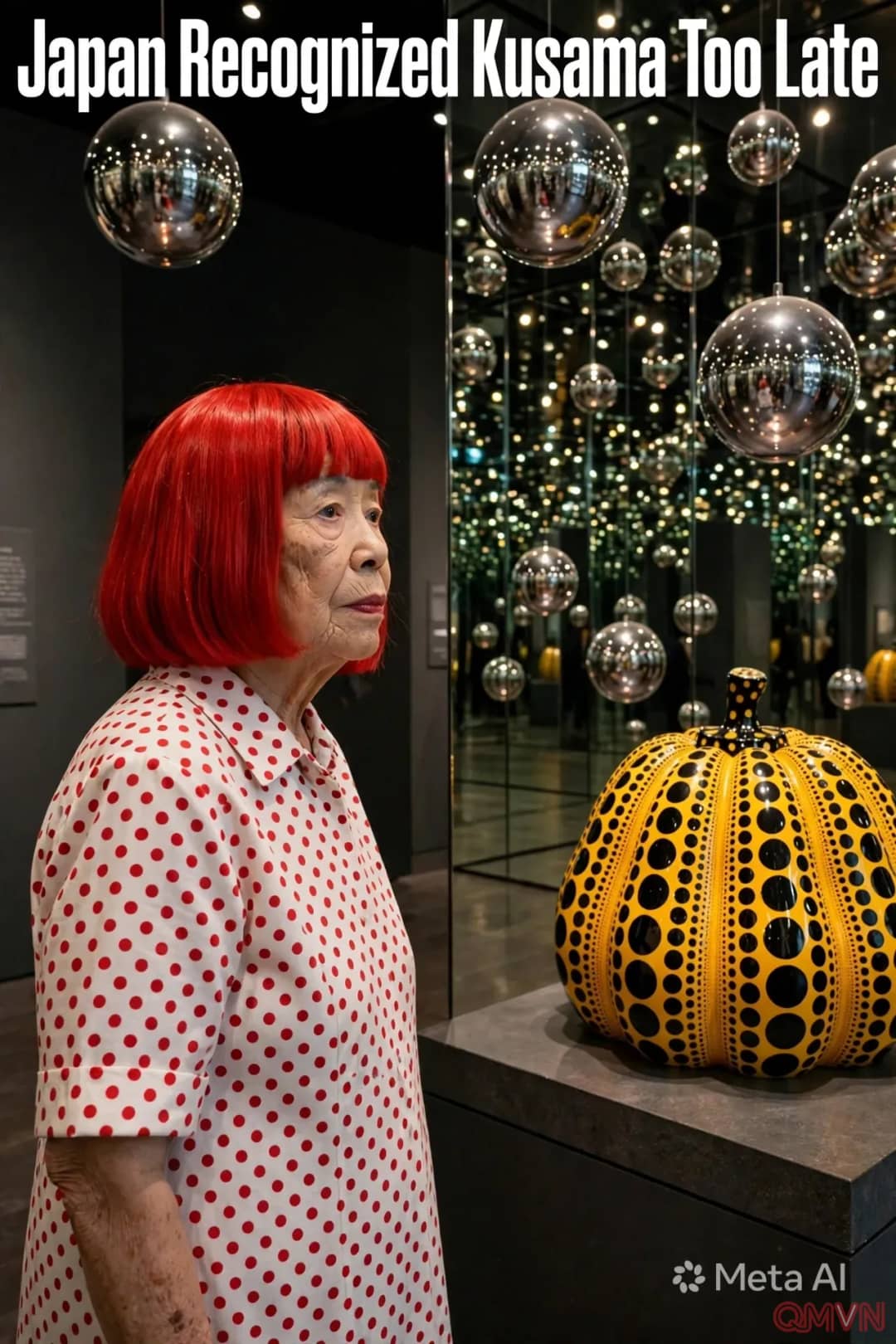
- In 1966, Narcissus Garden, with hundreds of mirrored spheres, appeared beside the Venice Biennale without an official invitation.