MAIN ARTICLE
When a familiar home is no longer safe enough
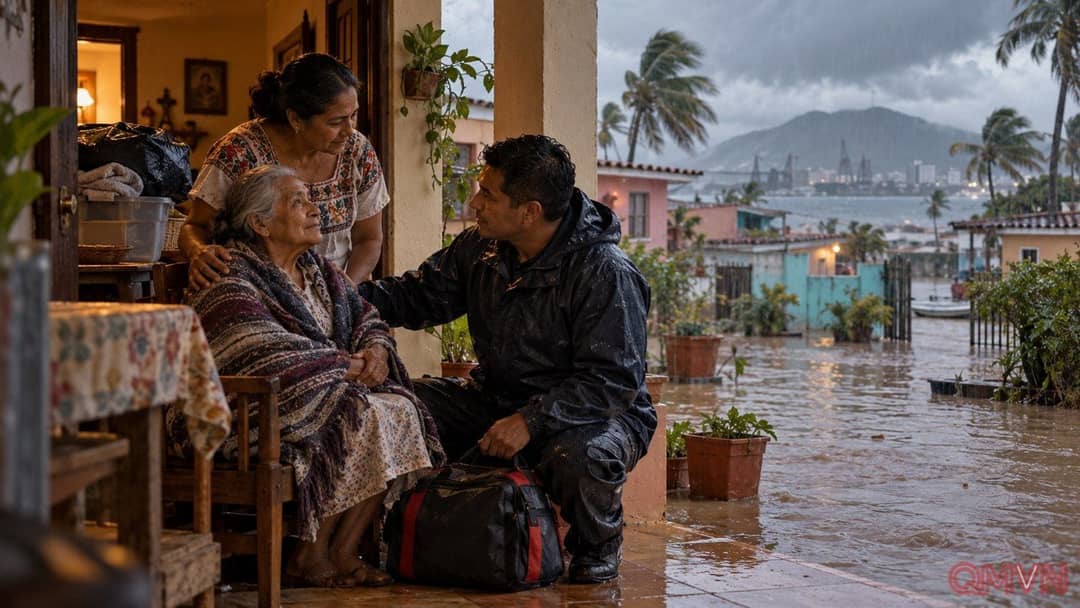
In the Alameda neighborhood in southern Manzanillo, Reuters saw residents moving through shin-deep water while military personnel and families used buckets to remove water from homes. By midday, rain had paused and some people began clearing up. The scene shows why damage cannot be understood through wind speeds alone. A soaked bed, a flooded refrigerator or a kitchen that is no longer usable can disrupt daily life even when the hurricane’s center has not passed through the city. The immediate burden is experienced inside homes, alongside the wider warnings issued for the coastline.
Cecilia Palomar told Reuters that beds, the refrigerator, the stove and other furniture had become wet. Her elderly mother did not want to leave home, so the family moved her to a brother’s room on higher ground. This is one household’s experience, rather than a description of every resident’s response. It helps explain why evacuation involves more than transport: for an older person, a home can hold memories and a sense of belonging. Assistance needs patience with that attachment while keeping safety at the center of the decision about where a person can remain.