MAIN ARTICLE
A cold night beneath a leaking roof
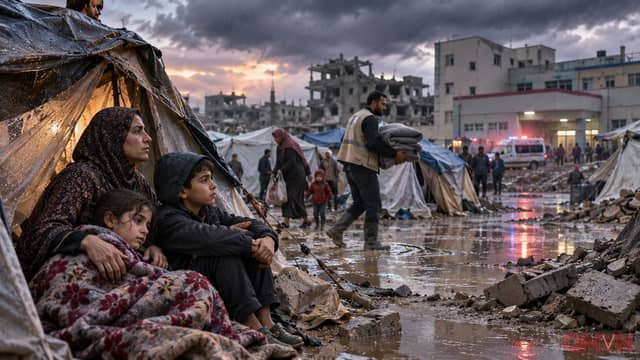
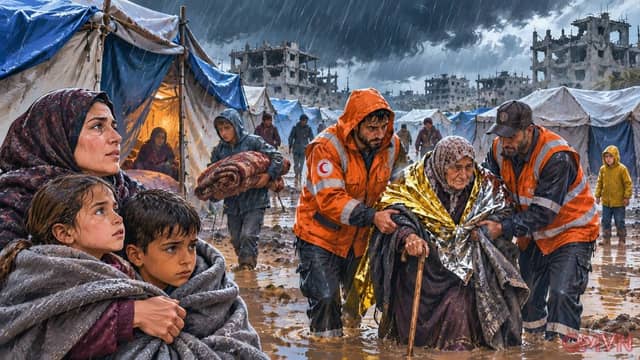
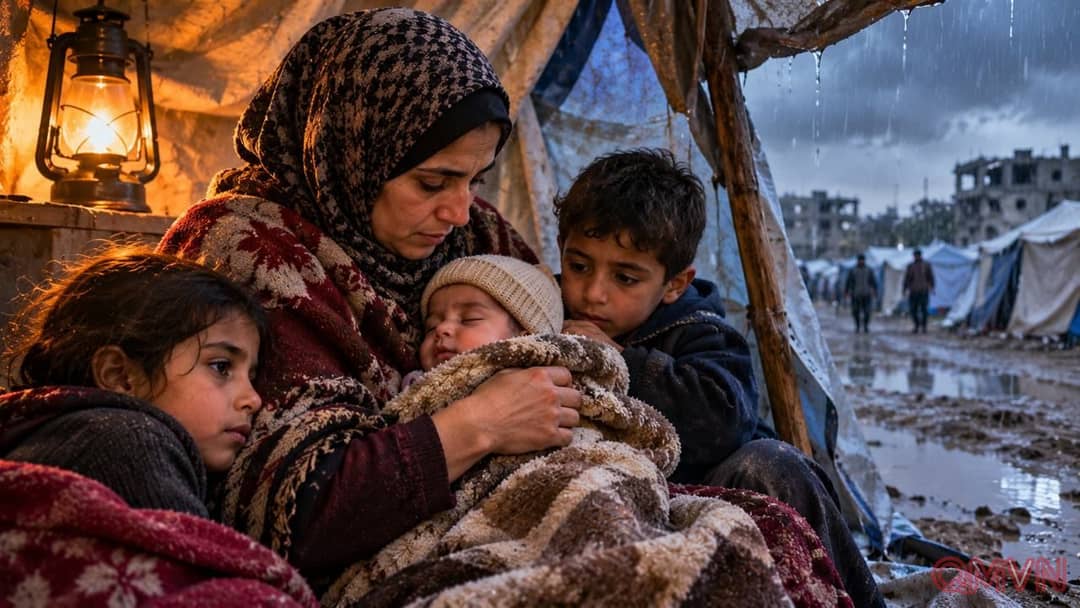
In western Gaza City, Amira Saad shares a thin tarpaulin shelter with 18 relatives, including nine children. In an account to Al Jazeera, she described rain pouring inside while the family slept, soaking their pillows, bedding and mattresses. Her infant son Mohammed, just four months old, has little winter clothing; a borrowed warm garment has become indispensable after dark.
For 60-year-old Basima Saad, cold nights bring a particular fear for her adult daughter, who has a disability. She keeps her close in bed to share body heat. Choices as intimate as who gets dressed first, or who receives the remaining dry blanket, reveal the human meaning behind displacement statistics.
The damage persists long after a storm passes. Bedding may remain damp for days, extending children’s exposure to cold. Poor sanitation, damaged water networks and limited access to health care then magnify the risks of respiratory illness and infection.
The first storms expose a fragile shelter system
An OCHA report dated November 9 said rains beginning November 6 had reportedly destroyed more than 6,000 family shelters and damaged another 17,400. By November 8, over 26,000 households had sought help after damage to shelter or belongings. These were preliminary figures, subject to revision as assessments continued.