Argentina sees EU soymeal opportunity as deforestation rules threaten Brazil trade in Argentina
In Buenos Aires and São Paulo, Brazil's soybean industry expressed severe apprehension on Wednesday, October 28, 2026, that incoming European Union Deforestation Regulations (EUDR) will curb soymeal shipments to the continent, generating a major commercial opening for rival exporter Argentina. Brazil currently stands as the EU's primary supplier of protein meal for livestock feed, delivering approximately half of total bloc imports and shipping an unprecedented 23.3 million metric tons globally in 2025. However, effective December 30, the EUDR mandates that importers legally prove products are not sourced from deforested ecosystems, backed by steep financial penalties for non-compliance. While Brazil's logistical hurdles across inland farming states earned it a 'medium' risk rating from the European Feed Manufacturers' Federation (FEFAC), Argentina confirmed it is fully prepared to absorb an anticipated export shortfall of 5 to 6 million tons, backed by its fully operational VISEC traceability platform and historic Pampas farming belts.
ADMIN PHAN ĐANG KHOA·2 min read · 3 min listen·28 October 2026, 07:29 EDT·
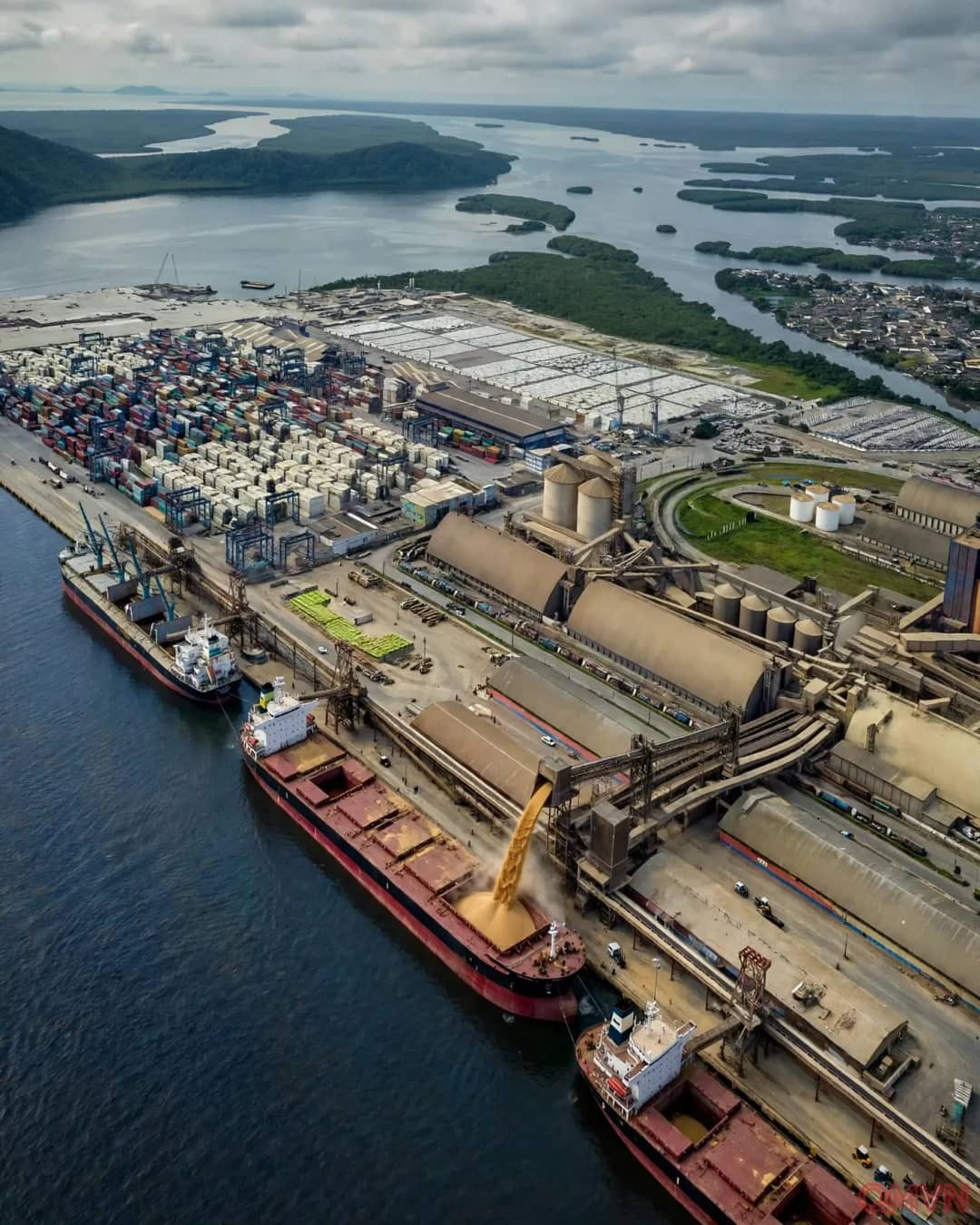
AI-generated illustration
EUDR compliance mandates and export bottlenecks in central Brazil
Beginning December 30, the European Union's landmark anti-deforestation regulatory regime (EUDR) will enforce rigorous digital due diligence on agricultural imports, requiring proof of deforestation-free production under threat of prohibitive market penalties.
The European Feed Manufacturers' Federation (FEFAC) warned that supply chain traceability hurdles under the new regulatory framework could lock out up to 4 million metric tons of Brazilian soybean meal, representing nearly 17 percent of the nation's total exports.
Advertisement300 × 250
FEFAC assigned Brazil a 'medium' compliance risk rating, citing structural transport bottlenecks in interior farming regions such as Mato Grosso, where agricultural frontiers sit more than 2,000 kilometers from maritime terminals and require complex multimodal transfers across trucks, barges, and railways that complicate chain-of-custody tracking.
Brazil's environmental problems are much smaller than the size of our agriculture.
Argentina's commercial readiness and the VISEC digital advantage
In contrast to logistical constraints in Brazil, Argentina's massive soybean crushing hub along the Paraná River is mobilizing to capture displaced European demand.
Gustavo Idigoras, president of Argentina's CIARA-CEC grains exporters and crushers chamber, confirmed that Argentine processors can readily absorb potential Brazilian export deficits estimated at 5 million to 6 million tons.
Idigoras affirmed that 'Argentina is ready,' citing the nation's proprietary VISEC platform, which tracks soy and cattle supply chains from farm plots directly to export vessels.
Unlike central Brazilian farmland, Argentina's premier soy acreage is concentrated across the Pampas plains within 350 kilometers of the Rosario deepwater port cluster, rendering traceability verification far more economical and transparent.
FEFAC assigned Argentina and Paraguay 'low' risk ratings for EUDR supply disruptions, forecasting that nearly all Argentine soymeal produced during the first half of 2027 will comply with EU requirements.
Argentina maintained its position as the world's leading soymeal exporter last year, dispatching approximately 27 million metric tons, with about 25 percent bound for Southeast Asian feed mills.
Paraguay's CAPPRO crushing association highlighted favorable structural conditions, noting that its eastern agricultural region has operated under a strict statutory ban on agricultural deforestation since 2004.
The realignment of South American agricultural flows coincides with sensitive diplomatic deliberations surrounding the ratification of the provisional EU-Mercosur trade agreement concluded in May.
We can easily fill that gap. Argentina is ready.
BACKGROUND
This high-stakes agricultural trade shift unfolded on October 28, 2026, across Buenos Aires, São Paulo, and Brussels. Soybean meal serves as the indispensable protein backbone for European commercial poultry, swine, and dairy farming. Under its ambitious European Green Deal, the European Union established the EUDR to ban imports of key commodities (including cattle, soy, palm oil, coffee, and timber) harvested from lands deforested after December 31, 2020. Brazil historically dominated the European feed market, supplying roughly 50% of the bloc's soymeal imports. However, extensive clearing of native vegetation across the Cerrado biome and northeastern frontier states over recent decades exposed Brazilian agribusiness to elevated EUDR non-compliance exposure. The core supply chain crux centers on inland transport: Brazilian beans travel thousands of kilometers from frontier farms through multiple logistical intermediaries, creating immense data verification costs. Conversely, Argentina's primary soy production is situated in the historic Pampas, where land has been continuously cultivated for over a century, situated within short trucking distance of the Rosario export corridor. By operationalizing the end-to-end VISEC certification architecture, Argentina has transformed environmental compliance into an aggressive commercial lever, threatening Brazil's European market dominance just as President Luiz Inácio Lula da Silva prepares to inaugurate his new presidential term.
Key takeaways
Stringent non-tariff environmental mandates (like the EUDR) rapidly restructure global commodity trade, transforming one exporter's compliance liabilities into a competitor's market share gain.
Geographic proximity between production acreage and deepwater export ports significantly reduces supply-chain friction when executing mandatory polygon-level traceability audits.
Institutional digital traceability systems (such as Argentina's VISEC) serve as indispensable commercial trade infrastructure in an era of green protectionism.
Subscribe to the QMVN newsletter
A daily morning digest - only stories worth reading, no spam.