MAIN CONTENT
A trade opening with clear boundaries
The agreement marks a controlled reopening rather than unrestricted access. Canada's government has established an initial quota of 49,000 qualifying electric vehicles annually, assessed at the most-favoured-nation tariff of 6.1 percent. The country had previously imposed an additional 100 percent surtax on Chinese-made EVs. The lower rate applies only within the regulated import framework, which requires shipment-specific permits.
The policy has both consumer and industrial dimensions. It may increase competition in a market where the upfront price of an electric car remains a barrier for many households. At the same time, a quota gives policymakers a way to limit sudden disruption to local suppliers and assembly plants. Whether import access subsequently expands depends on government decisions, not on a single automaker's promotional plans.
What Shenzhen’s showrooms reveal
In Shenzhen, battery-powered taxis and passenger cars are so common that the usual urban soundtrack seems transformed. A reporter visiting showrooms described the compact BYD Seagull with a local sticker price equivalent to roughly C$17,700 and a stated range of 420 kilometres.
The Zeekr 007, meanwhile, was presented with a 688-kilometre claimed range and a local equivalent price near C$44,000. These are Chinese-market examples, not confirmed Canadian offers.
Other displays suggest how manufacturers are experimenting with convenience as much as price. An Arcfox model was marketed with robotic battery swapping, a concept that would need an extensive network before becoming practical abroad. Some premium models emphasize elaborate styling and automated comfort features. The variety underscores China's mature EV supply chain, but also the challenge of choosing technology that fits Canadian roads and habits.
The Canadian winter is the real showroom
A vehicle's advertised range is only the beginning of a purchase decision. Cold temperatures can reduce battery performance and increase cabin-heating demands; suitable thermal management, reliable defrosting and effective fast charging matter greatly. The Shenzhen account noted that one inexpensive display car lacked a rear-window defroster, illustrating why specifications must be adapted before any Canadian launch.
Long-term ownership raises a different set of questions: crash-test compliance, spare-parts availability, repair training, warranty coverage and software support. Transport Canada certification addresses applicable safety requirements, but it does not by itself establish reliability or the cost of repairs. A low showroom price abroad may also rise after transport, currency conversion, taxes, distribution and market-specific equipment are included.
Opportunity and anxiety for Canadian manufacturing
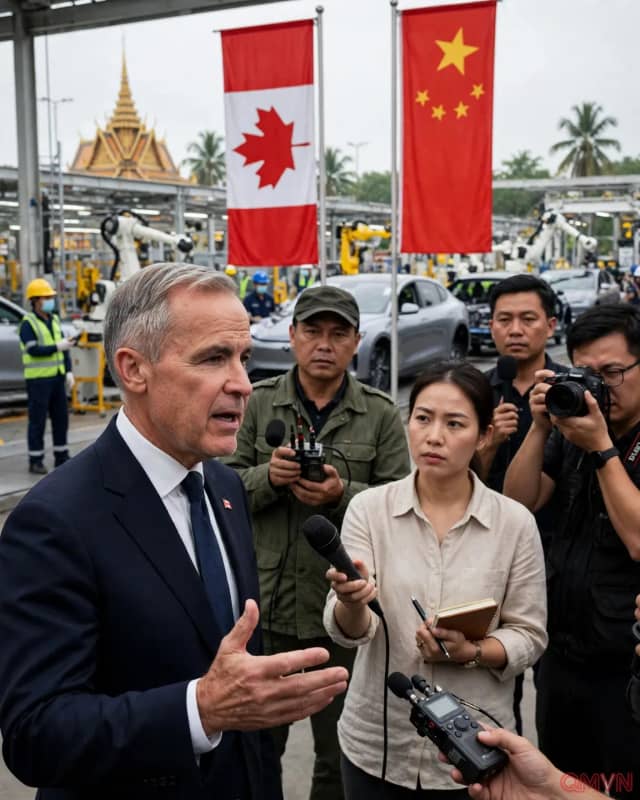
Carney's visit also highlighted a strategic concern. Canada wants access to new electric-car technology while preserving investment and employment in its own automotive sector. Amid questions about future production by established North American manufacturers, the prime minister has discussed attracting investment from carmakers beyond the traditional Detroit group. A commercial opening is therefore being weighed against factory jobs and supply-chain security.
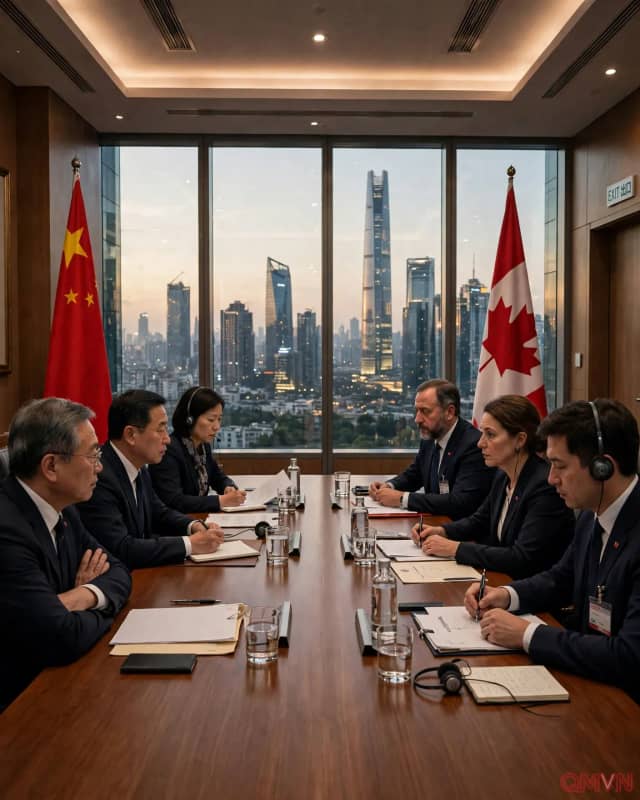
The broader diplomatic picture extends beyond vehicles. Reuters reported that Canada and China advanced trade arrangements involving agricultural, fishery, steel and aluminum products during Carney's meetings with Xi Jinping. For consumers, increased choice could be a practical benefit. For governments and manufacturers, the harder task is to ensure that competition strengthens, rather than hollows out, the capacity to build and maintain cars in Canada.