The first brushstroke, no lessons required
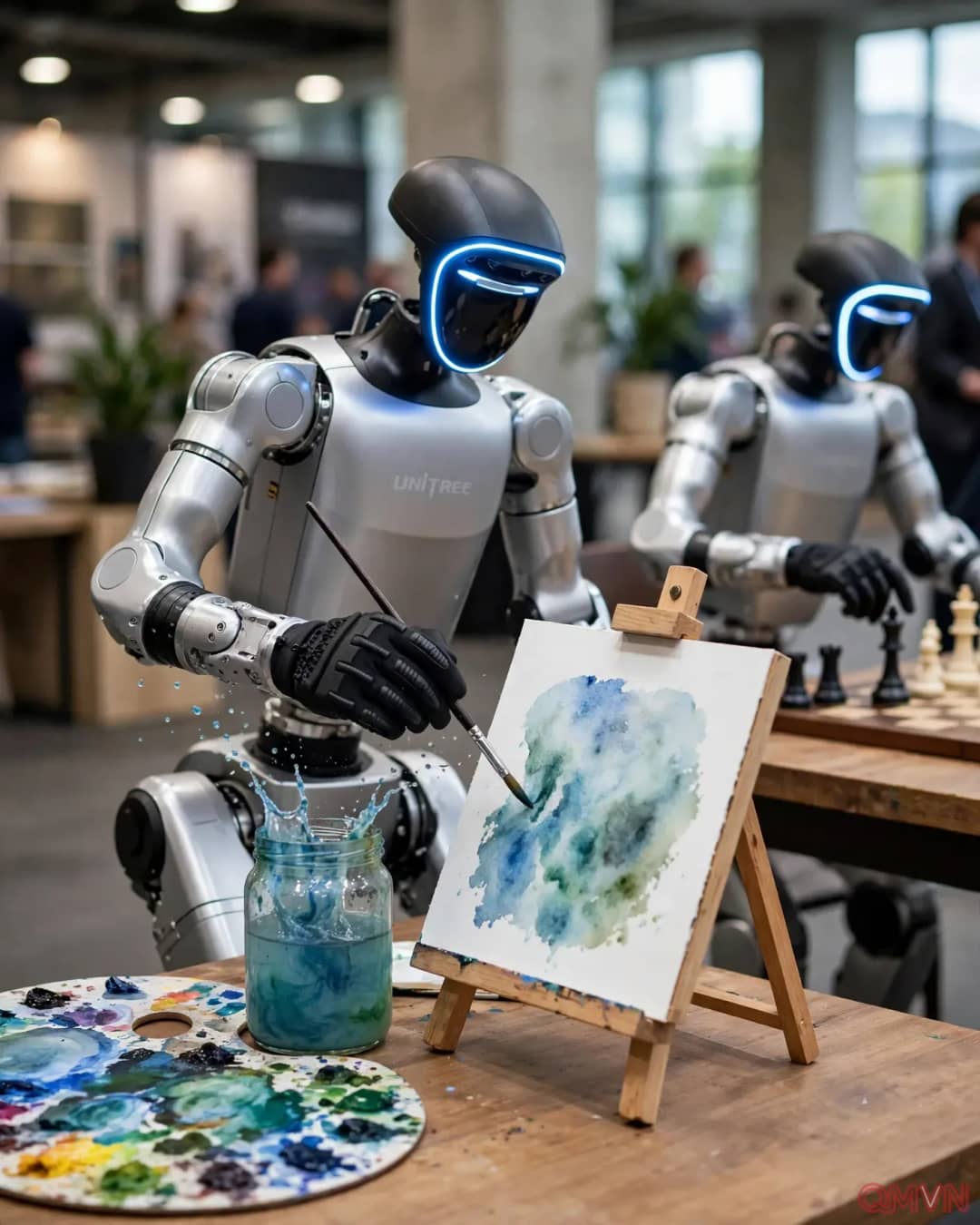
According to Wang Xingxing, Unitree's robots connected to GPT-6 can carry out intricate sequences such as dynamically replacing brush water and blending pigments, guided entirely by real-time model inference. For a machine, picking up the right colour in the right amount without smearing the palette demands a high degree of precision.
The precision required to change pigments without error is quite high. Seeing it perform at this level with zero training was truly stunning.
However, Unitree only showed video clips of its robots painting during the presentation and conducted no live demonstration on stage, a detail suggesting the claims still need further verification. Last month, Wang said GPT-6 had pulled the industry's breakthrough timeline forward to “within one or two years”, and suggested that GPT-7, expected next year, could crack core challenges in embodied AI.
The “last millimetre”, a problem of the physical world
Despite his optimism, Wang acknowledged that translating AI commands into precise physical actions remains an uphill battle. In his view, the biggest obstacle is no longer reasoning or planning in the digital realm but the “last-millimetre” mechanical gap: even a tiny mismatch between the model's intention and a joint's movement can ruin an entire task.