From a banking restriction to a shopping basket
In 2012, following an EU decision, SWIFT disconnected Iranian banks subject to European sanctions from its international financial messaging network. The wording matters: it did not cut off every Iranian bank at once. Restricting cross-border payments nevertheless made trade and imports harder. When goods and essential inputs cost more or become scarce, the pressure travels beyond a bank balance sheet.
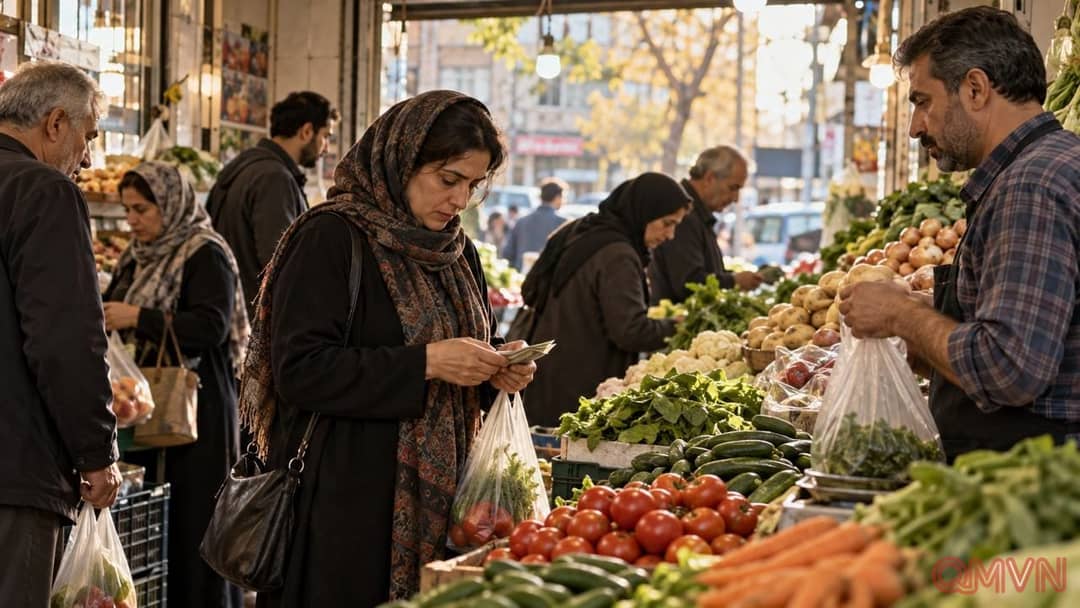
A factory short of parts may reduce shifts; a shop raises prices to cover replacement stock; a household spends more on food. Exchange rates, domestic policy and inflation also matter, so not every price change can be attributed to one sanction. The transmission from finance to purchasing power is why the effect on families should be measured directly rather than inferred from lost trade alone.
The losses are not shared equally
In The World Economy, Haidar and Karimi use Iranian household income and expenditure data with consumer-welfare measures to estimate losses from the 2012 shock. They report that poorer households lost 2.3–2.8 times as much, relative to pre-sanctions real spending, as better-off households.