MAIN ARTICLE
Energy hidden in the agricultural waste stream
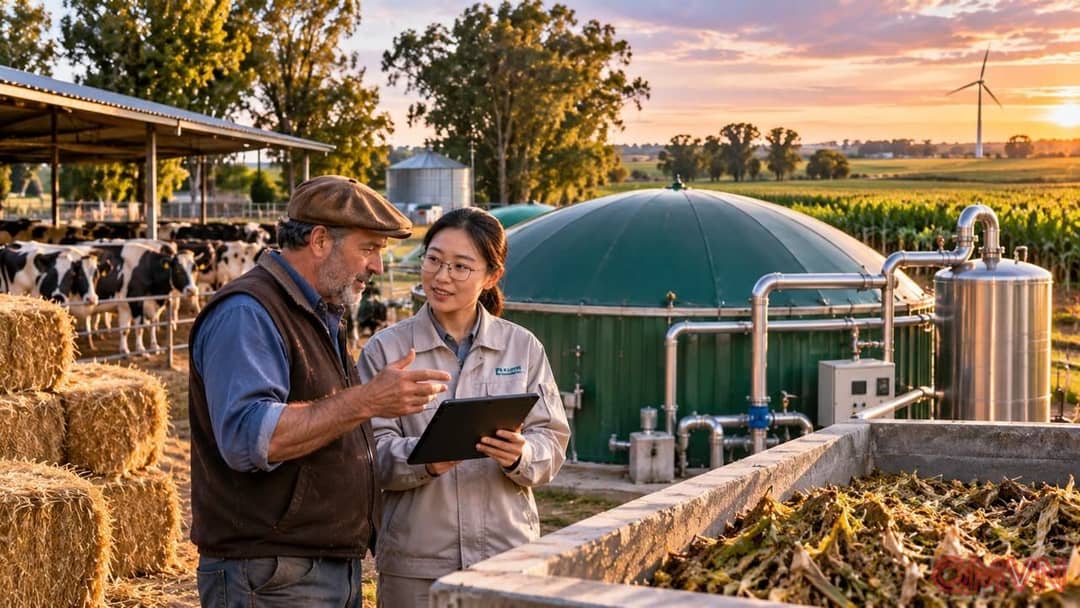
Livestock manure, residues from crops and processing by-products can release methane and contaminate soil or water when managed poorly. In an anaerobic digester, microorganisms break down organic matter without oxygen, generating gas composed mainly of methane and carbon dioxide. Captured gas can provide heat and electricity; after upgrading, it can serve as a transport or pipeline-compatible fuel, where local standards and infrastructure permit.
The leftover digestate may be processed into fertilizer or a soil amendment, returning nutrients to farms. Properly designed projects therefore offer benefits for sanitation, energy security and nutrient recycling. Their yields vary with the material being treated, however, and equipment needs consistent inputs. A system that works for a large cattle operation may not be economical for a small, dispersed holding.
An alliance built through training and applied research
South China Morning Post reports that a two-month training program in Chengdu in 2018 helped launch this cooperation, followed by a 2019 memorandum. China announced the China–Argentina Biogas Development and Cooperation Center in 2021.