A U-turn on leverage
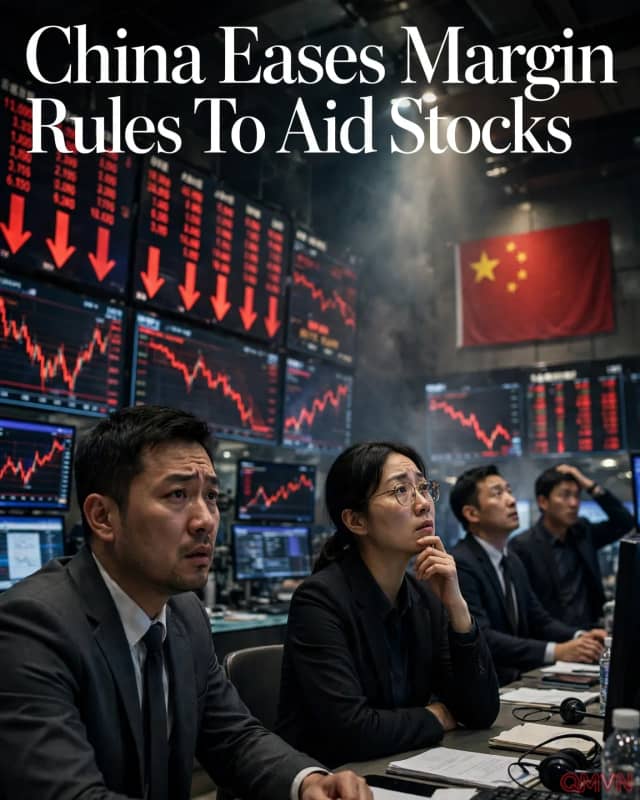
The China Securities Regulatory Commission approved the change for the Shanghai Stock Exchange and Shenzhen Stock Exchange, meaning investors who borrow to buy shares will need to put up collateral worth 80% of the purchase rather than the full amount. Lower requirements allow investors to take larger positions with the same capital, which regulators hope will bring liquidity back to the market.
The decision reverses a move made only ten months ago. In mid-January, as the Shanghai Composite hit its highest level in about a decade and daily turnover reached record levels, the exchanges raised the ratio from 80% to 100% as a counter-cyclical step to curb leverage and prevent sharp swings.
Why authorities are acting now
Market conditions have deteriorated steadily through the autumn. Key signs of weakness include:
- The Shanghai Composite fell to around 3,574 points on November 17, its lowest since August 2025, after losing about 4% in four weeks.
- Over the past 12 months, the index has declined more than 9%.
- The STAR 50 index, which tracks China's biggest AI chipmakers, has slumped more than 40% since its record high in June.
- Exchanges reported a noticeable decline in margin trading activity in recent weeks.