MAIN STORY
A home that reads like a historical chronicle
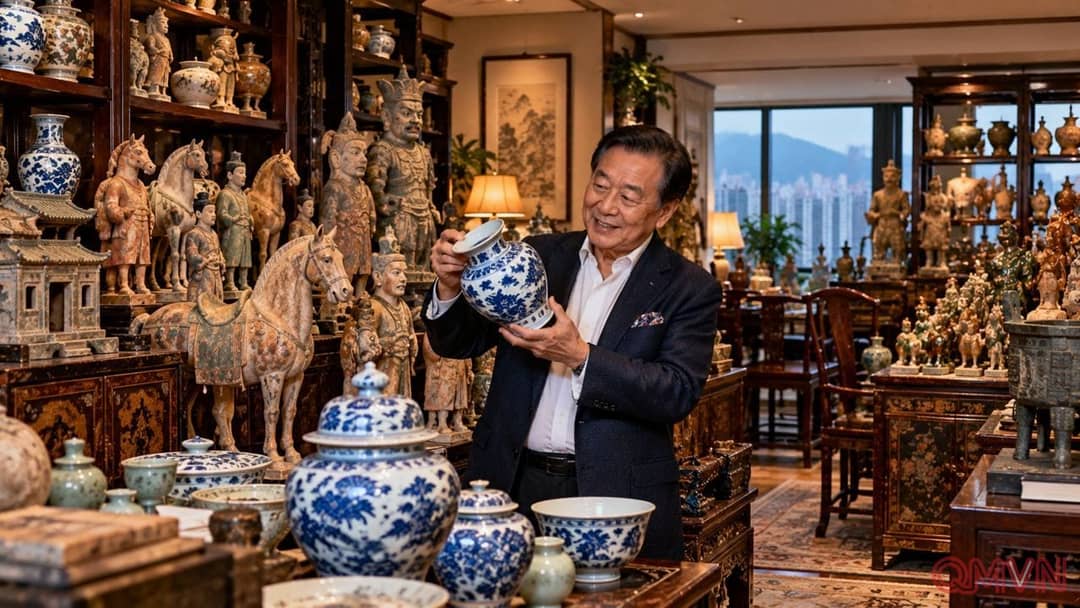
Inside Chua’s Kowloon home, blue-and-white Ming and Qing porcelain stands alongside wedding cabinets full of tableware, sculptures of more than 180 horses and pieces attributed to a succession of Chinese dynasties. He does not know the collection’s precise size; it might, he suggests, number in the hundreds of thousands. Yet he is less interested in impressing visitors with scale than in letting them encounter the craftsmanship and imagined lives behind the objects.
Chua started collecting soon after moving to Hong Kong in 1967, and became a far more committed buyer following his first visit to mainland China in 1979. He returned regularly to dealers along Hollywood Road, buying ceramic vessels, mooncake molds, snuff bottles and funerary figures known as mingqi. Those tomb objects are a particular fascination, even though some traditional beliefs discourage bringing them into domestic spaces.
A second life for damaged objects
A serious medical episode in 1999 gave Chua an unusual opportunity to remain at home and reconsider his holdings. Broken pottery and incomplete vessels acquired unexpected meaning.