A costly lesson from the Strait of Hormuz
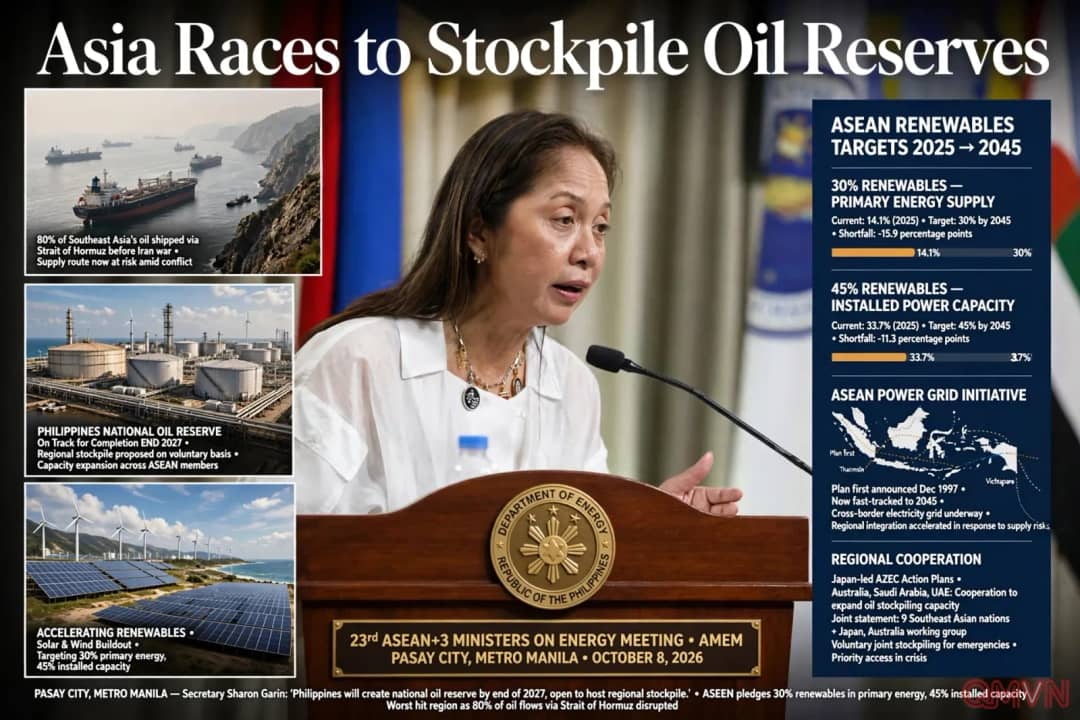
With 80 per cent of the oil passing through the Strait of Hormuz once heading to Southeast Asia, any disruption in the Gulf immediately becomes a worry over fuel prices, power bills and the region’s economic security. The Iran war has turned that theoretical risk into reality.
In a joint statement with Japan and Australia, nine Southeast Asian nations said the most advanced efforts are support for developing oil stockpiling systems in each country and regional joint stockpiling on a voluntary basis. After a meeting of the Japan-led Asia Zero Emission Community (AZEC), Japan’s State Minister of Economy, Trade and Industry Takagi Kei said Tokyo had agreed on action plans with its partners, and that Saudi Arabia and the UAE had also signalled willingness to cooperate.
Oil reserves: from national to regional
The Philippines, which imports nearly all its oil and fuel and chairs ASEAN this year, will create a national reserve by the end of 2027. According to Garin, it could then be converted into a regional stockpile.