Washington voices support
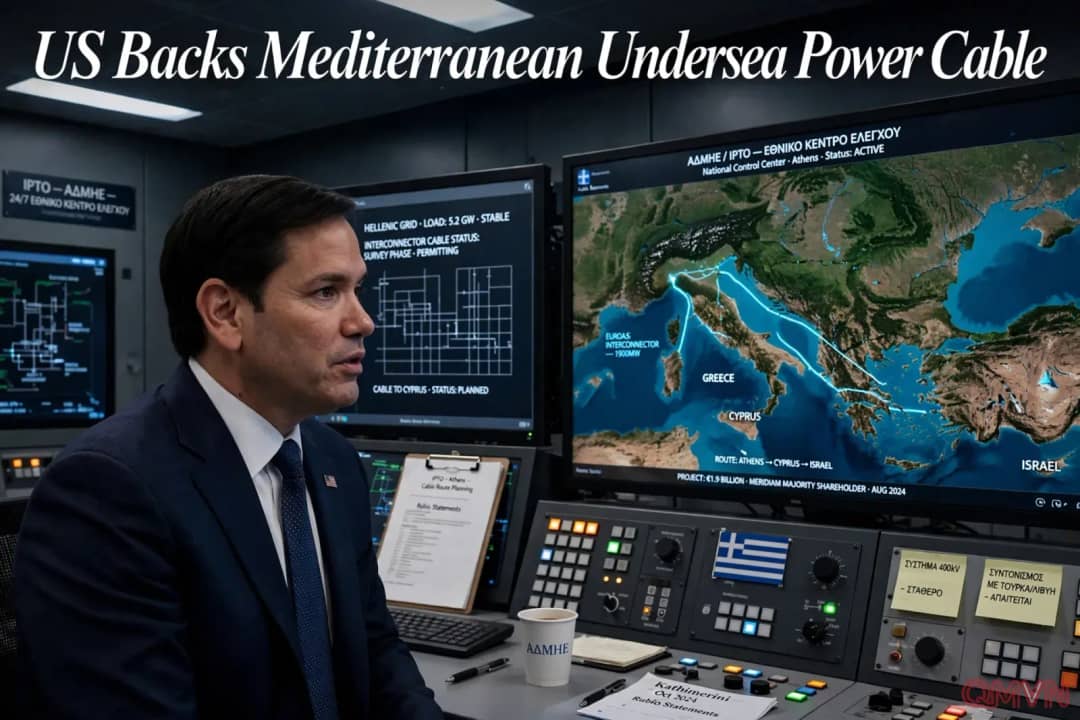
Speaking to Kathimerini, Secretary of State Marco Rubio said the United States is “very committed” to the project because it promotes energy supply diversification. In his view, that is necessary because of Russia's war in Ukraine and the situation in the Strait of Hormuz, an energy shipping route disrupted by the conflict in the Middle East.
Rubio acknowledged that the project faces some obstacles and said the US would use its diplomatic efforts to remind all parties how important it is to Washington, in the hope of finding solutions.
“We understand there are some potential impediments, there are some things standing in the way, and we intend to use our diplomatic efforts to remind all parties how important this is to us and why this matters. And I hope to find resolutions.” — Marco Rubio
A 1.9 billion euro project and obstacles at sea
The project is being developed by Greece's power transmission operator IPTO and aims to link mainland Europe with Cyprus and later Israel. Progress has been slow, however, because of a dispute between Greece and Turkey over the maritime area designated for laying the cable.
Greece wants to resume seabed surveys soon to determine the route. Turkey says this would require prior coordination between the two countries, as the cable crosses an area covered by a 2019 maritime deal between Ankara and Libya, which Athens rejects. In August, French investment group Meridiam signed an agreement to become the project's majority shareholder.
Ending Cyprus's energy isolation
Cyprus is currently the only EU country with no connection to other members' electricity markets, leaving the island heavily dependent on imported fossil fuels and with some of the bloc's highest power prices. The cable is expected to improve Cyprus's energy security by allowing it to trade electricity with the rest of Europe.
In the longer term, extending the link to Israel could turn the eastern Mediterranean into a new energy corridor, helping integrate renewable power and reduce reliance on vulnerable supply routes. US support therefore carries both energy and geopolitical significance.