MAIN STORY
An expedition becomes an enforcement case
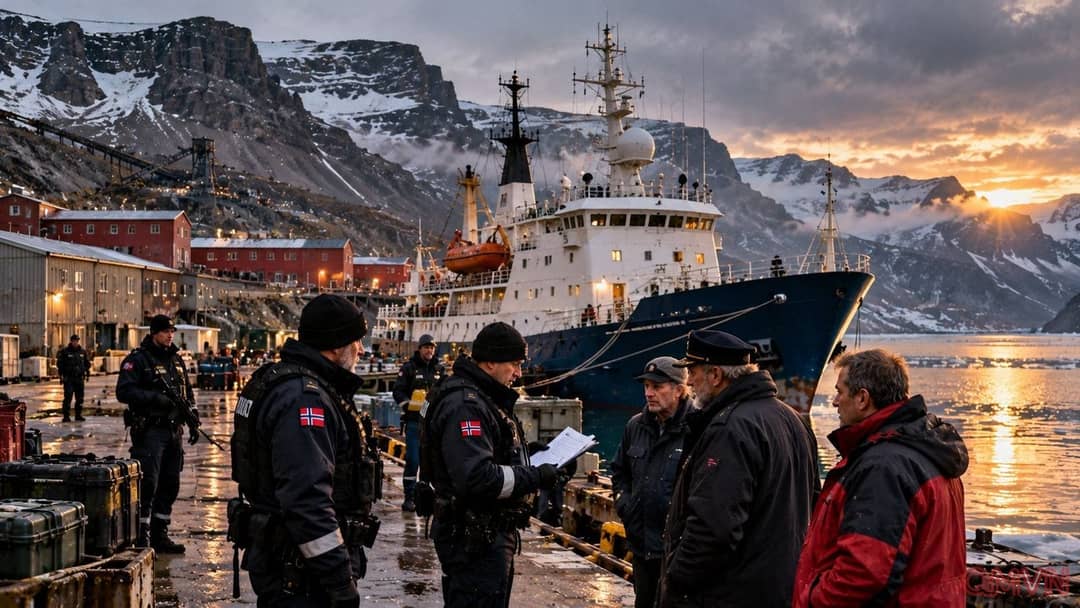
Professor Molchanov sailed from Murmansk in late August toward Svalbard, where a Russian-run mining community has long operated in Barentsburg. An Arctic expedition might have appeared routine to those aboard. But on August 31, the Nord-Troms and Senja District Court approved a request to secure the ship as part of Naftogaz’s enforcement efforts.
On September 2, the Governor of Svalbard’s office carried out the order in Barentsburg. The vessel was directed to remain in port pending further decisions. This is an asset-enforcement measure in a civil financial dispute, rather than a finding that passengers or sailors committed an offense—an essential distinction amid heightened political rhetoric.
The judgment dwarfs the value of the ship
The dispute began with the loss of Naftogaz energy operations in Crimea following Russia’s 2014 annexation. After years of proceedings, a tribunal in The Hague awarded roughly $4.22 billion in April 2023, before interest and costs; the total has exceeded $5 billion. Russia has not voluntarily paid.
Naftogaz has consequently sought Russian assets in jurisdictions where courts may recognize and enforce the award. Even a successful sale of Professor Molchanov would recover only a tiny part of the claim. Its significance is instead precedent and practical leverage: an award can be pursued far from the location where the underlying loss occurred.
A special Arctic territory under strain
Svalbard is under Norwegian sovereignty but governed by a 1920 treaty granting nationals of treaty parties rights to certain economic activities on equal terms. Russia has maintained a substantial footprint in Barentsburg for decades. That makes an arrest of a Russian ship by Norwegian authorities more sensitive than a conventional commercial attachment elsewhere.
Moscow has denounced the seizure as politically driven and challenged the legal process. Norway emphasizes that its enforcement officers executed a domestic court ruling. Both positions are part of the story, and neither removes the need to distinguish the underlying arbitration, state-immunity questions and the separate act of holding a particular vessel.
Passengers, supplies and the unresolved outcome
International reporting indicates that 69 passengers and crew were assisted in returning home after the ship was held. Their safe departure mattered independently of the dispute over title and compensation. Norway has also moved to protect supply shipping to Svalbard against similar seizure risks, reflecting concern for the remote settlements.
The vessel’s eventual disposition remains tied to court processes and appeals. Detention, judicial sale and recovery of proceeds are distinct legal steps; the ship’s arrest should not be confused with Naftogaz already collecting the money. For now, the case reveals both the reach and the limits of cross-border justice.