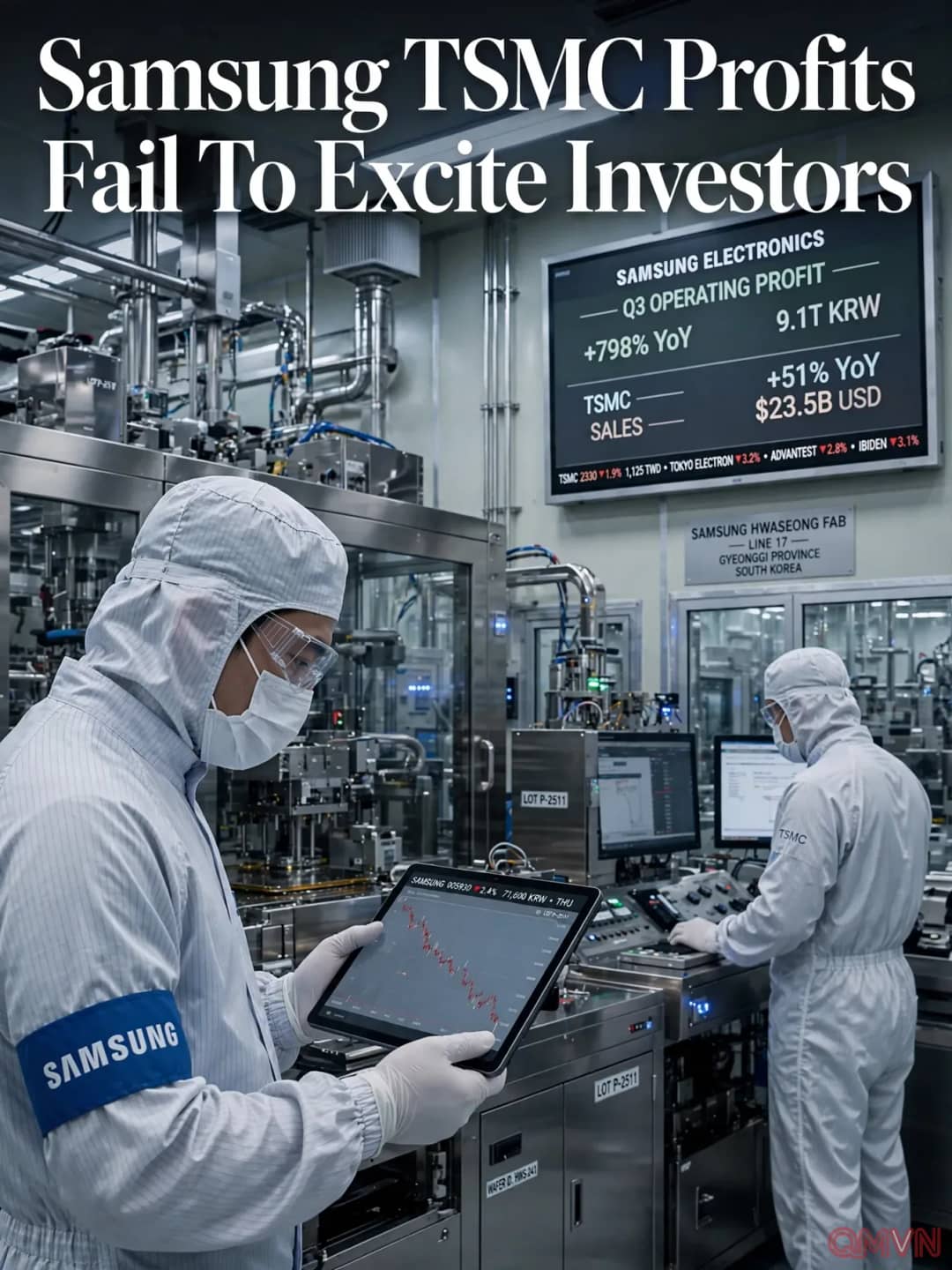
Record-setting numbers
Samsung Electronics, the world's largest memory chipmaker, reported a nearly ninefold year-on-year rise in third-quarter operating profit, compared with about 12.1 trillion won in the third quarter of 2025. The main driver is booming demand for high-end memory chips used in AI data centres.
On the same day TSMC, the world's largest contract chipmaker and partner to most leading AI chip designers, reported a 51% rise in sales. The two companies' results clearly reflect the spoils of the relentless race to spend on AI infrastructure.
A muted market reaction
Despite the record results, Samsung's shares fell 2.4% on Thursday in Seoul. In Tokyo, shares of suppliers to both companies, including chip equipment maker Tokyo Electron, test equipment maker Advantest and substrate maker Ibiden, also declined.
For investors used to the AI sector's torrid growth, strong results seem to have been priced in already. What the market cares about now is not last quarter's numbers but whether that growth can be sustained in the years ahead.
Doubts over the staying power of the AI boom
Investors increasingly question the durability of an AI investment boom propped up by rising debt levels. Many technology groups have issued billions of dollars in bonds to fund data centres, intensifying competition in debt markets.
The pressure is all the greater as borrowing costs rise worldwide: the 10-year US Treasury yield has hit its highest level since 2002, and several central banks have resumed raising rates to fight inflation. That could force companies to rethink their huge capital spending plans, with knock-on risks for the entire semiconductor supply chain.