MAIN CONTENT
From the fields to the negotiating table
For decades, many agricultural laborers in California faced low pay, exhausting hours and little access to basic workplace protections. Huerta recognized the contradiction: people whose work fed the country had limited influence over the terms of that work. She left a more conventional teaching career to organize alongside farmworker families, learning their concerns directly and pressing public officials to take them seriously.
In 1962, she and César Chávez founded the National Farm Workers Association, a predecessor of the United Farm Workers. Strikes, grape boycotts and bargaining campaigns helped workers secure contracts, improved wages, drinking water, sanitation and health benefits. The U.S. Department of Labor also credits Huerta with fighting for family assistance, disability protections and changes to pesticide practices. These achievements were built through years of negotiations and collective sacrifice.
A rallying cry that reached across generations
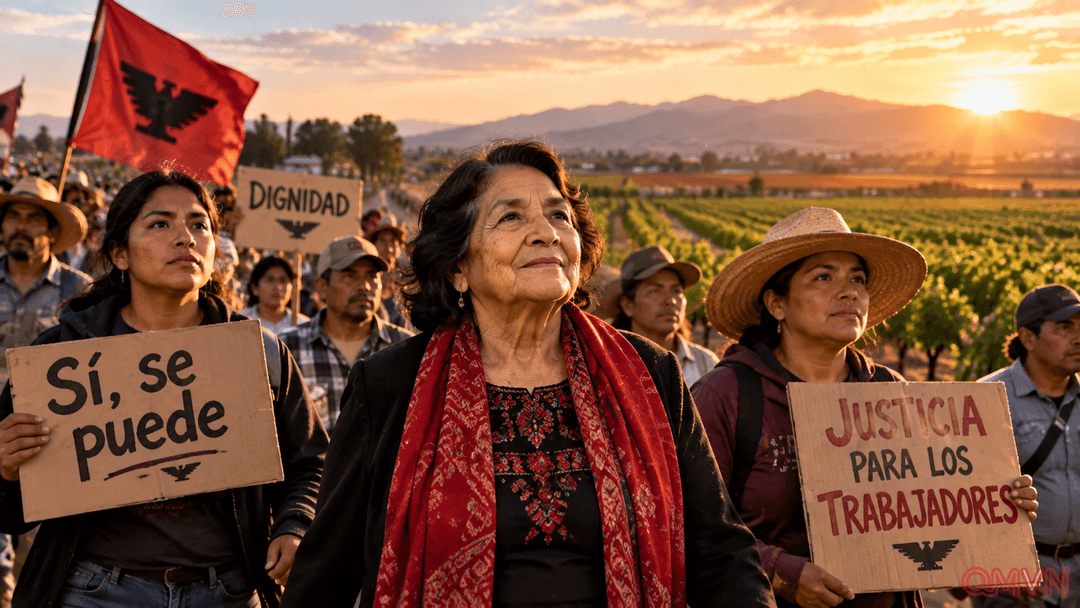
“Sí, se puede” — roughly, yes, it can be done — became inseparable from Huerta and eventually traveled far beyond farm labor organizing. Yet her influence was not simply rhetorical.