MAIN ARTICLE
A close contest between competing blocs
The governing alliance of National, ACT and New Zealand First wants to extend the administration formed after the 2023 election. Across the aisle, Labour, the Greens and Te Pāti Māori could seek a new arrangement. Polls conducted in late October and early November have placed National and Labour close together, with smaller parties potentially making the difference. Polling margins, turnout and constituency-level results complicate any attempt to forecast the final seat count. No party can responsibly claim victory before voters have had their say.
The Opportunity Party, led by Qiulae Wong, has emerged as one possible kingmaker. It has signaled willingness to consider arrangements across the political spectrum, although Luxon has ruled out cooperating with it. A smaller party crossing the parliamentary threshold can significantly change seat allocations and the potential majority. Its negotiating leverage may thus exceed the size of its popular vote. That is a structural feature of proportional politics rather than an anomaly.
Two votes and the mathematics of Parliament
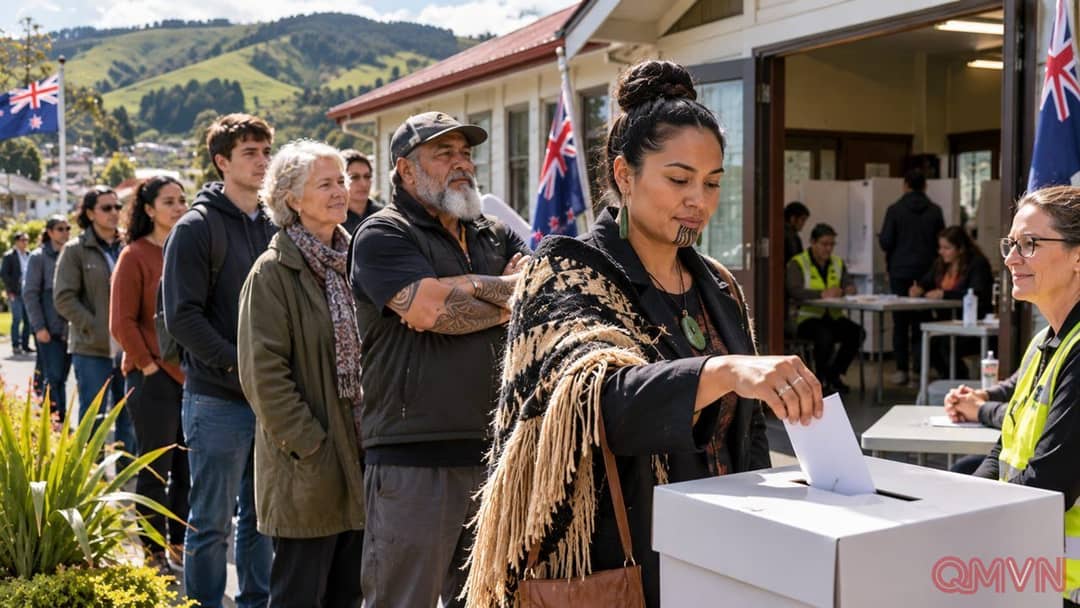
New Zealand uses mixed-member proportional representation, or MMP. Each voter receives two votes: one for a political party and one for a local electorate candidate. The party vote largely sets each qualifying party’s total share of seats; electorate votes select individual constituency representatives.