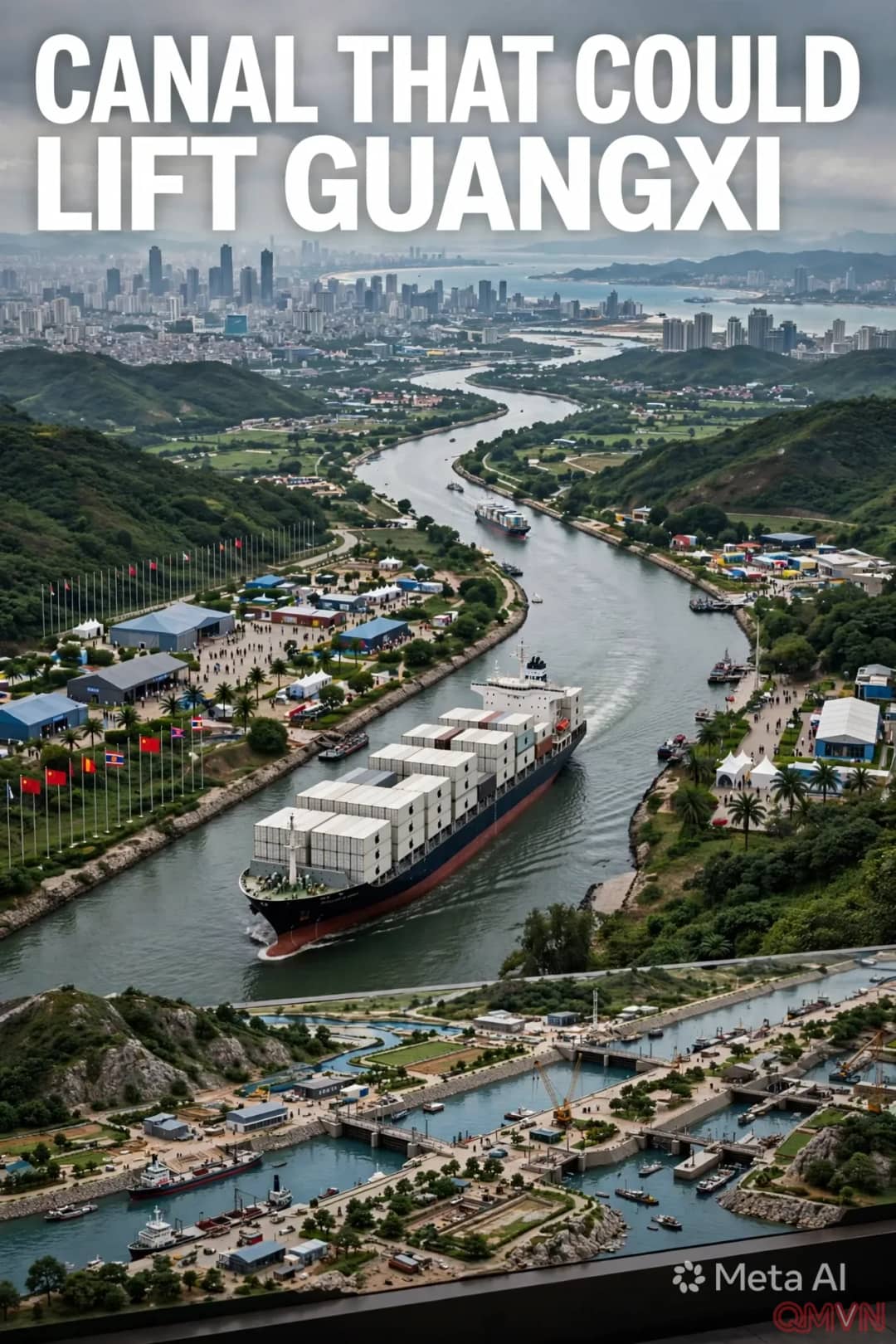
A Canal That Takes the Southwest to the Sea
On the morning of September 16 in Qinzhou, Chinese first-ranked Vice-Premier Ding Xuexiang declared the Pinglu Canal open to navigation as the first vessel sounded its whistle and set sail. After 52 months of construction that began in August 2022, it is the first major river-to-sea canal China has planned and built at the national level since 1949. A few key figures about the project:
- It runs 134.2 kilometres, linking the main channel of the Xijiang River near Nanning with Qinzhou port on the Gulf of Tonkin, at a total cost of 72.7 billion yuan, about US$10.8 billion.
- Vessels overcome a water level difference of about 65 metres through a system of water-saving ship locks.
- Cargo from Kunming, Chengdu and Chongqing heading to sea no longer has to detour via Guangzhou, saving more than 500 kilometres.
Early forecasts suggest the canal could handle about 5 million tonnes of cargo in 2026 alone, with sharp growth in the following years. For the Guangxi government, it is the key piece in turning a border region into a hub for trade with Southeast Asia.
From Vietnam-Made AirPods to Nanning’s Apple Store
A week before the canal opened, Apple held its biggest product launch of the year in California, and the new devices went on sale across China, including in Nanning, on September 18. Amid a crowd of shoppers asking when they could get their hands on their purchases, a “Genius Bar” tech specialist in Nanning offered an optimistic forecast: AirPods earbuds, Apple Watch wearables, HomePod speakers and many accessories assembled in Vietnam could use the canal to reach Guangxi faster and then spread across the vast Chinese market.