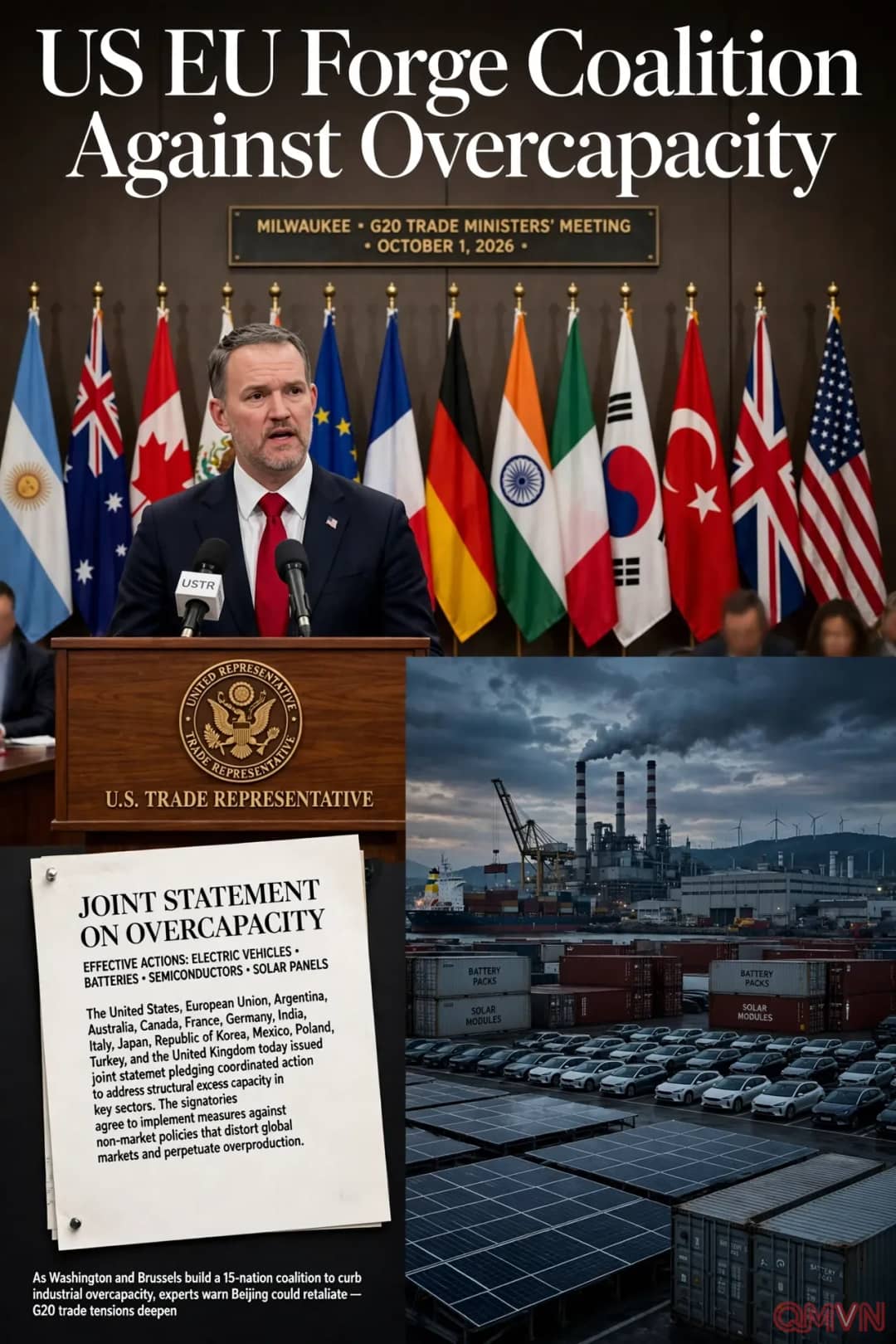
A joint statement on overcapacity
In the statement, the United States and 14 other economies agreed to “take effective actions” to address structural excess capacity in several sectors. Signatories included the trade ministers of Argentina, Australia, Canada, the EU, France, Germany, India, Italy, Japan, South Korea, Mexico, Poland, Turkey, the UK and the US.
The agreement was reached on the sidelines of an Organisation for Economic Co-operation and Development (OECD) Trade Committee meeting, just days after G20 trade ministers failed to reach consensus on the issue at a meeting in Milwaukee. After the G20 meeting, China's commerce ministry said most participating economies held differing views on excess capacity, while Washington said only a “handful” of ministers had opposed it.
The view from Beijing
According to Zhao Minghao, deputy director of the Centre for American Studies at Fudan University, the statement shows the US wants to use the overcapacity narrative to assemble a multilateral coalition to pressure China, a strategy pursued since the Biden administration and now amplified. He said Europe also wanted to show its willingness to align with the US, as this is one of the few areas where their goals genuinely overlap.