MAIN ARTICLE
Moscow frames the gathering as a multipolar turning point
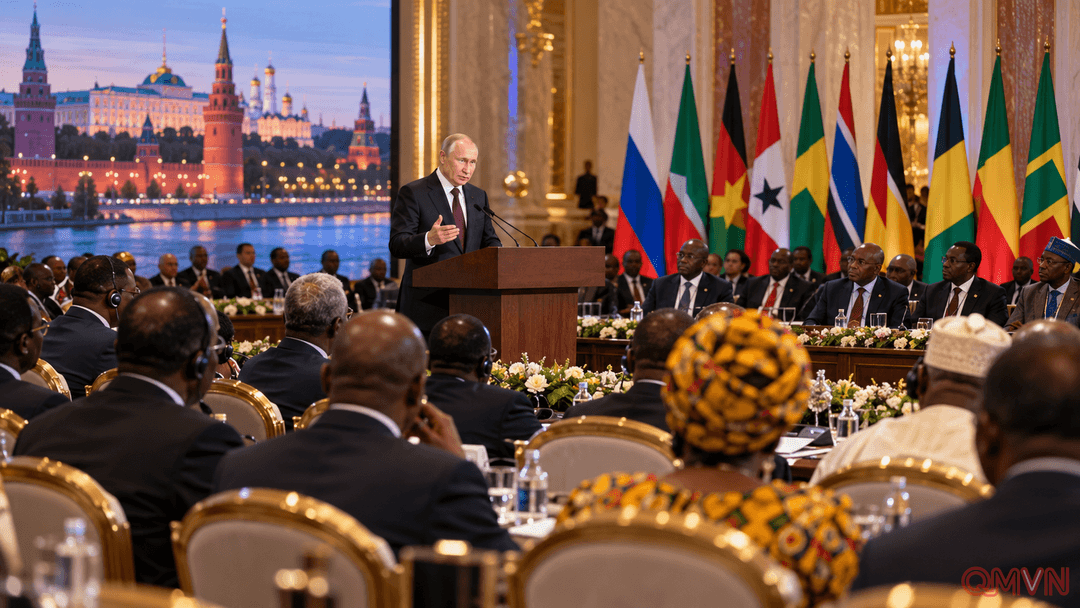
Opening the third Russia–Africa Summit, Putin argued that Africa was becoming an increasingly important actor in world politics and the global economy. He criticized what he described as the persistence of colonial attitudes among Western countries, accusing them of seeking advantage from African resources and debt. The message connected the continent’s experience of foreign domination with Russia’s campaign for a world less centered on established Western powers.
Yet the rhetoric of solidarity does not by itself establish that a partnership is equitable. The governments gathered in Moscow face very different challenges: some need affordable imported grain, others electricity, transport networks, skilled workers or assistance against armed insurgencies. Attendance at a diplomatic forum should not be mistaken for universal endorsement of Russia’s position on Ukraine or its interpretation of Western history.
AP notes that Africa’s 54 countries collectively constitute a significant diplomatic constituency at the United Nations. For Moscow, individual meetings, practical deals and relationships that survive beyond the summit may ultimately matter more than the applause heard in the conference hall.