MAIN STORY
A trail into the forest exposes a larger struggle
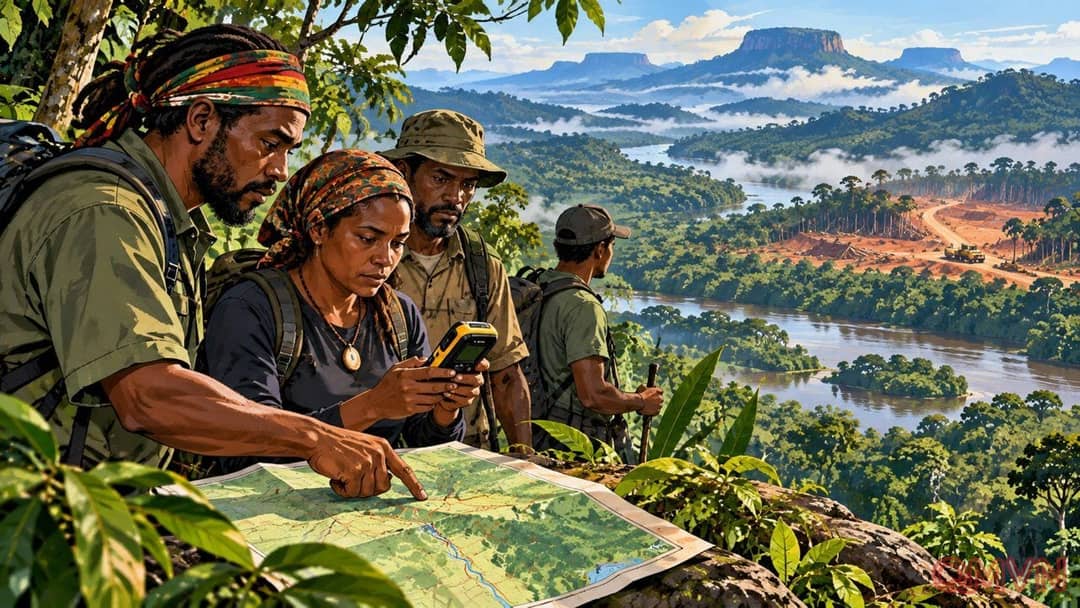
In September 2026, Navaldo Vola and other Saamaka residents cut a path through the humid forest near Ebbatop to inspect unusual activity. They came upon an abandoned excavator and remains of temporary camps. The discoveries raised fears of unauthorized commercial activity, although objects left behind do not on their own establish the identity or nationality of past occupants.
For the patrol, the machinery symbolized a deeper shift. Roads can connect remote villages to hospitals, schools and markets; they can also deliver industrial equipment into forests once reached mainly on foot or by river. The issue is not simply whether infrastructure is good or bad, but whether its routes and consequences are decided with the people whose livelihoods and heritage are directly affected.
Apaki combines ancestral knowledge with modern evidence
The communities named their mapping initiative Apaki in November 2025, borrowing a name for a traditional dried-calabash container used to preserve food. In the same spirit, they aim to safeguard the forests inherited from earlier generations.