MAIN ARTICLE
A test of whether government can function
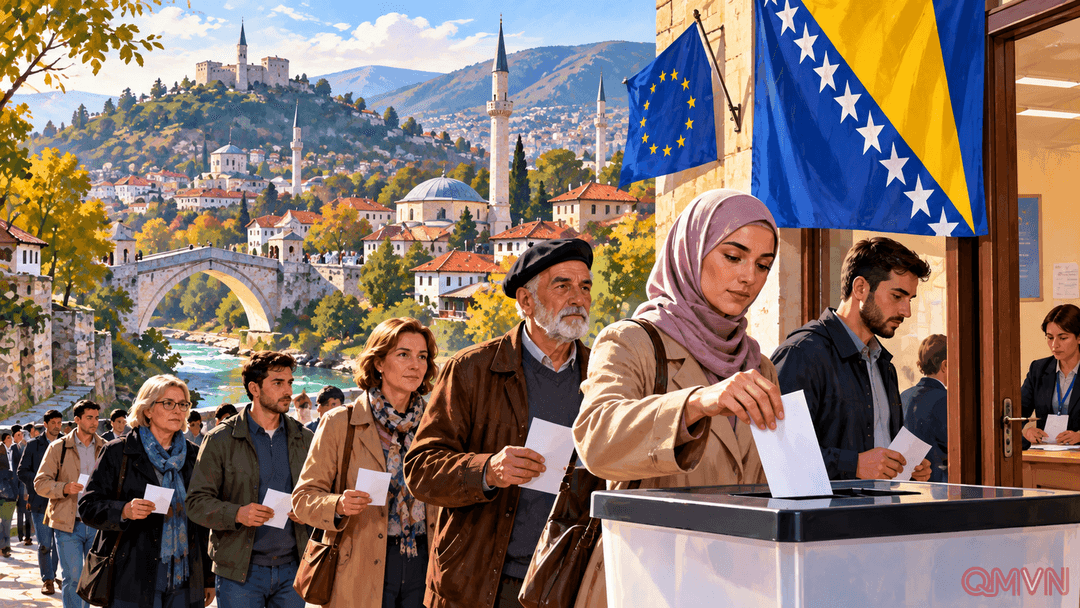
In Sarajevo and Banja Luka, the October 4 vote is about more than filling offices. Citizens are choosing members of a state presidency shared among the principal communities, a national legislature and representatives in the Bosniak-Croat Federation and Republika Srpska. This intricate division of authority poses a persistent challenge: winning a contest within one community does not automatically produce the consensus needed to run the entire country.
Reuters identifies the Bosniak SDA, the Serb SNSD and the Croat HDZ BiH as major ethnically rooted parties facing opponents including multiethnic coalitions led by the Social Democratic Party. Pre-election polling offers only an imperfect snapshot; a national lead does not translate neatly into influence across Bosnia's different institutions. The potential strength of Milorad Dodik's SNSD in Republika Srpska illustrates why regional races matter alongside the countrywide picture.
Voters' frustrations are less abstract. Weak economic momentum, costly daily necessities and the repetition of identity disputes shape how people view their leaders. Reuters interviewed pensioner Dusan Cvijic in Banja Luka, who described difficult living conditions, and Sarajevo teacher Ismar Garasljevic, who lamented political arguments that have remained remarkably similar since the war. Their experiences point to an uncomfortable gulf between elite disputes and ordinary expectations.