A mystery spanning two centuries
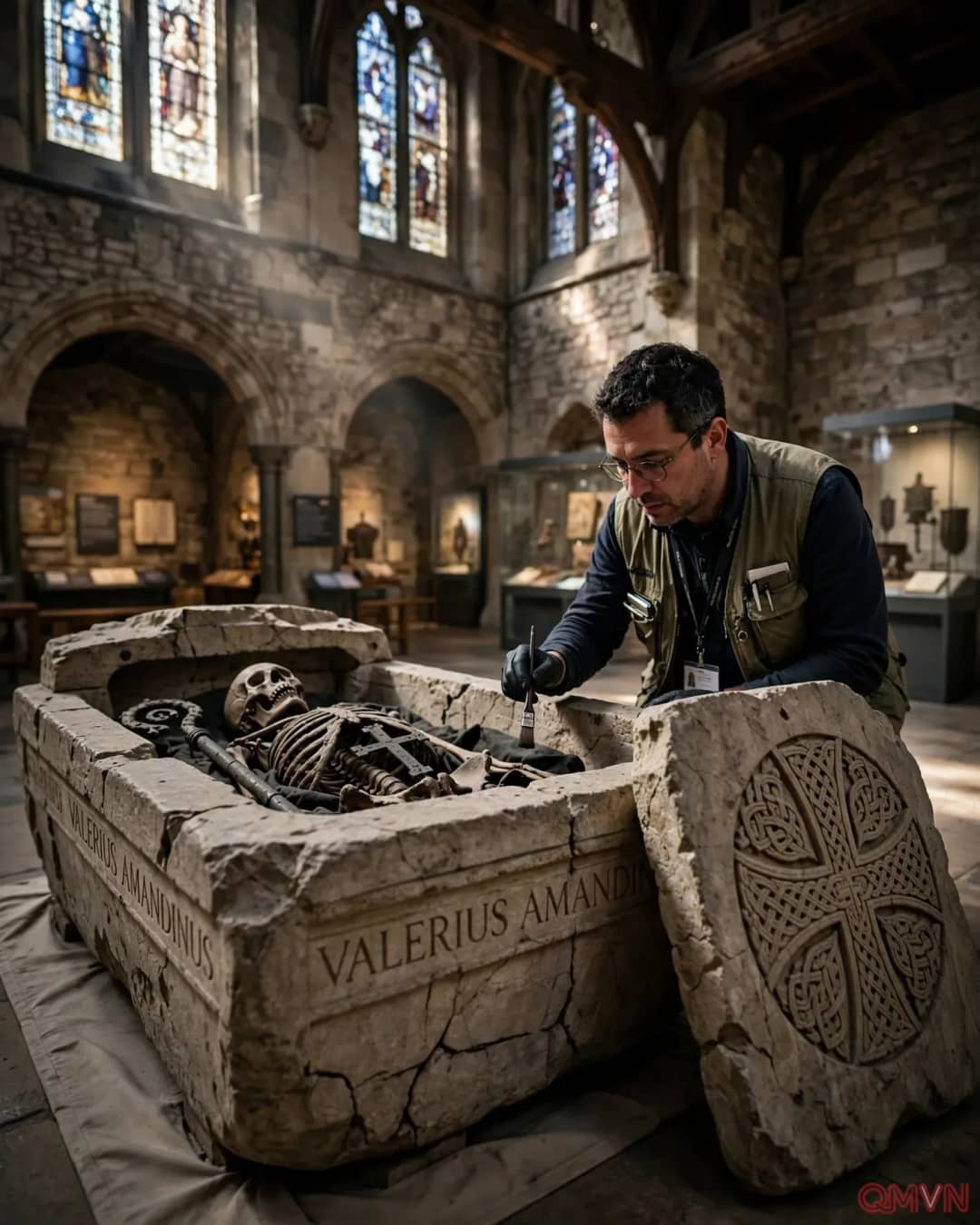
According to The Guardian, the limestone sarcophagus was first discovered in 1820 and officially excavated in 1869 in what is now a grassy area along the north side of the abbey’s nave, once the yard of a sacristy built by King Henry III. The sarcophagus dates from the late Roman period and bears a Latin inscription to Valerius Amandinus, but later excavations found no Roman artefacts in the area.
That was not its original place of burial.
According to Professor Rodwell, the sarcophagus was most likely originally placed in the wall recess of a mausoleum, and Valerius Amandinus was a wealthy individual. The lid of the fourth-century sarcophagus was later modified with a large carved cross.
It runs the full length and the width of the lid, and it’s a very specific late Anglo-Saxon cross type.