MAIN CONTENT
Two goals, one immigration system
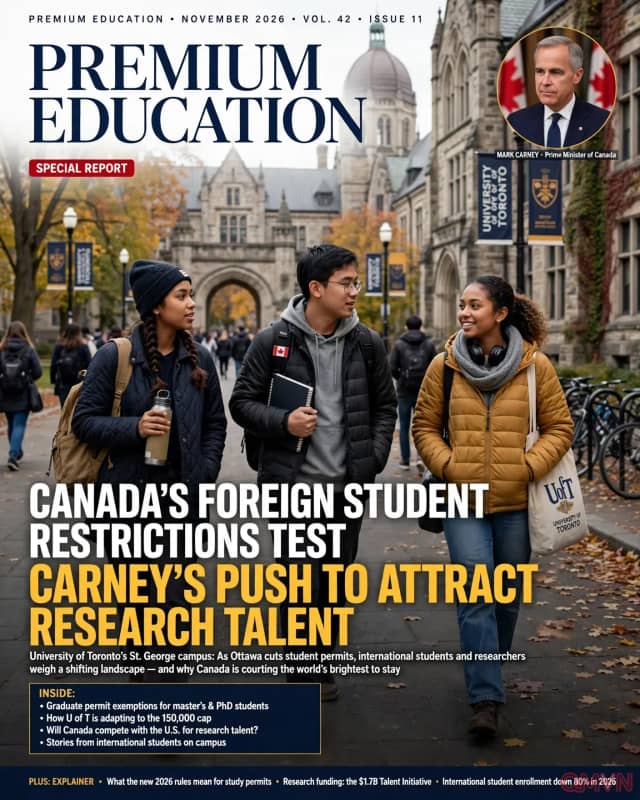
Canada’s official 2027–2029 immigration plan provides for 150,000 new student arrivals annually. This is an arrival target, not a count of every study permit issued or every international student already living in the country. Immigration, Refugees and Citizenship Canada (IRCC) had previously projected 155,000 new arrivals in 2026. Its November 2025 allocation notice also distinguished new permits from extensions, an important clarification for families assessing the headline figures. The government argues that slower growth can help communities absorb demand for accommodation and services.
The policy dilemma is that education operates on a different timetable from immigration administration. A doctoral applicant may begin searching for a supervisor a year before enrolling, while universities must commit laboratory resources and funding well in advance. Frequent rule changes can introduce uncertainty even when an applicant ultimately qualifies for an exemption. A predictable framework may therefore matter almost as much as the numerical target itself.
The competition for scientific talent
The Canada Global Impact+ Research Talent Initiative, described in federal documents as a C$1.7 billion effort, aims to recruit more than a thousand researchers across career stages. It is intended to improve the country's ability to compete for internationally mobile scholars.