MAIN ARTICLE
The bottleneck between factory and orbit
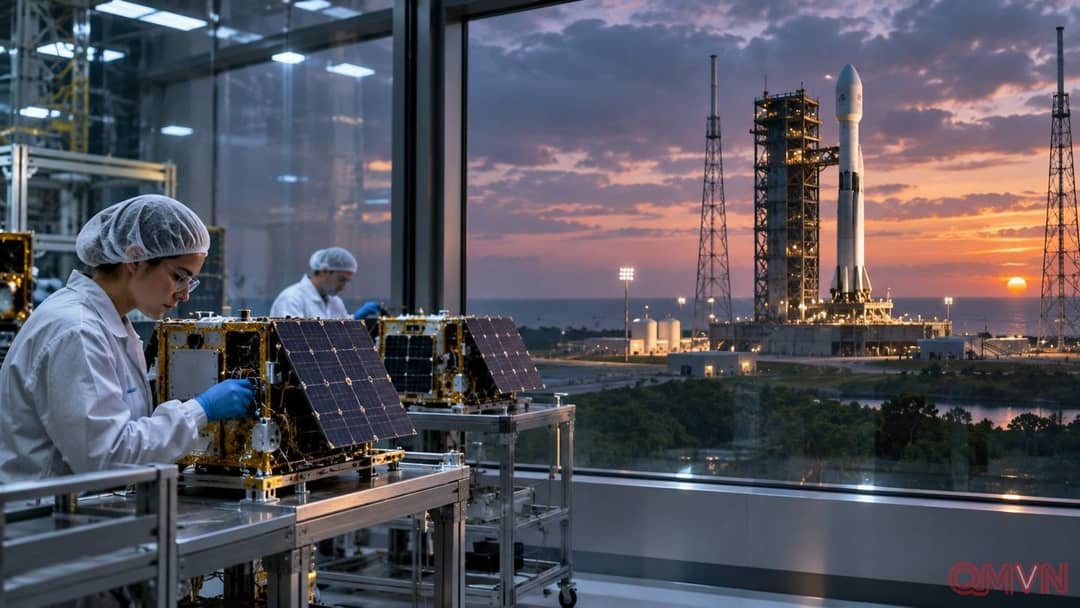
Amazon announced that it had manufactured its thousandth satellite by early September 2026. That milestone suggests the industrial side of the project is advancing faster than deployment. A spacecraft awaiting transport, however, cannot carry internet traffic or generate subscription revenue. The imbalance leaves capital tied up in inventory while customers wait for coverage.
The company's November mission update confirmed that the Vulcan payload was lost on November 15. An earlier setback involving Blue Origin's New Glenn and a postponement of an Ariane 6 mission added to the scheduling pressure. Diversifying launch contracts helps spread risk, but it cannot guarantee that replacement flights will be available when needed. Amazon even purchases launch services from SpaceX, its chief competitor in broadband.
Why Starlink's advantage is difficult to replicate
SpaceX combines rocket operations with satellite manufacturing and network management. Reusable launch vehicles give it greater control over the timing of deployments and replacements. For Amazon, the launch calendar is partly determined by independent businesses with their own customers, technical investigations and operational constraints.
The numerical difference is not the whole story. Satellites must reach appropriate orbital positions and pass commissioning tests before delivering dependable service. Ground stations, terminals and software must also work together. A smaller constellation can serve selected regions, but continuous coverage across more latitudes requires adequate capacity and careful coordination.
Competition is becoming a public interest
The Federal Communications Commission granted Amazon a conditional waiver of its initial deployment milestone in June 2026. That decision offers breathing room without eliminating regulatory obligations.
Public authorities have reasons to welcome additional providers, particularly where terrestrial broadband is difficult to build and a single supplier can leave communities vulnerable to outages or contractual disputes.
The debate over Ukraine illustrates a different dimension of dependence. The Wall Street Journal reported restrictions involving a military satellite service, while Elon Musk disputed claims that Starshield had been slowed. Ukrainian President Volodymyr Zelensky maintained that the disruption was real. The conflicting accounts do not establish what happened independently, but they underline the need for clear service agreements, oversight and contingency plans when communications support critical operations.
The economics of a second network
Reuters reported on October 27 that the FCC approved Amazon Leo's $11.5 billion acquisition of Globalstar. The transaction could expand Amazon's ambitions into direct connectivity for mobile devices. Such services are distinct from fixed broadband through dedicated antennas and will require their own technical and regulatory development.
Amazon has also secured agreements with Delta and JetBlue for aircraft connectivity. These commitments indicate demand, not completed deployment. The company's cloud computing experience and commercial relationships may help it attract enterprises, but profitability will depend on more than winning contracts. Satellites have finite operating lives, so the costs of replenishment will continue after the initial constellation is established.
What customers should watch
The next phase should be judged by measurable service outcomes rather than the number of announcements. Three indicators deserve particular attention:
Successful launches followed by operational satellites and expanding continuous coverage.
Published service prices, terminal availability and independently measured reliability.
The ability to fulfill airline and enterprise agreements without repeated delays.
A credible competitor need not immediately match Starlink satellite for satellite. It must first deliver a dependable product to the markets it chooses to serve. If Amazon can achieve that, customers may gain bargaining power and greater resilience even before the two networks approach comparable scale.