Relief rather than celebration
Few investors welcome new tariffs, and most analysts still regard them as an economically destructive tool. But markets trade on expectations, and many had braced for something far harsher from Washington. When the details emerged, the dominant reaction was that it could have been worse.
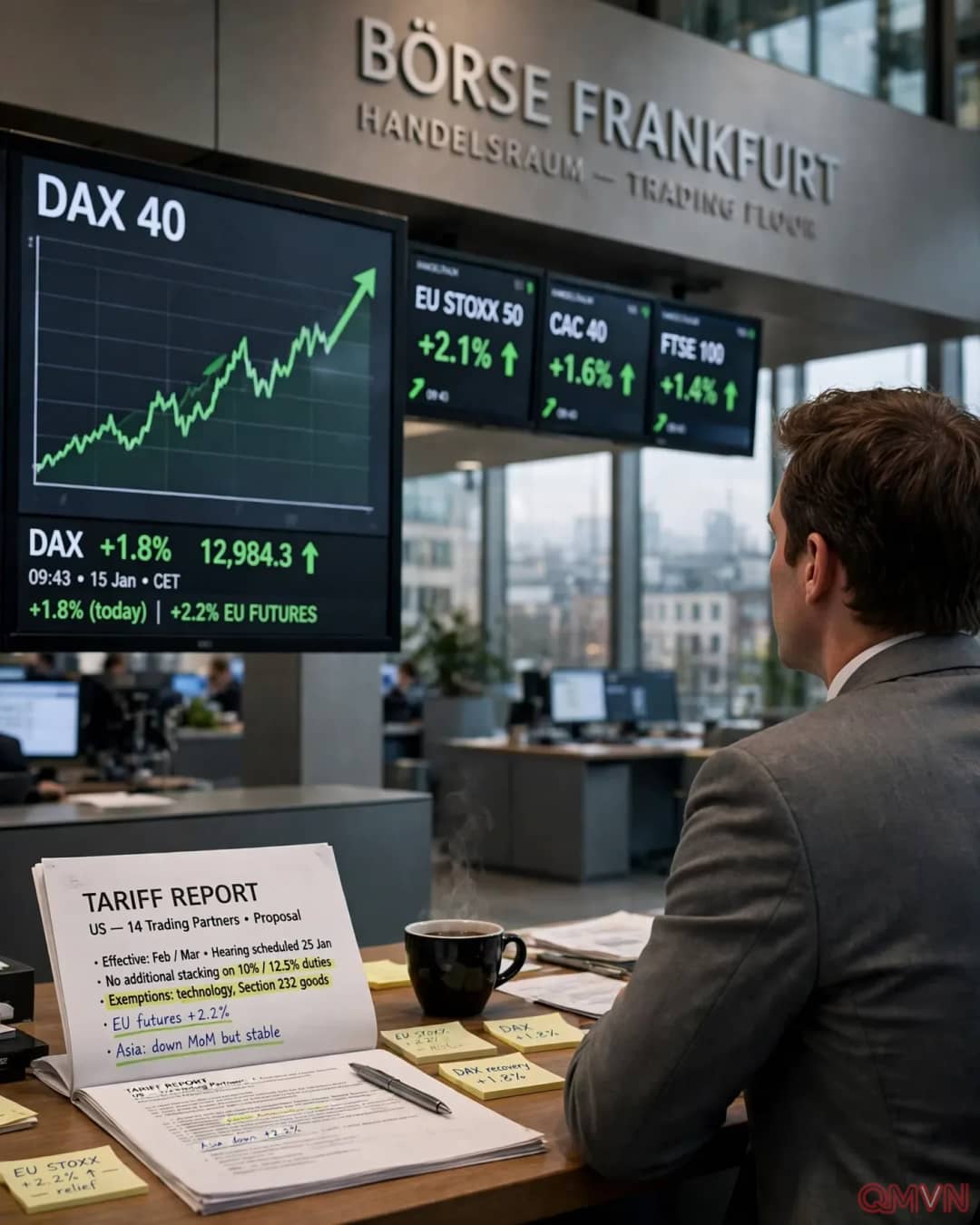
That sentiment showed up quickly in prices. European stock futures climbed between 1.4% and 2.2%, while most Asian share markets moved into positive territory, even though many remain sharply lower for the month after a bruising sell-off in technology shares.
The rebound says less about confidence than about the removal of a worst-case scenario. For now, investors are pricing a manageable increase in trade friction rather than a new escalation.
Why the new package looks milder
Three features explain the relief. First, the proposed duties would not stack on top of the 10% or 12.5% levies imposed in July on a group of 60 trading partners, limiting the combined burden on any single country.
Second, the plan would exclude certain products, including technology goods and items already subject to separate Section 232 tariffs, such as those imposed on national security grounds. That carve-out matters for global supply chains in electronics and semiconductors.