MAIN CONTENT
Why a tariff announcement brought relief
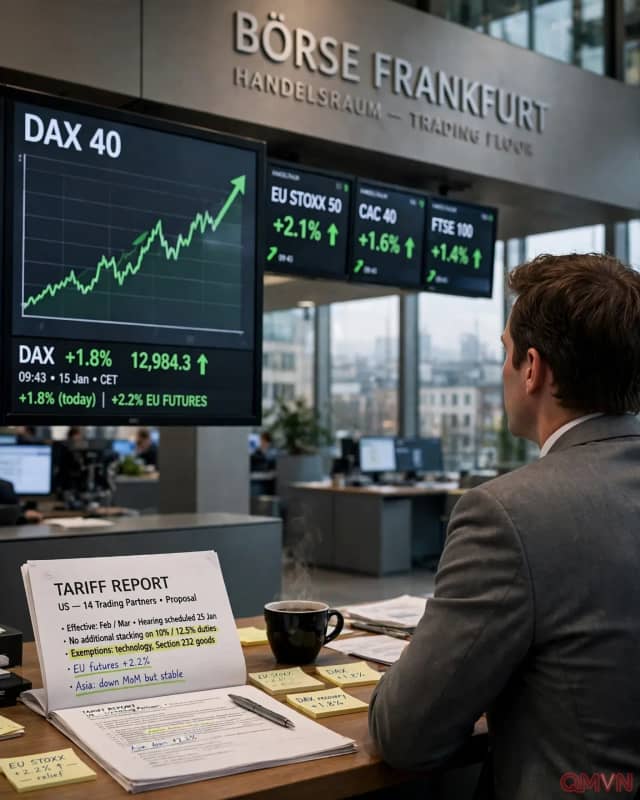
Markets respond to the difference between expectations and reality. A policy that raises costs can nevertheless trigger a rally if investors had prepared for a more severe outcome. The initial advance in European futures therefore should not be mistaken for broad approval of protectionism or proof that the trade dispute has been resolved.
On November 25, the Office of the United States Trade Representative (USTR) announced findings from its Section 301 investigations into manufacturing overcapacity in 14 economies. Its proposals take account of existing duties and, in several cases, bilateral trade commitments. For the European Union, Washington is considering a 15% rate net of ordinary most-favoured-nation tariffs and existing Section 301 duties, subject to exemptions. Reuters reported that the new package would not simply be added to the 10% or 12.5% duties introduced in July. Actual liability will depend on the final legal text and product classification.
The calendar matters as much as the tariff rate
USTR has scheduled public hearings to begin on January 25, 2027. KPMG’s November 25 analysis also confirms that the proposals follow investigations launched in March.