MAIN ARTICLE
A modest limit or a major barrier to young voices?
Appearing before a seven-judge bench, government lawyer Stephen Lloyd argued that the restriction imposed only an indirect, limited burden on political communication. Canberra distinguishes the right to engage in public discussion from the ability to maintain an account on a particular category of digital service. Children can still read some publicly available material without logging in and can communicate through other channels. In the government's account, the law targets platform features capable of causing harm rather than any political opinion or viewpoint.
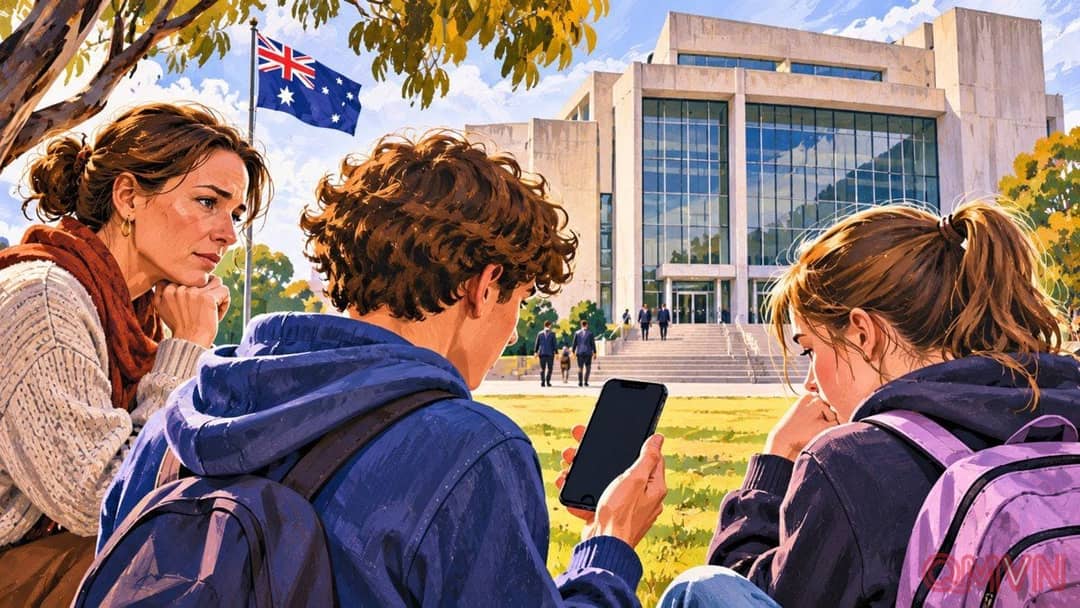
Reddit and Digital Freedom Project frame the problem differently. Social networks are not merely entertainment venues: young people use them to learn about public policy, discuss climate change, ask for help and organize around local concerns. Losing an account can mean losing the ability to comment, coordinate and take part in conversations, particularly for teenagers living far from community hubs. The dispute therefore concerns more than screen time. It asks how a democracy recognizes the developing political voice of its younger members.
Australia has no constitutional free-speech provision equivalent to the First Amendment in the United States. Instead, the High Court recognizes an implied freedom of political communication arising from representative government. The judges must assess whether the law burdens that freedom and whether the restriction is proportionate to a legitimate public objective. One central question is whether similarly meaningful protection could be achieved through measures less restrictive of participation.