MAIN CONTENT
A cultural landmark outside the city center
Major Sydney cultural attractions have traditionally clustered around the harbor and inner city. Powerhouse Parramatta seeks to rebalance that geography for the expanding and culturally diverse communities of western Sydney. The New South Wales government presents it as the region’s first state cultural institution and one of its most significant cultural investments since the Sydney Opera House. The promise is not simply a destination for tourists, but a place that residents can regard as their own.
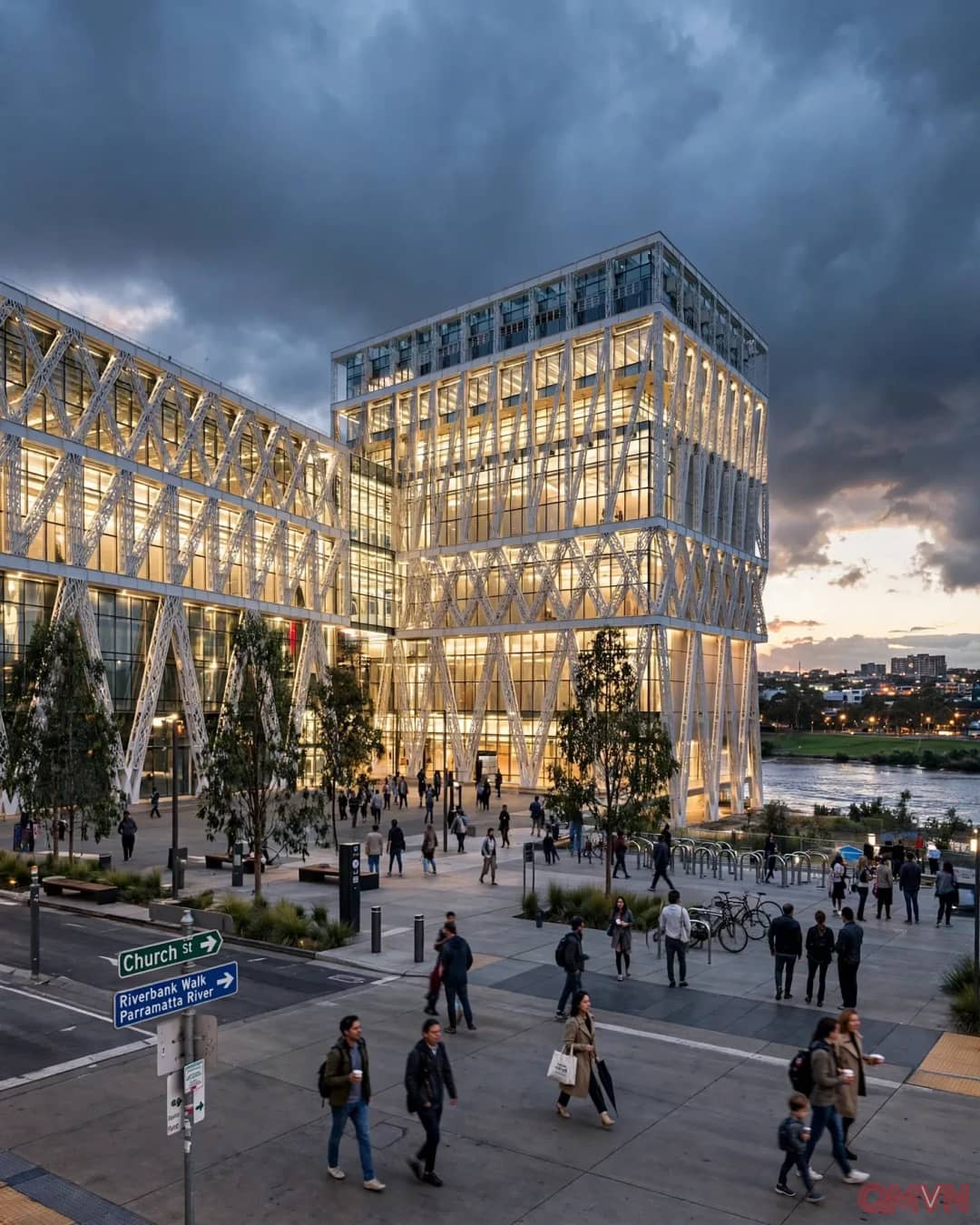
Powerhouse Trust president David Borger hopes the building becomes a recognizable landmark. Its dramatic white exoskeleton, however, has already earned the label “milk crate.” Architectural notoriety may help a building attract attention, but it cannot answer a more important question: whether local people participated in shaping the institution and will continue to recognize their lives, stories and interests inside it.
What the $915 million budget actually includes
The headline A$915 million figure requires precision. State documents identify it as a comprehensive project budget that incorporates a new storage facility at Castle Hill and collection-related work; it is not solely the construction bill for the Parramatta building. A separate pre-opening government statement put the Parramatta delivery component at approximately A$660.1 million, covering such expenses as architecture, construction, exhibitions, landscaping and public art.
That distinction does not remove the obligation to explain how public money was spent. Taxpayers can reasonably ask what the investment will deliver over decades, not just on its opening weekend. The location has also raised questions about flood exposure. Long-term resilience, conservation standards and operating costs will therefore be as relevant to the project’s assessment as its architecture or its place in the skyline.
Five exhibitions tell a broader story
The debut program presents more than 3,000 objects across five exhibitions, over 1,600 drawn from the Powerhouse collection. Task Eternal explores flight, space and the human impulse to travel beyond Earth.
The Mall looks at shopping centers, commerce and changing consumer life, using everyday artifacts—including jeans associated with Apple co-founder Steve Jobs—to examine modern culture rather than only the achievements of famous inventors.
Other displays explore childhood imagination, water knowledge and First Nations perspectives, alongside works by British artist Es Devlin. Their mix of science, design, art and ordinary experience reflects an ambition to make the museum more participatory. Four opening exhibitions are free while Task Eternal requires a ticket. That pricing balance makes accessibility, particularly for families and schools across western Sydney, a practical test of the museum’s public mission.
A leadership investigation before the doors opened
Weeks before the opening, chief executive Lisa Havilah stepped aside as New South Wales authorities investigated governance and procurement matters. ABC News reported that a formal misconduct inquiry followed a whistleblower complaint and earlier fact-finding. The precise allegations had not been fully published. An ongoing investigation is not a finding of wrongdoing, and a fair account must distinguish questions raised from facts ultimately established.
Government architect Abbie Galvin became interim chief executive, praising the professionalism of the museum team. A petition in support of Havilah also asked for a timely and fair process. The state, trustees and staff all have an interest in a credible conclusion. Cultural institutions depend on public confidence: even an ambitious exhibition program cannot substitute for transparent management and a workplace that understands who is accountable for decisions.
What happens to the historic Ultimo collection?
Some heritage advocates insist that the new western Sydney museum cannot replace the original Powerhouse at Ultimo, which is undergoing renovations. Former trustee and heritage specialist Kylie Winkworth points to the importance of major industrial and transport objects, such as an eighteenth-century Boulton & Watt steam engine and the Catalina flying boat. Critics worry about the treatment of more than half a million collection items and the possible erosion of the museum’s research and teaching role.
The trustees argue that the two sites can complement one another by showing more of the collection to different audiences. The strongest answer would avoid framing the issue as a contest between old and new. Ultimo could preserve deep technical and historical interpretation while Parramatta encourages experimentation and broader participation, provided that conservation capacity, curatorial expertise and reliable funding remain protected.
Beyond opening-weekend crowds
Early crowds suggest considerable public curiosity. Organizers announced a 23-day opening festival and extensive activities, while projections for first-year attendance ranged between the state’s more ambitious target and a more cautious estimate from interim management. Those are forecasts, not attendance outcomes. Repeat visits, school participation, community partnerships and visitor satisfaction will better indicate whether the museum becomes an enduring civic resource.
Powerhouse Parramatta still has a real opportunity to grow into a source of pride for western Sydney. Doing so will require reporting on the governance inquiry when appropriate, protecting the collection and making programs affordable and meaningful to its neighbors. What remains after the inaugural celebrations should matter more than any nickname or construction figure: a durable space in which successive generations can encounter science, creativity and history.