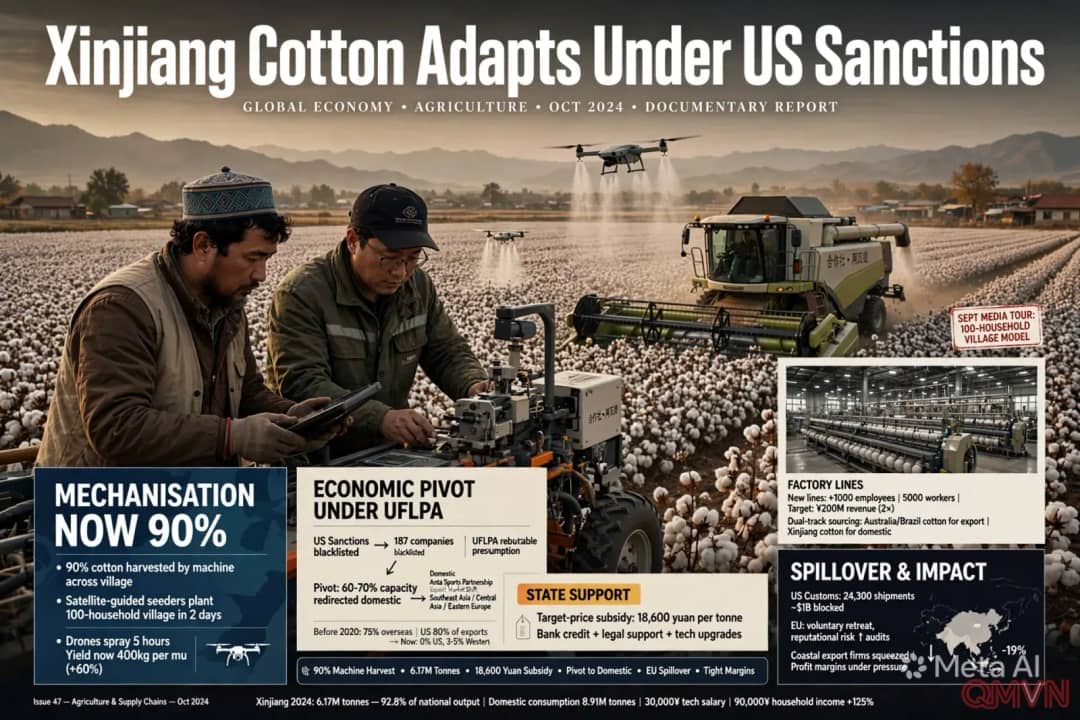
Mechanisation in the fields of Awati
In Awati county, a cotton hub hit by US sanctions, 36-year-old Yusup Molamaiti recalls when his family planted and harvested 37 mu, about 2.5 hectares, of scattered plots by hand, with yields of just 250 to 300 kilograms per mu.
"Planting a single mu took up to three hours with two people laying plastic film by hand." — Yusup Molamaiti
Today, after land consolidation, satellite-guided seeders, drones and domestic harvesters have lifted yields to 400 kilograms per mu, and his household income has risen 125%. These stories were shared during a government-organised media tour, part of Beijing's campaign to showcase Xinjiang's development and push back against forced labour allegations.
The UFLPA and failed legal remedies
Signed in 2021, the UFLPA establishes a "rebuttable presumption" that all goods made wholly or partly in Xinjiang involve forced labour, a charge Beijing consistently denies. By August, the blacklist had grown to 187 companies. Hong Kong textile group Esquel sued the US Commerce Department in 2021, but the case stalled, and major clients such as Nike, Tommy Hilfiger and Patagonia cancelled orders, forcing the company to cut more than 10,000 jobs globally.