MAIN ARTICLE
A summit pushed beyond its limits
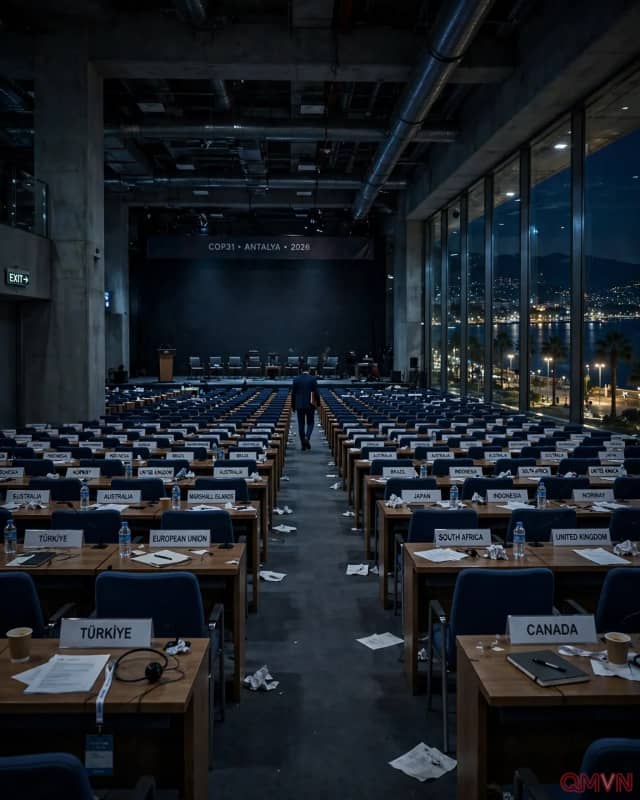
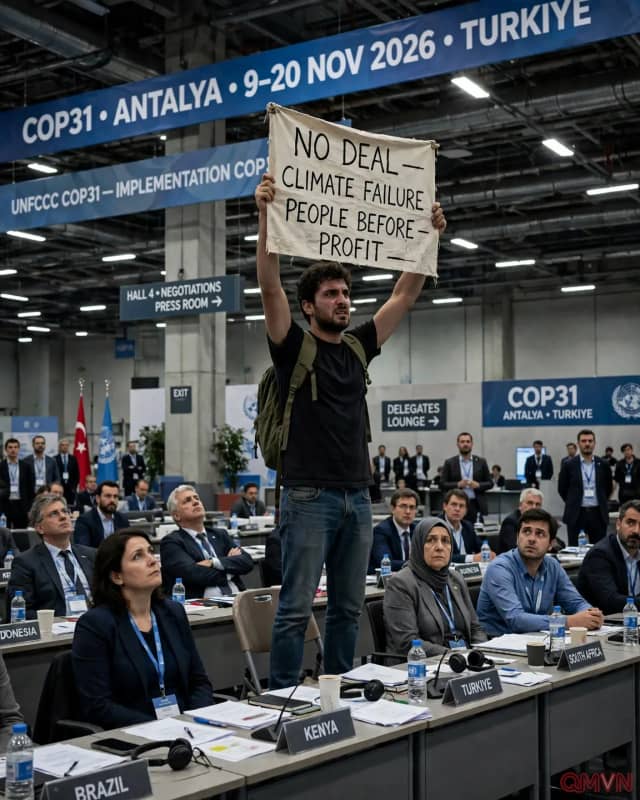
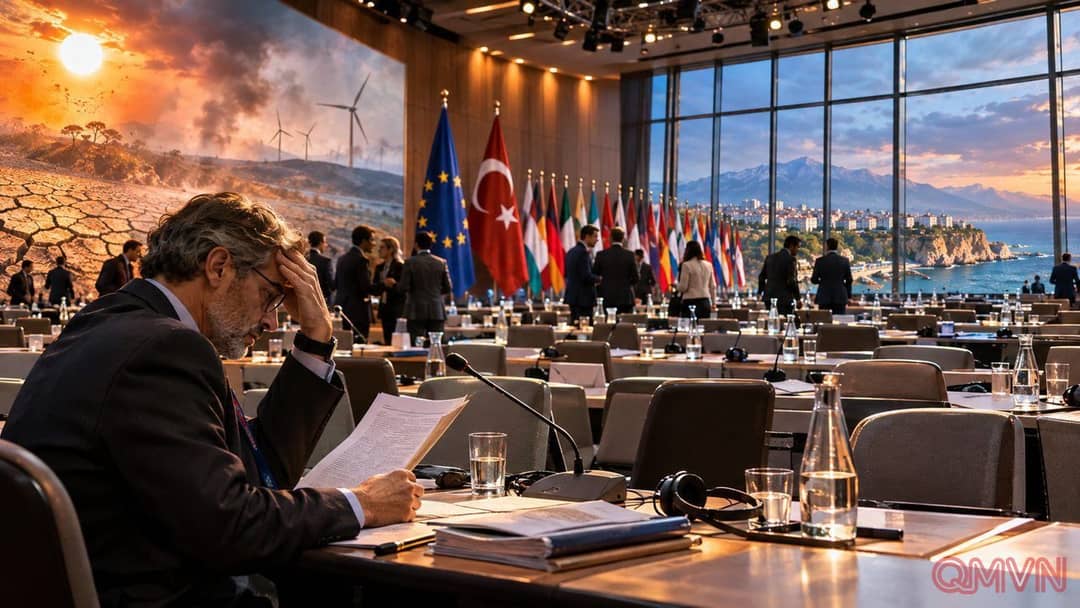
When delegates departed the conference hall in Antalya, the political document sought by the Turkish and Australian presidencies lacked the support needed for adoption. Reuters and AP described a rare failure of the United Nations climate process to agree on an overarching outcome, recalling the breakdown in Copenhagen in 2009. Talks ran two days past the planned deadline, making COP31 the longest such conference on record.
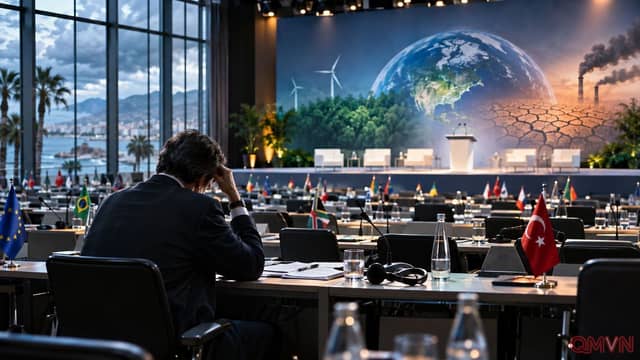
Ireland’s climate minister Darragh O’Brien, speaking for the European Union, argued that a climate document could not ignore the principal driver of the crisis. Small island states and other countries vulnerable to disasters sought language strong enough to protect livelihoods, coastlines and future generations. Meanwhile, some negotiators questioned a process dominated by closed-door discussions, which they believed made it harder to identify a credible compromise.
Conference president Murat Kurum acknowledged that consensus was absent; Australia’s negotiations president Chris Bowen voiced disappointment. United Nations Secretary-General António Guterres also expressed frustration that governments had failed to meet the moment. Their responses captured the disappointment, while highlighting a more complicated truth: a declaration adopted at any price would not necessarily represent meaningful progress.
The unavoidable fault line over fossil fuels
In 2023 governments agreed on the need to “transition away from fossil fuels” in energy systems. The omission of coal, oil and gas from the Antalya proposal therefore represented more than a drafting detail.
For the European Union, summit language helps shape expectations for investment, national regulation and the long-term direction of energy markets.
Saudi Arabia and other petroleum exporters argue that conventional fuels will retain an economic role and emphasize technological solutions. Accounts from the negotiations say Saudi Arabia and Russia opposed explicit references to fossil fuels. Countries demanding a quicker transition feared that deleting those words would dilute a political signal achieved through earlier negotiations.
Behind the terminology lies a difficult distribution of costs: exporters fear declining revenue, importers worry about energy security, and communities exposed to heat waves, floods and rising seas bear losses they did little to create. Such conflicts cannot be resolved by a slogan. Yet their complexity cannot justify postponing the transition indefinitely.
Climate finance and technology: unfinished promises
The draft called for an expansion of support to help lower-income countries adapt to climate change, including a possible tripling of finance, but lacked a sufficiently clear baseline and delivery mechanism. For governments facing storms and droughts, this left unanswered questions about where money would come from, when it would arrive and whether it would increase debt burdens.
The proposed text also promoted carbon capture and removal to address temperature overshoot. Scientists acknowledge that removing carbon dioxide can complement deep emissions cuts, but environmental groups warn that it must not become an excuse to continue burning fossil fuels. The disagreement concerned priorities: reducing pollution at its source or leaning too heavily on the possibility of cleaning up emissions later.
Another proposed target sought to expand electricity’s share of final energy consumption to roughly 35% by 2035. Electrifying transport, heating and industry can cut emissions as power systems become cleaner. But poorer states need grids, investment and access to technology; without support, even a positive target risks becoming an obligation they cannot reasonably fulfil.
What follows the Antalya breakdown?
The absence of a new overarching declaration does not cancel the 2015 Paris Agreement or earlier decisions. Some separate technical decisions can still advance. Nevertheless, COP31 raised a difficult question about consensus-based diplomacy: if every government must agree, a small group can obstruct action supported by many others.
The United Nations Environment Programme’s Emissions Gap Report 2026 projects roughly 2.8°C of warming this century under current policies, or about 2.6°C if countries fully implement their latest climate commitments. The 1.5°C threshold is increasingly likely to be exceeded, making each year of delay consequential for ecosystems, public health and vulnerable communities.
While multilateral bargaining stalls, voluntary coalitions, domestic policies and investment in clean electricity can continue. Yet isolated action cannot completely replace global agreements on finance and shared responsibility. Antalya’s lasting lesson may be that climate diplomacy is credible only when political declarations are matched by practical timetables, resources and a fair allocation of burdens.