An indirect election with two layers of representation
Unlike a direct election for the lower house, citizens do not vote individually for senators. The Senate says some 93,469 electors are involved in the 2026 renewal, with municipal delegates accounting for 95.2% of them. Every commune has at least one delegate, while larger ones send more according to population. That design deliberately gives small communities a route into the national legislature.
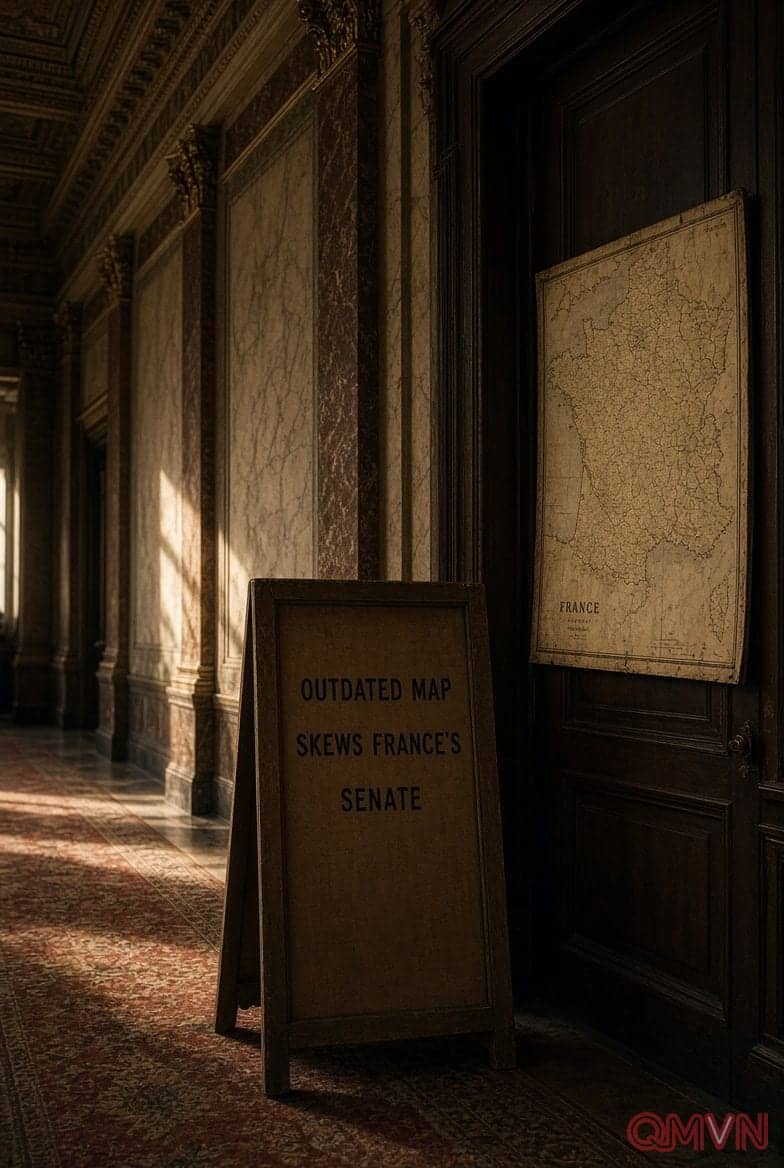
The second layer is the number of seats assigned to each constituency. An old allocation cannot adjust automatically when one area grows quickly. Le Monde reports that Bouches-du-Rhône has about 2.1 million residents and eight senators, while Paris, with only roughly 16,000 more residents, has 12. This contrast does not by itself make the system unlawful; it illustrates the tension between territorial representation and population-based equality.
Why keeping the map is easier than changing it
The current distribution emerged from reforms in 2003 using the 1999 census. Earlier revisions tended to add seats to reflect growth while avoiding the removal of seats from places whose populations fell.