Building the foundations of AI
Ha, vice chair of the Presidential Council on National Artificial Intelligence Strategy, outlined three priorities: semiconductors, AI data centers and physical AI. The Korea Times reported that these areas are central to the country's ambition to rank among the world's three leading AI powers. The ambition is a policy objective, not an established international ranking.
The three priorities are closely connected. Chips provide processing capacity, data centers make that capacity available at scale, and physical AI brings computational intelligence into machinery and real-world processes. A shortage in any one of these areas can limit progress in the others. Reliable electricity, network connections and technical expertise are therefore important considerations when assessing infrastructure projects.
From computing to industrial productivity
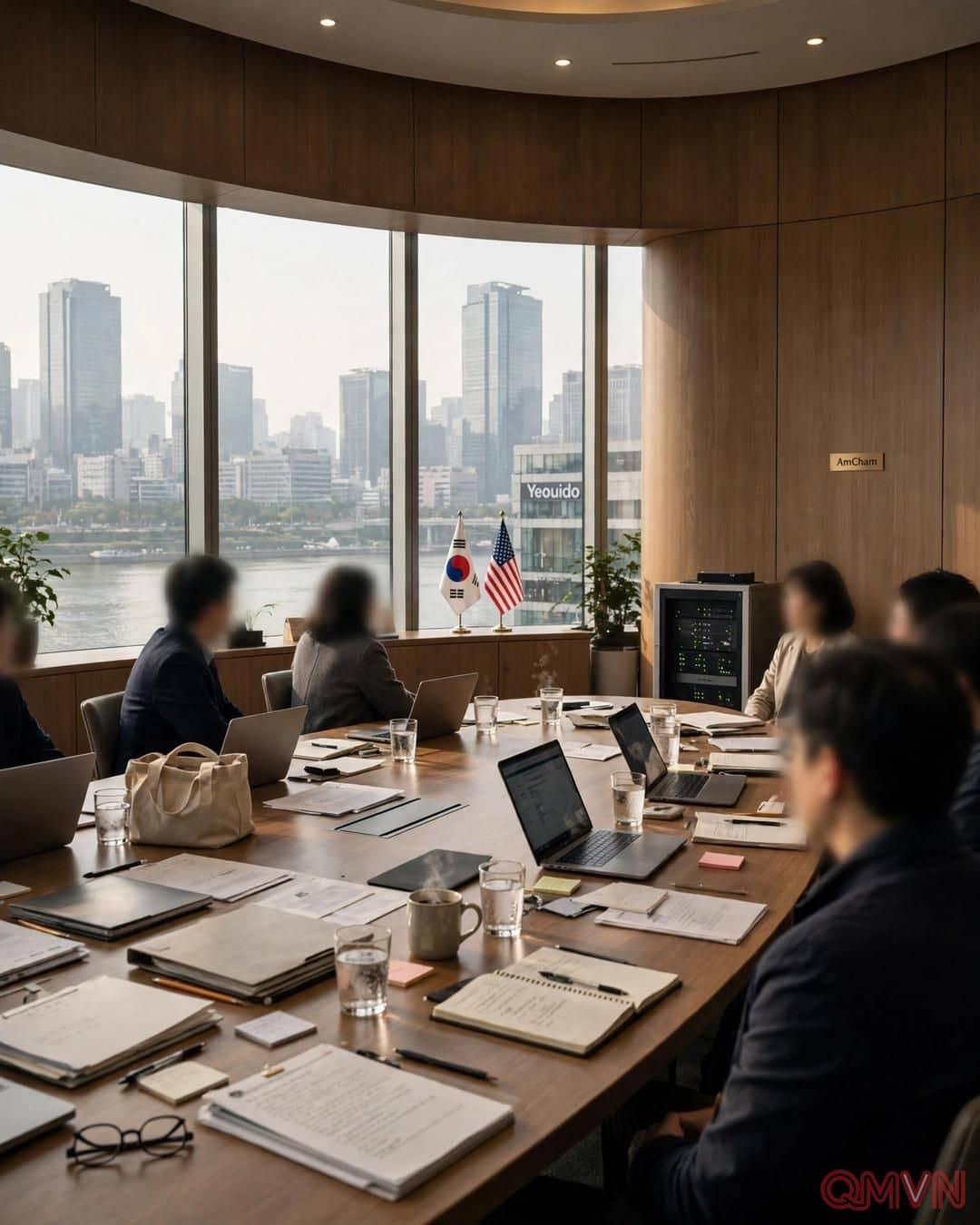
The gathering at AmCham's Yeouido office included Corning, Palo Alto Networks, PTC and UL Solutions in addition to Apple, Amazon Web Services and Qualcomm, according to the chamber and The Korea Herald. Their different specialties illustrate how AI deployment extends beyond the companies that develop the best-known models.
Manufacturers may use AI to inspect products, anticipate equipment problems or improve production planning. Yet successful adoption requires more than purchasing software: businesses must integrate systems with existing equipment, establish reliable data practices and train employees. Cooperation between Korean industrial firms and international technology providers could help address these challenges, although the meeting did not establish specific projects or funding commitments.
Trust as an economic resource
Cybersecurity, AI safety and international standards were also discussed. These questions are especially consequential when automated tools interact with factories, sensitive business information and essential services. An error that is inconvenient in a consumer application may have more serious consequences in an industrial environment.
AmCham chairman James Kim expressed support for Korea's AI ambitions and emphasized predictable policy. Ha identified energy and international cooperation as important parts of a sustainable AI ecosystem. Their statements point to a shared interest in reducing uncertainty, though businesses and regulators may still differ over the appropriate balance between flexibility, accountability and public protection.
Turning dialogue into measurable progress
The chamber's AI Leadership Council, launched in July, provides a channel for industry perspectives to reach policymakers. Its value will depend on whether discussions lead to practical improvements that are accessible to companies of different sizes, rather than simply producing statements of shared ambition.
Future progress could be assessed through actual infrastructure development, industrial adoption, workforce training and reliable safety evaluations. The November meeting is best understood as a step in that process. Neither the reports nor the chamber announcement establishes a new binding investment agreement or guarantees that Korea will achieve its stated global ranking.