A ceiling, not a blanket exemption
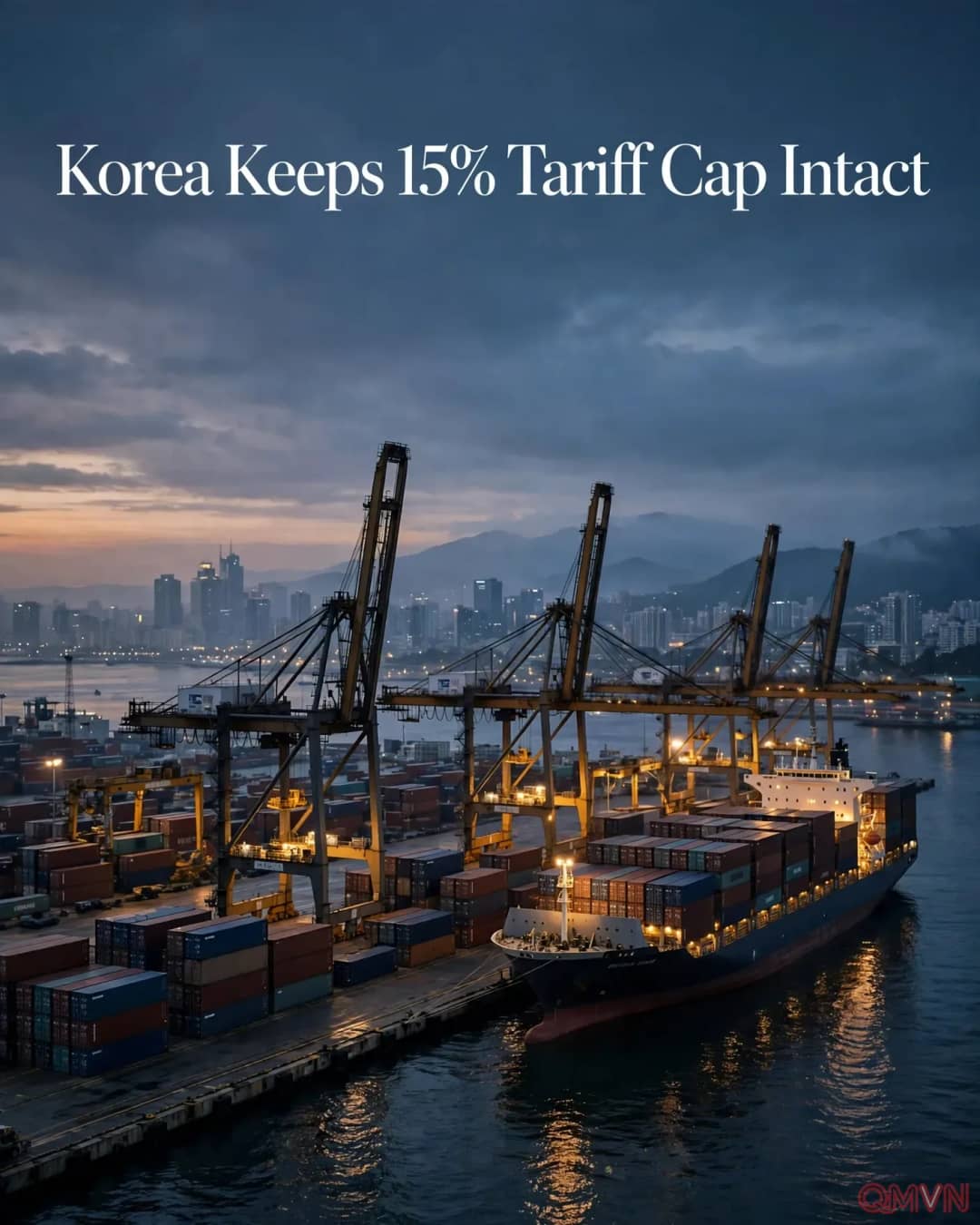
The Korea Herald reported that the US administration intends to respect negotiated tariff ceilings. The USTR announcement confirms a proposed Korean rate of up to 15%, taking account of existing most-favored-nation and Section 301 duties, with certain exemptions. Korea was subject to a 12.5% levy under the July measures concerning forced-labor import restrictions. Companies should therefore distinguish the total applicable rate from the size of any new charge; product-specific treatment may still differ.
The proposal could take effect in January 2027 after consultation and a public hearing. Its eventual economic consequences depend on the final legal text, exemptions and customs implementation. A headline ceiling alone is insufficient for calculating the landed cost of every shipment.
Manufacturing under scrutiny
Washington argues that Korean industrial planning, preferential financing and links to non-market economies contribute to production beyond sustainable demand. These are US government findings and allegations about trade practices, rather than an independent conclusion that every Korean exporter has engaged in wrongdoing.
Automobiles, semiconductors and petrochemicals are prominent in the official assessment.
The Korea Herald reported that US goods and services trade with Korea produced a Korean surplus of $56 billion in 2024. A bilateral surplus, however, does not by itself demonstrate excess capacity. Demand, productivity, exchange rates and the international division of production can all influence trade balances. The policy dispute concerns how governments should distinguish legitimate competitiveness from support that distorts markets.
Digital rules remain a separate uncertainty
According to The Korea Herald, citing Politico, US officials have considered investigating digital regulations in South Korea, the European Union and Australia. Consideration of an investigation is not equivalent to its formal launch or to a decision to impose duties. Any such action would have to be assessed separately from the current manufacturing proposal.
For technology companies, the uncertainty reinforces the value of tracking regulatory developments alongside trade negotiations. For policymakers, the challenge is to reconcile domestic regulatory objectives with international commercial commitments without assuming that every disagreement must result in a tariff.
Investment and commercial planning
Under the deal completed in November 2025, Seoul pledged $350 billion in US investment and secured a reduction in the negotiated reciprocal tariff from 25% to 15%, according to The Korea Herald. The latest proposal illustrates why the practical implementation of a trade agreement matters as much as its announcement.
Businesses can prepare by reviewing customs classifications, contract terms and exposure to possible changes in sourcing costs. A predictable framework may support investment decisions, but its benefits depend on consistent administration and clear communication. Consumers and workers on both sides also have a stake in whether trade measures increase costs or support sustainable economic activity.