MAIN ARTICLE
An election-day declaration with uncertain reach
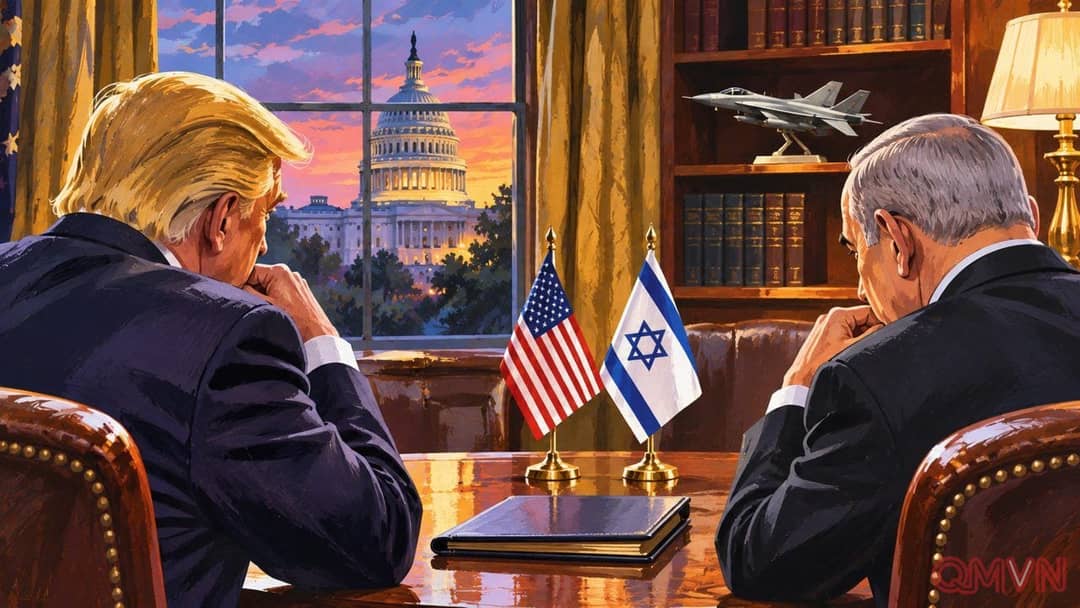
During a November 3 interview with Fox News, Trump said roughly $4 billion in yearly assistance to Israel would stop at the end of this year. He maintained that Netanyahu had raised the idea in discussions held months earlier and that Israel was economically strong enough to pay more of its own defense costs. The president also left open the possibility of future American help in exceptional circumstances. His words, however, did not identify a specific appropriation, contract or funding account being terminated.
The timing was politically charged. As Americans voted for a new Congress, candidates were arguing over wars, household expenses and the allocation of taxpayers’ money. Trump explicitly invoked Abdul El-Sayed, a Democratic Senate candidate in Michigan who opposes unconditional military assistance to Israel. The announcement therefore has both potential policy consequences and an electoral purpose; the two should not be confused. A campaign message can change expectations overnight without changing the statutory authority to spend money.
The $3.8 billion framework and congressional authority
According to the Congressional Research Service, the US-Israel memorandum of understanding covering fiscal years 2019 through 2028 outlines $38 billion in assistance. That comprises $3.3 billion annually in Foreign Military Financing and another $500 million for cooperative missile-defense activities.