MAIN ARTICLE
The message from Paris shifts attention eastward
Meeting in Paris on November 9 and 10, foreign ministers from Canada, France, Germany, Italy, Japan, Britain and the United States, alongside the European Union's high representative, included Taiwan in a broader Indo-Pacific declaration. Unlike general appeals for calm in the Taiwan Strait, the text explicitly identified China's activities in waters east of the island. That geography matters: the concern is no longer confined to the narrow channel separating Taiwan from the Chinese mainland, but extends into the Pacific-facing approaches.
The ministers warned about risks to regional stability, freedom of navigation and shipping safety. They called for cross-strait issues to be settled peacefully through constructive dialogue and supported Taiwan's meaningful participation in international organizations. Their words represent a collective diplomatic position, not an announcement of armed intervention or a finding that a blockade has already begun.
Why the eastern maritime approaches matter
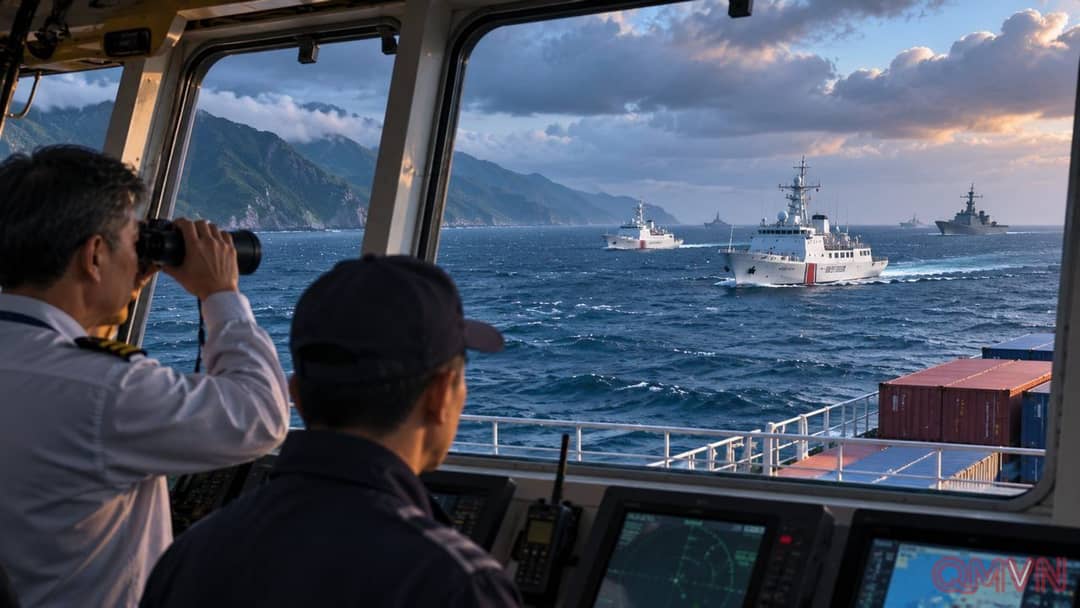
According to Reuters, Chinese coast guard vessels have made regular patrols east of Taiwan since June. After a patrol in October, Taiwanese officials accused Beijing of harassing commercial traffic and claiming a maritime jurisdiction Taipei does not recognize.