MAIN ARTICLE
A small bowl with a remarkable price
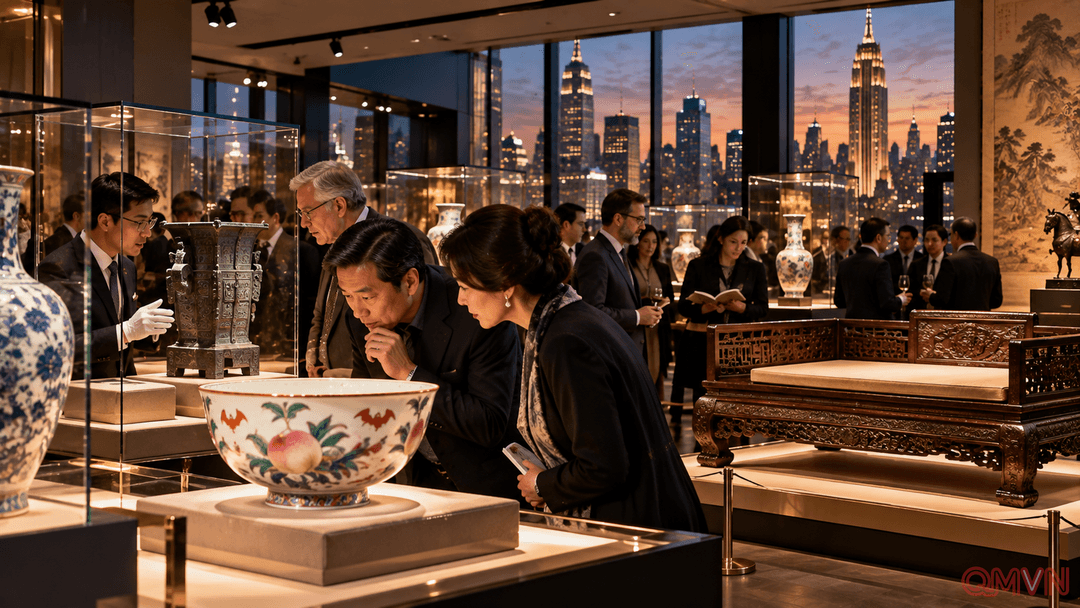
At Christie’s in New York on September 18, 2026, a Yongzheng-period famille rose bowl bearing peaches and bats realized $2,048,000. Beyond its craftsmanship, the imagery speaks an older cultural language: peaches suggest longevity, while bats evoke blessings. An object fashioned for a different world became a closely watched symbol of today’s global appetite for documented Chinese art.
Christie’s reported that Important Chinese Art Including Ceramics from the Art Institute of Chicago achieved $17,270,480, roughly 2.5 times the low presale estimate. A rare seventeenth-century huanghuali daybed brought $3.17 million. Such prices show demand across ceramics and classical furniture, particularly when their histories can be traced through established institutional records.
Yet the language of treasures “returning home” deserves qualification. Auction bidders may participate from China, the United States or elsewhere; buyer identities and eventual display locations are not consistently public. The sales show renewed international circulation, not proof that every work has returned permanently to China.