MAIN CONTENT
A record-sounding figure, with different kinds of commitments
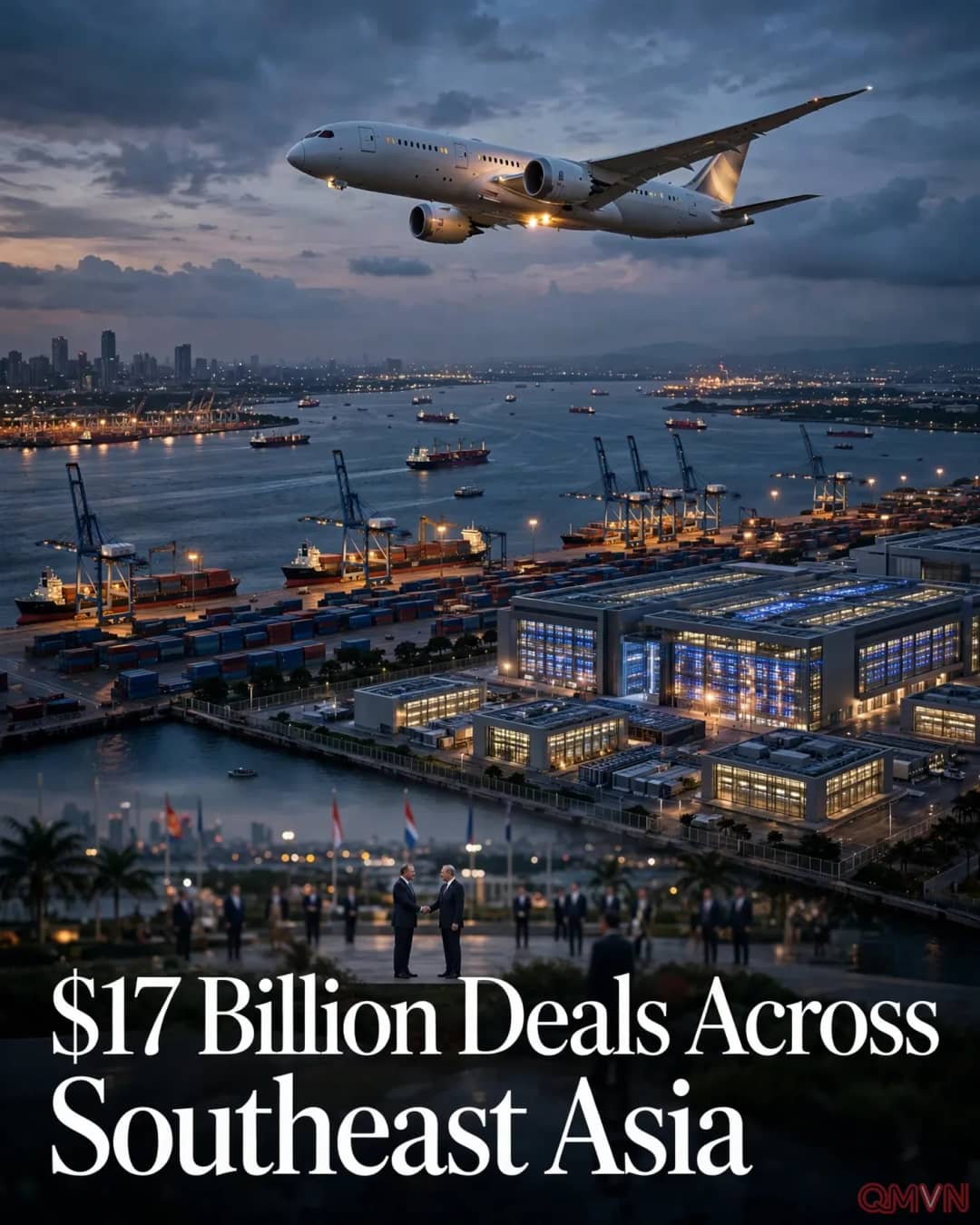
The White House presented the package as an outcome of Trump’s two-day visit to the Philippines and the ASEAN gathering in Manila. Its more-than-$17-billion figure is not a single cash transfer or one fully executed contract. It spans private sales, intended purchases, financing discussions and projects that may take years to develop. That distinction matters because announced investment values do not automatically become immediate spending, revenue or employment.
The centrepiece is a proposed $12 billion purchase of up to 20 Boeing 787 aircraft equipped with GE Aerospace engines for Philippine Airlines, according to the White House. The airline transaction dominates the overall amount, illustrating how one large aviation order can shape the appearance of a regional diplomatic package. The government's account highlights benefits to American manufacturing; actual deliveries and payments will depend on contractual schedules.
Philippine security and infrastructure enter the commercial picture
Manila and Washington also plan to pursue a US financing package exceeding $2 billion for Philippine defence acquisitions. The White House separately described $400 million in support for Philippine military operations in the South China Sea, where maritime tensions make surveillance, logistics and deterrence central concerns. These figures describe policy commitments and prospective financing, not proof that every weapon system has been delivered.
Beyond military procurement, the announcements include a $40 million fuel facility at Subic Bay and plans to upgrade Basco Airport, a location of strategic and humanitarian relevance near the country’s northern approaches. Infrastructure serving both disaster relief and military access can improve readiness, but it also invites debate over public priorities, environmental oversight and how governments preserve room for independent decisions.
Defence and energy deals cross national borders
Thailand intends to spend up to $123 million on US-made High Mobility Artillery Rocket Systems, or HIMARS, according to the US account. The tentative purchase would deepen defence procurement links and could become a notable example of the system entering mainland Southeast Asia.
Its significance rests not only on price but on training, upkeep, interoperability and the political decisions required to finalize the sale.
Energy transactions add another dimension. In Indonesia, Latitude Energy and sovereign wealth fund Danantara are discussing a $2 billion coal project involving American technology. Separately, Navajo Transitional Energy Company agreed to supply $100 million of coal over three years to a subsidiary of Malaysia’s Tenaga Nasional Berhad. These arrangements demonstrate demand for energy security, even as coal projects prompt questions about emissions and the durability of fossil-fuel investment.
Artificial intelligence becomes a strategic export
Digital infrastructure gives the package a more forward-looking edge. Brunei’s Unified National Networks intends to award American company Vertiv a data-centre tender associated with nearly $1 billion of US-sourced spending. In Malaysia, a US consortium is expected to assist a sovereign artificial-intelligence cloud project, while Washington is offering $50 million in support, according to Malaysia’s communications regulator.
These projects could expand domestic computing capacity and create openings for local suppliers, but their wider impact depends on affordability, skills, secure data handling and access to reliable electricity. An AI data centre is not simply imported hardware: it creates enduring decisions about maintenance, cybersecurity, energy demand and who ultimately controls critical digital services.
From summit diplomacy to measurable results
For Washington, the announcements allow trade, defence and technology policy to be presented as mutually reinforcing. For ASEAN states, working with US companies can diversify commercial relationships and strengthen bargaining options in a region economically connected to China as well as to America. Neither benefit is automatic: the negotiating details determine whether projects serve local development needs and withstand changes in government or market conditions.
A careful reading therefore separates completed sales from hoped-for investments, and security aid from corporate earnings. Independent confirmation of contract terms, delivery dates, financing conditions and local costs will be essential. The summit revealed the scale of interest in Southeast Asia; implementation will show how much of that interest becomes durable economic value.