MAIN ARTICLE
A name that bridges eight decades
After the war, Morishita received an urn for her brother, but inside was only a paper bearing his name. Her last clear memory of Rikio is of him on the shore after bringing rice balls to the departing family. He had been ordered to stay with another brother to help defend Ioto. Rikio was killed at 22; the surviving brother later returned from captivity and seldom discussed the fighting.
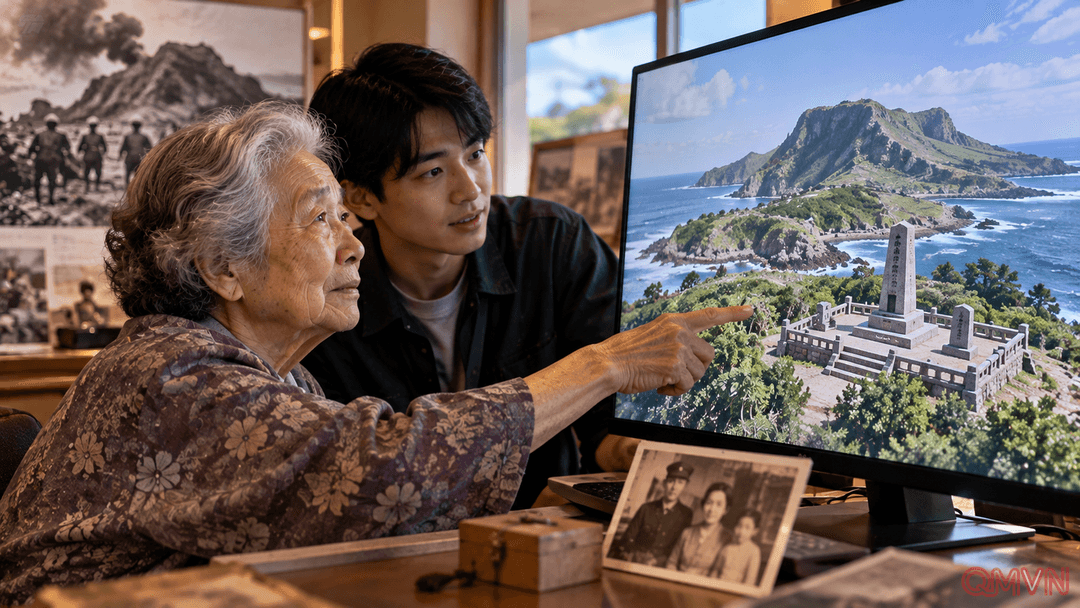
At a reunion of islanders, Morishita declined to wear a virtual-reality headset. A student navigated the digital landscape on a monitor for her, moving from wartime tunnels to the monument bearing Rikio’s name. She described the experience as feeling like meeting him again. Technology could not restore a missing body or erase the years, but it made remembrance tangible in a way that a map or history book could not.
“I felt as if I had met him again.” — Morishita Kayoko
Students reconstruct more than a battlefield
Tokyo College students traveled to Ioto in 2025 and 2026, documenting the terrain, remaining structures, memorials and underground passages with cameras and LiDAR scanners. They assembled the material into a three-dimensional museum enriched by archival photographs and interviews.