MAIN REPORT
Scrutinizing the science behind official assurances
EPA's Office of Inspector General plans to assess whether the agency discharged its responsibilities and had adequate information for public statements about returning home. The distinction matters: opening an oversight review is not the same as finding misconduct or determining that dangerous concentrations of chemicals remain in the community today.
Vice President JD Vance and EPA leadership sought the review, but residents and whistleblowers had already raised concerns. A central question is whether monitoring locations, sampling schedules and analytical methods captured the uncertainty of exposure to several chemicals rather than measuring each substance in isolation.
The decision that transformed a derailment into a national crisis
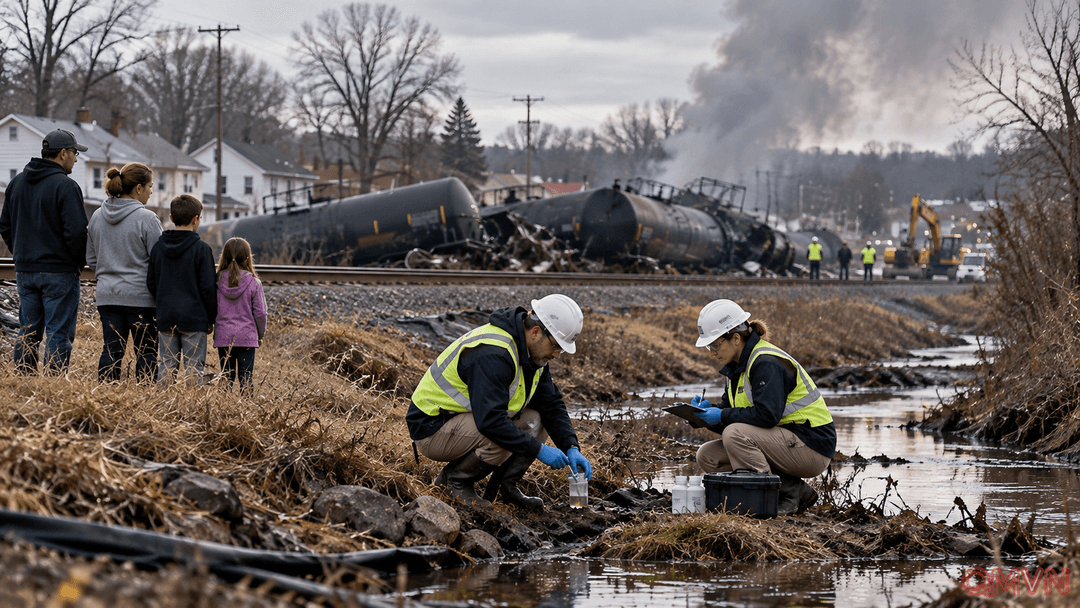
On February 3, 2023, a Norfolk Southern train derailed after an overheated wheel bearing failed, the National Transportation Safety Board determined. Damaged cars released hazardous material and a fire followed.
On February 6, emergency commanders approved the release and burning of vinyl chloride from five tank cars, fearing a possible explosion. A towering black plume became the defining image of the disaster.
The NTSB later judged that operation unnecessary and said commanders lacked important dissenting technical information. That finding challenges the decision-making process during the emergency; it does not, by itself, determine every lasting health effect or settle disputes about subsequent environmental testing.
Health concerns demand evidence, not easy conclusions
Residents say symptoms and uncertainty have persisted. Community advocate Jami Wallace has tracked more than 80 people in the area who developed cancer. That tally is a serious reason to investigate, but it cannot demonstrate causation on its own. Epidemiologists would need background disease rates, exposure histories and independent analysis before tying individual diagnoses to the accident.
Experts have also questioned the limitations of chemical-by-chemical risk thresholds when a disaster releases a complex mixture. Meaningful transparency would include sampling methods, detection limits, uncertainties and reasons behind officials' conclusions, allowing scientists and residents to distinguish reassuring results from unanswered questions.
Compensation remains entangled with public trust
Norfolk Southern agreed to a $600 million class-action settlement, yet the distribution has encountered litigation and allegations of mishandling by an initial administrator. A separate proposed federal agreement includes a $15 million fine and $55 million for medical examinations and groundwater monitoring; AP reports it still awaited judicial approval. Announced amounts should not be confused with compensation already received.
The railroad is also pursuing a merger with Union Pacific, subject to regulatory review. For East Palestine, lasting accountability means more than writing checks: it requires credible medical follow-up, accessible environmental information and a public explanation of what happened when key choices were made.