MAIN ARTICLE
Why Houthi attacks have changed the security debate
Reuters reported on November 20 that the Iran-aligned Houthis had intensified strikes on Saudi airports, energy infrastructure and buildings. Damage to the Public Investment Fund tower in Riyadh, followed by Houthi warnings directed at Red Sea ports, gave fresh immediacy to questions about infrastructure security. None of these incidents constitutes an attack on a Saudi nuclear plant under the proposed pact: the concern is the vulnerability of facilities that may be constructed in the future.
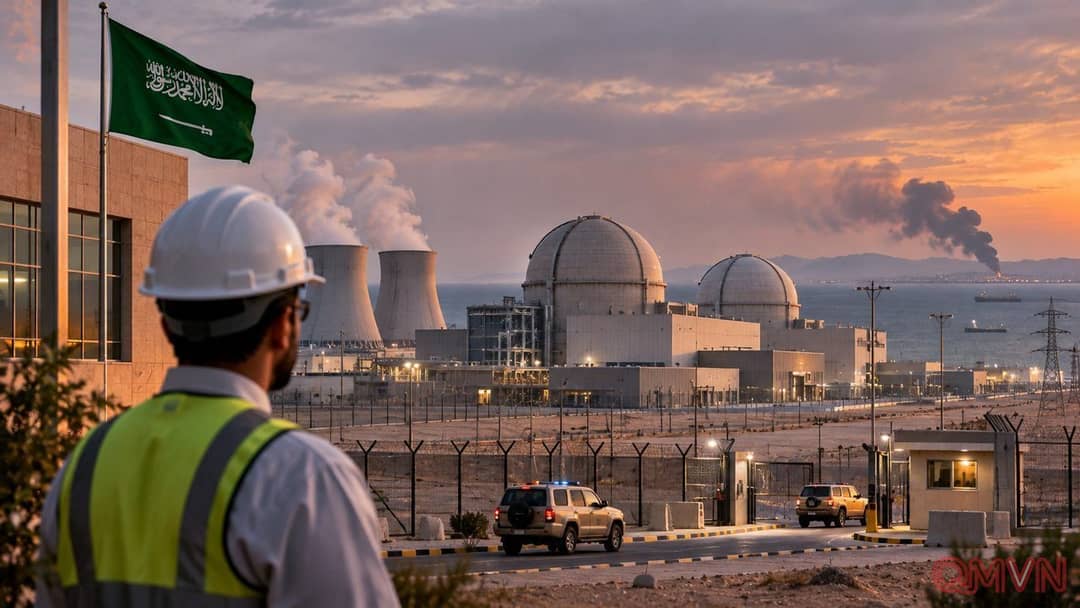
A nuclear power facility requires far more than a perimeter fence. Physical protection, cooling systems, backup power, emergency access and resilient communications must function even in a prolonged crisis. Strikes on conventional infrastructure do not automatically imply a radiological release, but the stakes associated with a nuclear facility demand careful preparation. The difficult question is whether plans designed for normal operation will remain credible when missiles or drones become a recurring hazard.
Nonproliferation specialists Henry Sokolski and Sharon Squassoni have urged Washington to require concrete security plans. Their broader warning is that nuclear cooperation cannot be separated from the political environment in which it operates. Missile defense may be one component, but supply chains, nuclear materials, staff security and contingency planning are also central to public confidence.