MAIN CONTENT
The 5% figure and what it conceals
According to the SIA report released on Friday and cited by the South China Morning Post, US chipmakers spend nearly US$27 billion a year on manufacturing equipment and materials. At first glance the supply chain looks safe: 95% of that money goes to companies headquartered in the US, Europe and Japan.
But measured by where goods are actually made, the picture changes sharply. The share of the US, Europe and Japan drops to 68%, because suppliers often rely on production lines outside their home countries. China’s share rises from about 1% to 5%, while Southeast Asia’s climbs from under 1% to 10%. And that covers only direct purchases, not raw materials and components further down the chain.
Choke points upstream
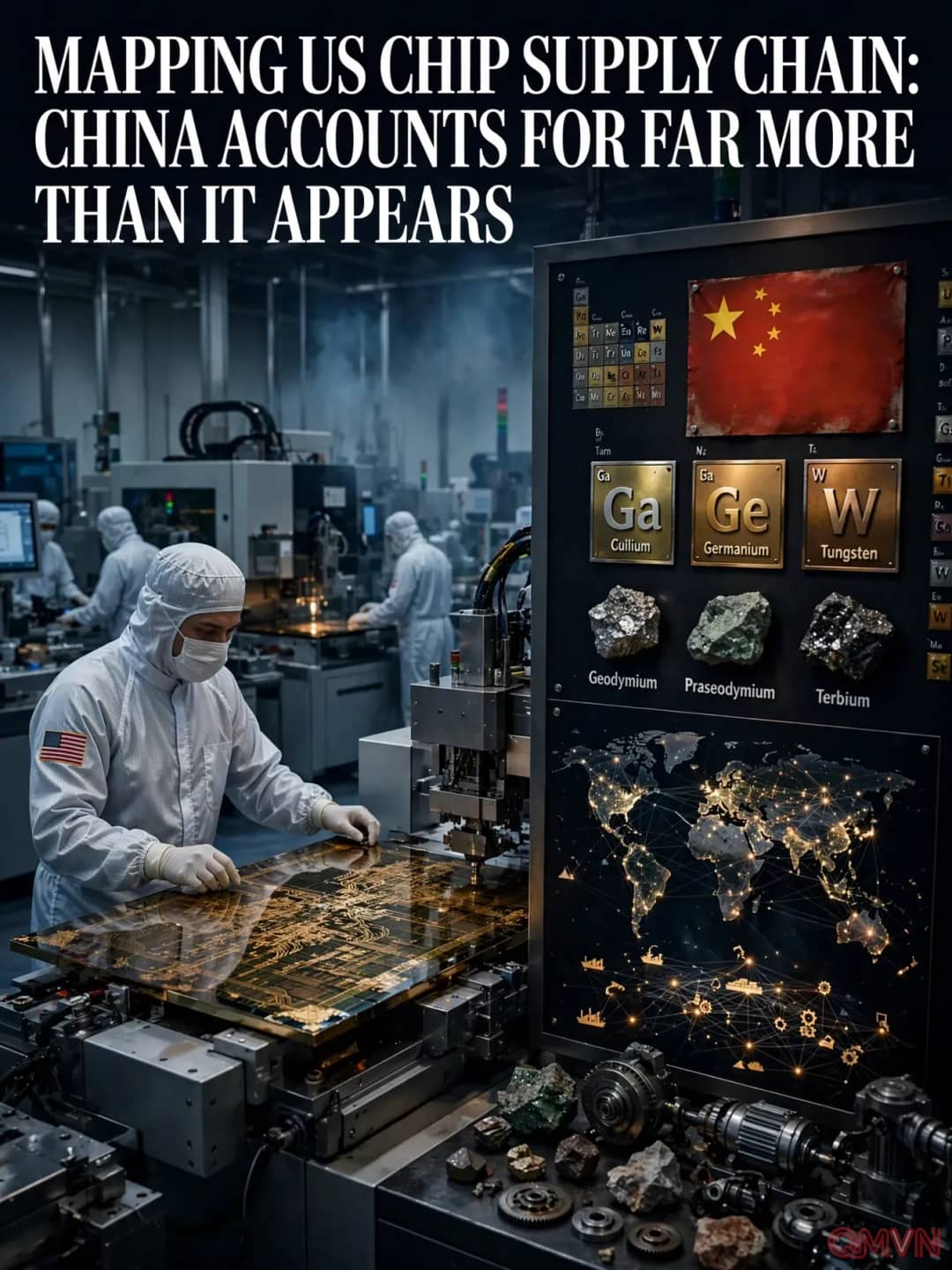
It is upstream that dependence on China becomes clear. According to the SIA:
- China accounts for about 95% of global gallium supply, a material used in compound semiconductors.
- The country holds about 85% of tungsten supply, a metal that can be refined into chemicals for depositing thin films in chip production.
- China’s combined share of neodymium and praseodymium is about 95%, with terbium at a similar level; these rare earths go into high-performance magnets for motors, robots and precision systems inside chipmaking equipment.