MAIN STORY
Where the real city meets an imaginary one
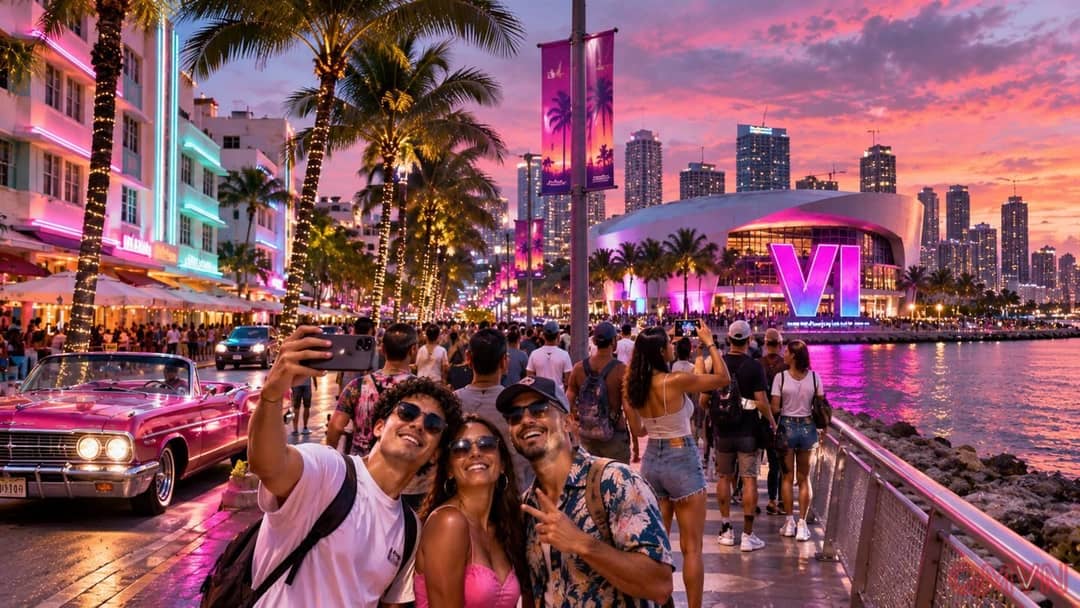
Along palm-lined streets and Art Deco façades, Miami has begun wearing the palette of Vice City. Branded installations near sports venues, arts districts and tourism corridors turn ordinary landmarks into destinations for people who have not yet loaded the game. What makes the campaign unusual is not simply the scale of the advertising but the invitation to see a familiar city through an imagined place that millions recognize.
AFP reporting carried by The Straits Times describes neon-coloured murals, themed displays and photo opportunities that recall both the game and Miami's cinematic past. References to the 1983 film Scarface add another layer of mythology. None of this makes Vice City a literal portrait of Miami. Instead, it shows how a fictional setting can become a shared cultural language, capable of drawing visitors toward real streets, shops and waterfronts.
For some residents, the connection is personal. Miami Dade College student Yarixza Hernandez told AFP how extraordinary it felt to see a favourite game inspired by the place where she grew up. Among younger audiences, gaming culture and urban tourism increasingly overlap. A photograph outside an installation may document a holiday, a hometown memory and a landmark in the history of a digital community all at once.