MAIN ARTICLE
Another meeting, but no breakthrough
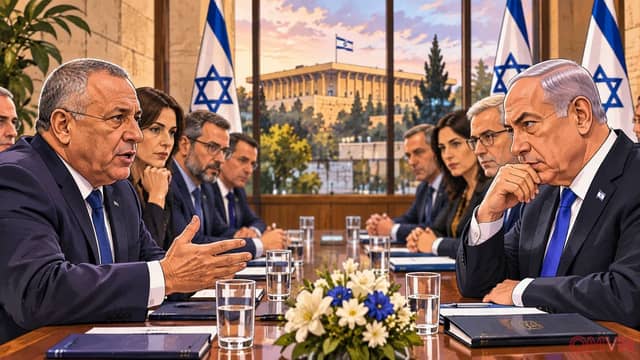
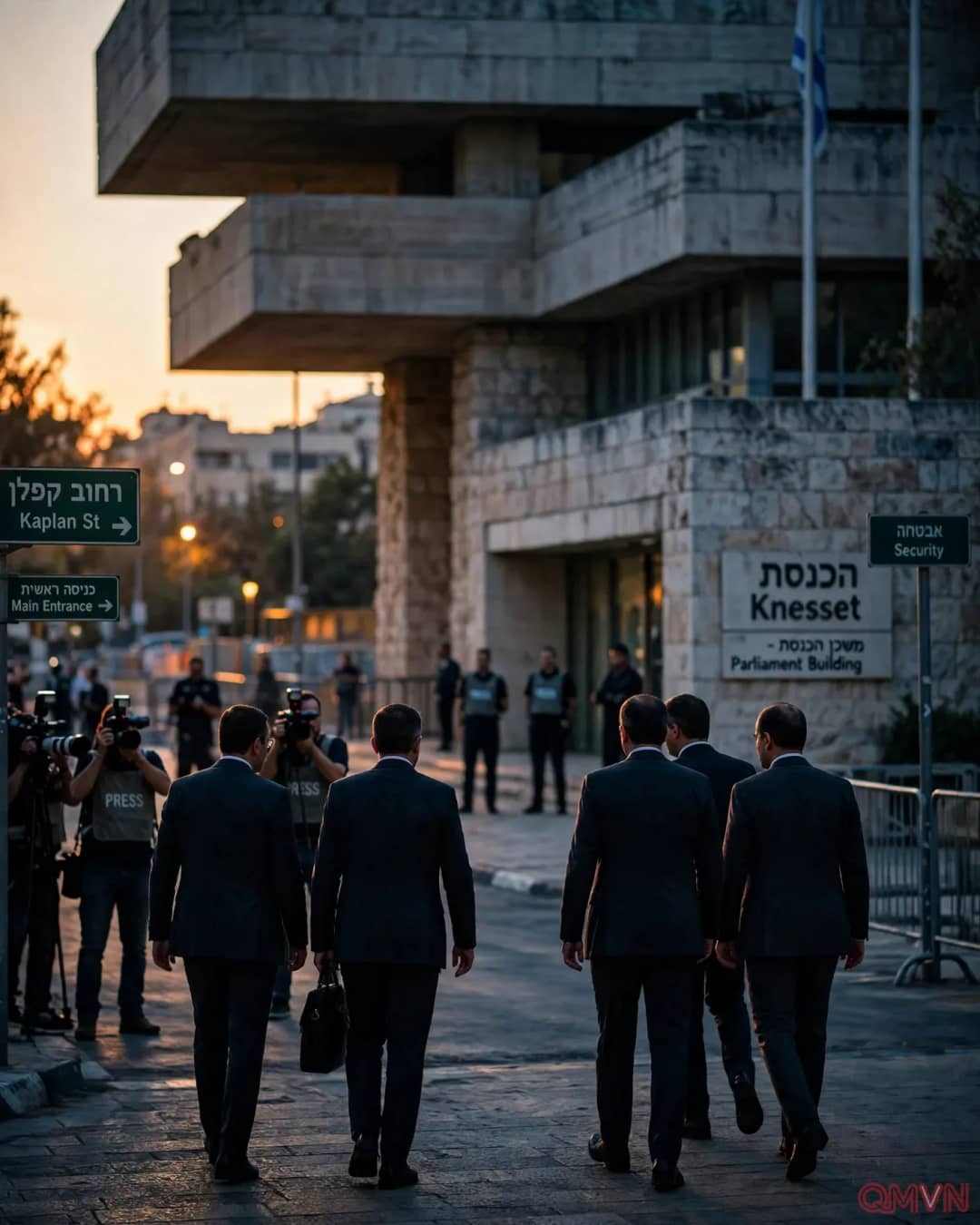
The Times of Israel reported that the negotiating teams planned another meeting at the Knesset on November 23. Their four-hour discussions at a Herzliya hotel on November 22 ended with a joint commitment to continue talking about core questions. Neither party announced an agreed coalition programme, cabinet lineup or resolution to the leadership dispute. That distinction matters: an ongoing dialogue should not be mistaken for a deal.
The contact itself carries political significance. In Israel’s fragmented parliamentary system, a coalition can require rivals to negotiate with parties they have sharply criticized in public. But willingness to sit around a table reveals little about whether those rivals are prepared to surrender leverage, alter campaign promises or explain compromises to their voters.
The impasse follows the October 27 general election. Likud emerged as the largest single party, yet Netanyahu’s allies lacked the 61 seats needed for a majority in the 120-member Knesset. Eisenkot’s opponents of Netanyahu also struggled to translate their varied political preferences into one workable governing team.
Leadership is the central obstacle
President Isaac Herzog formally asked Eisenkot to form a government on November 8. During presidential consultations, 67 lawmakers recommended Eisenkot compared with 46 who supported Netanyahu, according to Israel’s government account.
That offered Eisenkot a mandate to negotiate, not a guaranteed majority behind a finalized cabinet and policy platform.
Yashar has publicly rejected reports of a prime-ministerial rotation and said its proposal is for Likud to participate in an Eisenkot-led government. Reports carried by The Times of Israel, meanwhile, describe demands from Likud for Netanyahu to remain prime minister and for his right-wing allies to be included. These competing positions are reported negotiating demands, not settled contractual terms.
This is why the dispute cannot be resolved by calculating ministerial portfolios alone. It concerns the identity of the next prime minister, the role of hard-right parties and the credibility of election commitments. A nominally broad government could be fragile if its partners disagree on the very rules of cooperation.
Policy disagreements behind the political arithmetic
Accounts of the talks identify three particularly difficult subjects: the contentious judicial overhaul, military service exemptions affecting ultra-Orthodox men, and a possible state inquiry into the Hamas-led October 7, 2023, assault. Each carries implications beyond the negotiations, reaching into questions of constitutional restraint, social obligation and accountability after national trauma.
Conscription is both a debate about the fair sharing of public duties and a recurring test of coalition survival. Judicial changes shape the balance between elected leaders and independent institutions. An inquiry into October 7 raises the question of how a democracy examines failures when the conduct of its own political leaders is under scrutiny. These issues cannot be solved simply by distributing cabinet titles.
Other potential partners introduce additional constraints. Eisenkot has explored ways to secure support from religious parties or parties representing Arab voters, but not all members of his wider anti-Netanyahu camp accept those routes. Some oppose a minority cabinet reliant on Arab-party support; others reject a Netanyahu-led coalition. Their objections limit the combinations available.
Eisenkot’s choices and their limits
Eisenkot could continue pursuing a wide coalition, seek understandings with ultra-Orthodox parties or try to establish a minority government. But the lawmakers who recommended him to the president are not automatically committed to endorsing every policy or minister in a future cabinet. For a stable parliamentary majority, the 61-seat threshold remains a practical benchmark.
On November 17, lawmakers aligned against Netanyahu elected Yashar’s Matan Kahana speaker of the Knesset by 66 votes, Reuters reported. The result demonstrated the bloc’s ability to coordinate on an institutional decision. Yet the temporary alliance needed to choose a speaker does not necessarily translate into agreement on taxation, security, religion and government leadership.
A November 23 media report suggested Eisenkot might attempt to accelerate a confidence vote, but that remained reporting rather than a formally announced timetable. For the moment, another Yashar–Likud meeting illustrates an uncomfortable paradox: Israel needs a functioning government, while the compromises capable of producing one remain politically costly for nearly everyone involved.