MAIN ARTICLE
Building a connected copper province
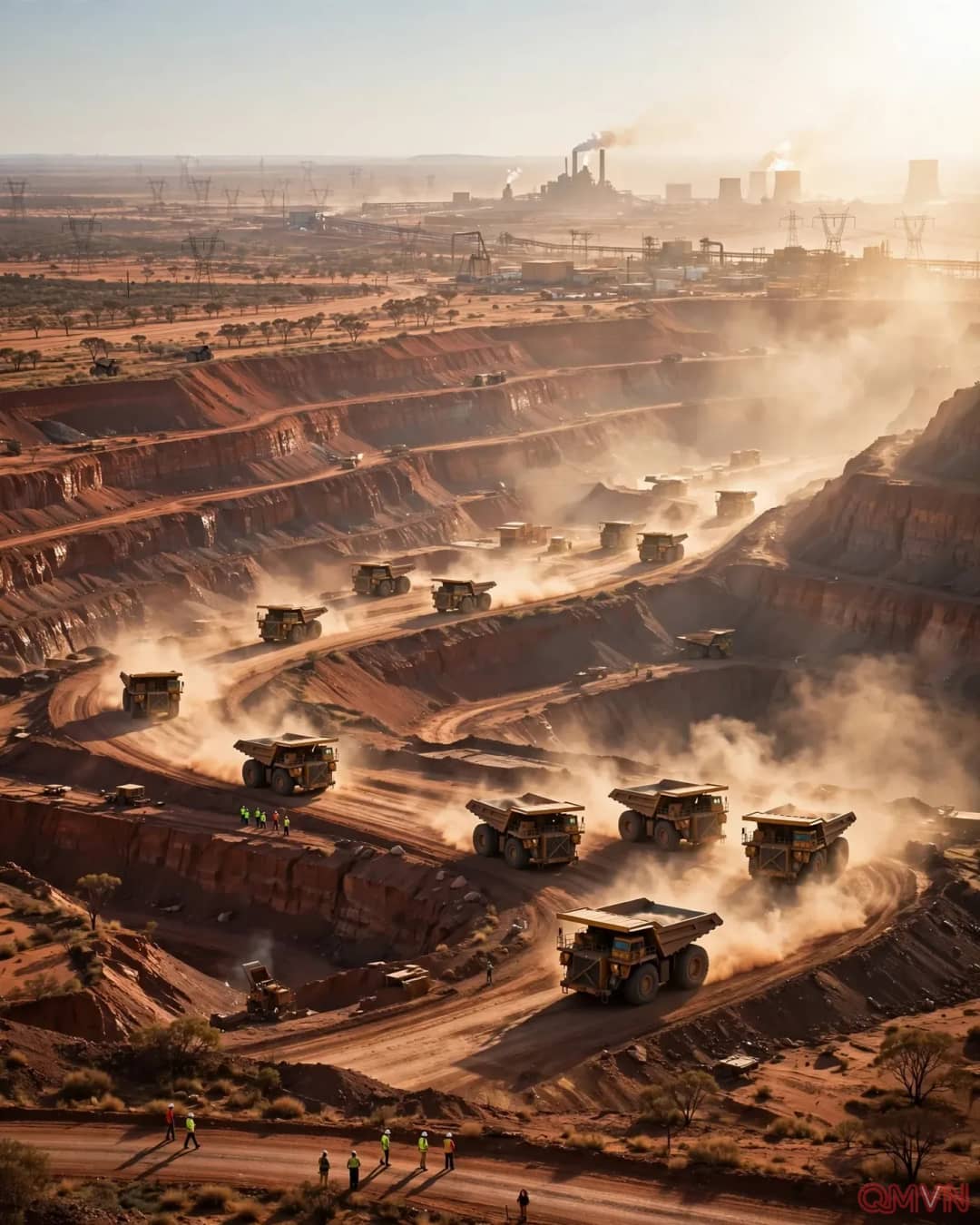
BHP is seeking to bring Olympic Dam together with Carrapateena, Prominent Hill and the Ankata deposit in a more integrated network. Carrapateena and Prominent Hill entered its portfolio through the roughly A$9.6 billion acquisition of OZ Minerals in 2023. Shared processing and infrastructure could allow different ore bodies to contribute to a single industrial system rather than requiring every mine to operate in isolation.
The schedule contains several distinct milestones. BHP is aiming for around 500,000 tons a year by 2035, with a further increase to approximately 650,000 tons in 2040. South Australia's published planning material also describes a proposed Olympic Dam smelter and refinery expansion supporting as much as 650,000 tons of annual copper production. These are proposed capacities and targets, not guaranteed results.
Why copper has become a strategic material
BHP forecasts global copper demand rising by about 30% by 2040 to more than 45 million tons a year. Copper is embedded in wiring, transformers, motors, chargers and transmission systems. The growth of data centers and artificial intelligence adds demand for electricity delivery, cooling equipment and network infrastructure alongside more traditional industrial uses.
Geraldine Slattery, who leads BHP's Australian operations, has argued that existing copper cash flow can support the expansion pathway. The company hopes its South Australian assets will make a significant contribution to wider production growth. Even so, a long-range demand forecast is not a profit guarantee. Commodity prices, labor constraints, construction costs and financing conditions can materially change a project that takes more than a decade to develop.
A complex processing challenge
The region's deposits are rich but difficult. Metallurgical complexity, inconsistent operational performance and expensive processing have contributed to delays in previous expansion efforts.
BHP is considering block-cave mining and two-stage smelting, technologies intended to bring large volumes of ore into a processing system with more competitive costs.
For the initial phase, the company has indicated an expected internal rate of return of roughly 14% to 17% and capital intensity of US$18,000 to US$23,000 per annual ton of copper capacity. These are forward-looking calculations dependent on delivery assumptions. Analysts have noted that the area's return on capital has historically been modest. The project would also expand associated gold output and uranium processing capacity, increasing the importance of rigorous safety and waste controls.
The water and electricity bottleneck
The mines sit within the ancient Gawler Craton, far from abundant water supplies. Existing use of the Great Artesian Basin has raised concerns among traditional owners, including Arabana communities. A proposed solution is Northern Water, a regional infrastructure scheme potentially involving a desalination plant at Cape Hardy on Spencer Gulf and a pipeline stretching hundreds of kilometers inland.
The proposed plant would deliver about 260 megaliters of water daily, but the scheme still faces commercial decisions, approvals and construction challenges. Initial water supply is targeted for fiscal 2032. Electricity transmission upgrades are also needed. If either utility is delayed, a technically ready mine or refinery could still be unable to achieve its planned production timetable.
The test beyond a headline investment figure
BHP's ambitions could generate construction contracts, specialist jobs and export earnings. They also raise questions about groundwater, Indigenous interests, emissions and the cumulative impact of expanded processing. The environmental review for Olympic Dam is therefore more than a procedural formality: its findings and conditions will shape whether industrial growth and public safeguards can coexist.
Before the anticipated 2027 investment decision, the company must show that ore supply, processing, water, electricity and financing fit together. Copper is crucial to lower-carbon technologies, but its production must also meet credible environmental and social standards. A successful transition cannot be judged only by how much metal is delivered.