A by-product that became a business
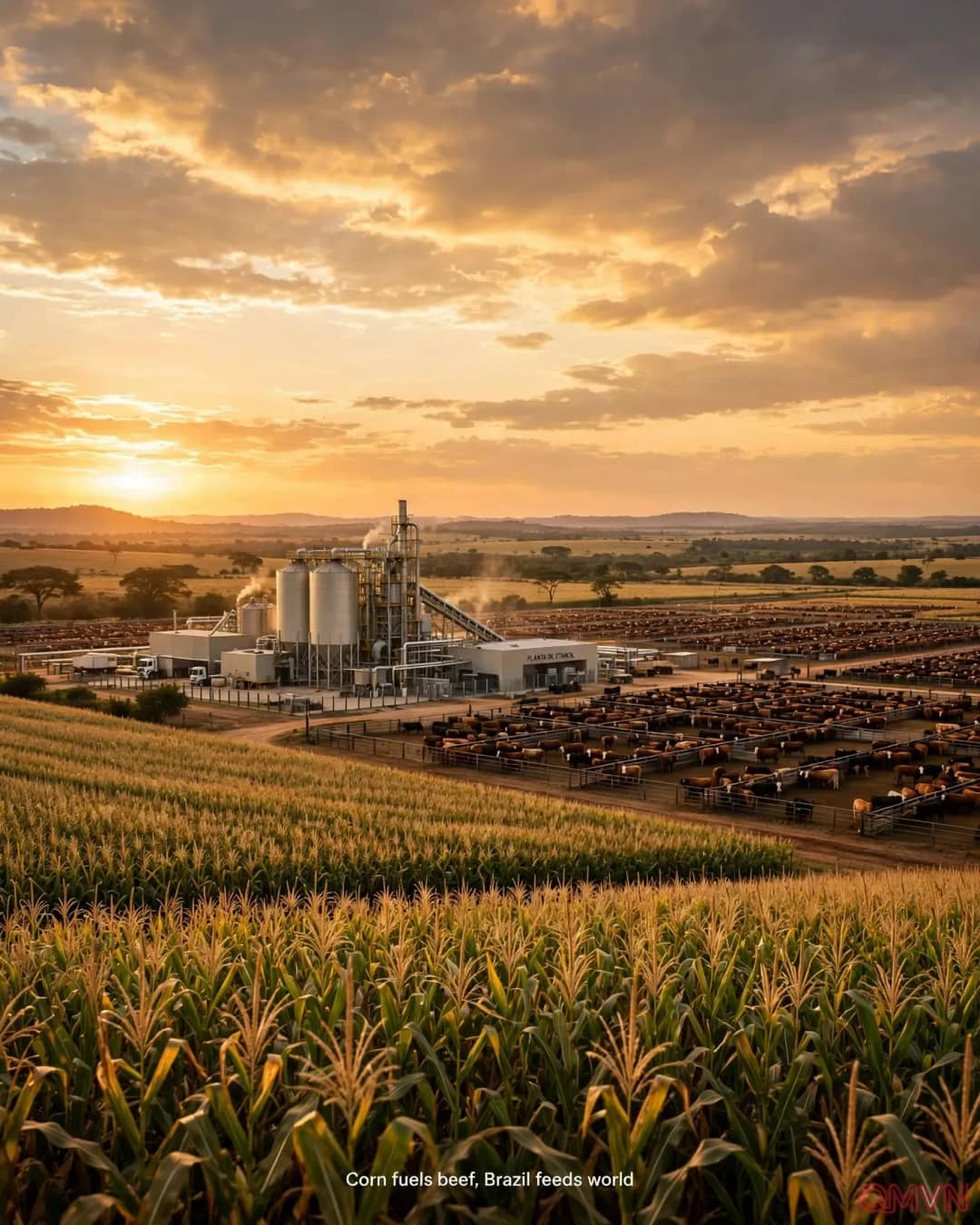
For decades, Brazilian ethanol meant sugarcane. Over the last ten years, however, a massive expansion of the country's corn crop has pushed corn ethanol from practically nothing to more than a quarter of total production. Every ton of corn that passes through a distillery leaves something valuable behind: once the starch is fermented into ethanol, the protein and other nutrients in the kernel are concentrated into dried distillers grains, with or without solubles, a dense and digestible feed for livestock.
Since FS opened Brazil's first corn ethanol plant in the 2017-2018 season, production of DDG/S has risen from 280,000 metric tons to more than 4.8 million tons, according to UNEM. Andrea Verissimo, the association's director of international relations and communications, described the industry as being in unrestrained expansion, with output of animal feed co-products expected to reach 5.71 million tons in the 2026-2027 season.
More feed, more feedlots
On the ranching side, the numbers have climbed just as steeply. Brazil's feedlot herd reached 4.9 million head in 2017 and has set a new record every year since, hitting 9.25 million in 2025, according to a census by animal nutrition company DSM-Firmenich, which forecast a fresh record of 9.78 million feedlot cattle to be slaughtered this year.