MAIN CONTENT
An explosion and an investigation
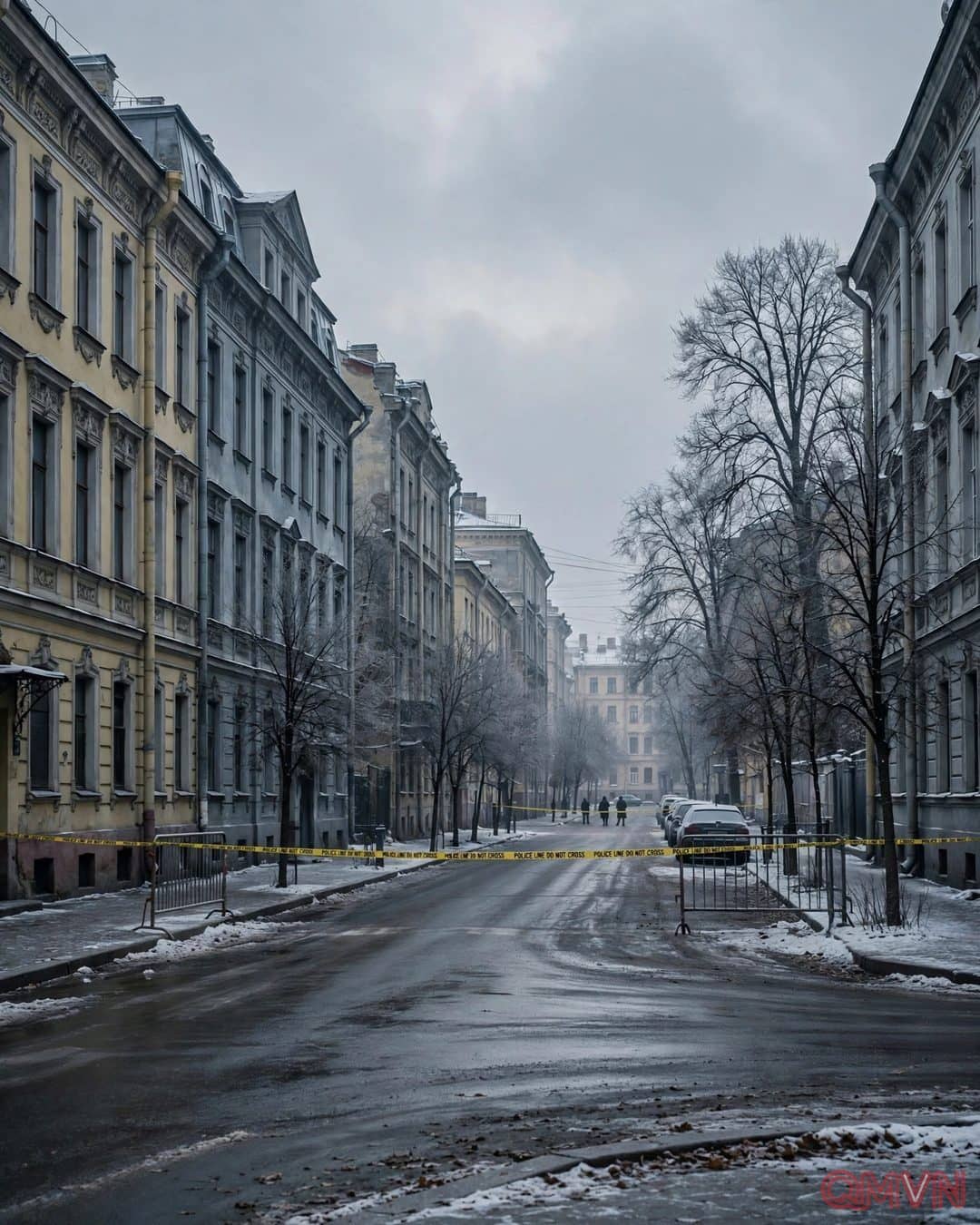
Russia’s Investigative Committee said it had opened a murder case following the death of a member of the armed forces. The explosion occurred in the Pushkinsky district, an area including Shushary on the southern edge of St Petersburg. Investigators and forensic teams examined the scene as military police restricted access.
Images distributed from the site showed a heavily damaged SUV on a roadway strewn with debris. An apparently unoccupied passenger bus nearby also appeared damaged. Those observations establish the scale of the visible aftermath, but do not by themselves identify the explosive device, its method of detonation or who was responsible.
What local reports allege—and what remains unconfirmed
The St Petersburg outlet Fontanka reported that the victim held the rank of colonel. It also published a more elaborate account, citing an anonymous source, alleging that a 31-year-old suspect watched the officer for at least a month and attached a device beneath his car before leaving Russia.
The outlet further claimed the explosive entered the country from the Baltic states by balloon.
Those claims are important to report with their limits intact. The identities of the victim and alleged suspect had not been officially confirmed, and Reuters said it could not independently verify Fontanka’s information. A media account, even one citing law-enforcement contacts, is not the same as a public forensic finding or a judicial determination.
A second fatal blast in the same district
The November incident followed a fatal car explosion on August 27 in the same part of St Petersburg. Recent attacks involving vehicles have also been reported in Moscow and Crimea, the Ukrainian territory Russia annexed in 2014. The recurrence raises questions about protective measures, vehicle security and intelligence failures, although repetition alone does not demonstrate that the same network carried out each attack.
Russia has accused Ukraine of involvement in earlier killings of officers and people linked to its war effort. Ukrainian sources have acknowledged responsibility in some cases and rejected it in others. As of Reuters’ November 12 report, Kyiv had not commented on this blast. It would therefore be premature to identify a perpetrator or present a motive as established fact.
Why verification matters beyond the crime scene
An attack in a residential or commuter setting has consequences beyond the intended victim. An adjacent bus, disrupted traffic and the presence of emergency teams bring ordinary people into an event shaped by wartime tension. Confirming whether other people were injured, how the area was secured and what risks remain is essential to an accurate public account.
The investigative process must also distinguish physical evidence from speculation: blast fragments, vehicle examinations, surveillance records and a documented chain of custody could clarify what happened. Until such findings become public, the responsible approach is to separate the death and investigation—both officially acknowledged—from allegations about rank, surveillance, cross-border delivery and political direction.