Main article
A ceasefire needs a political foundation
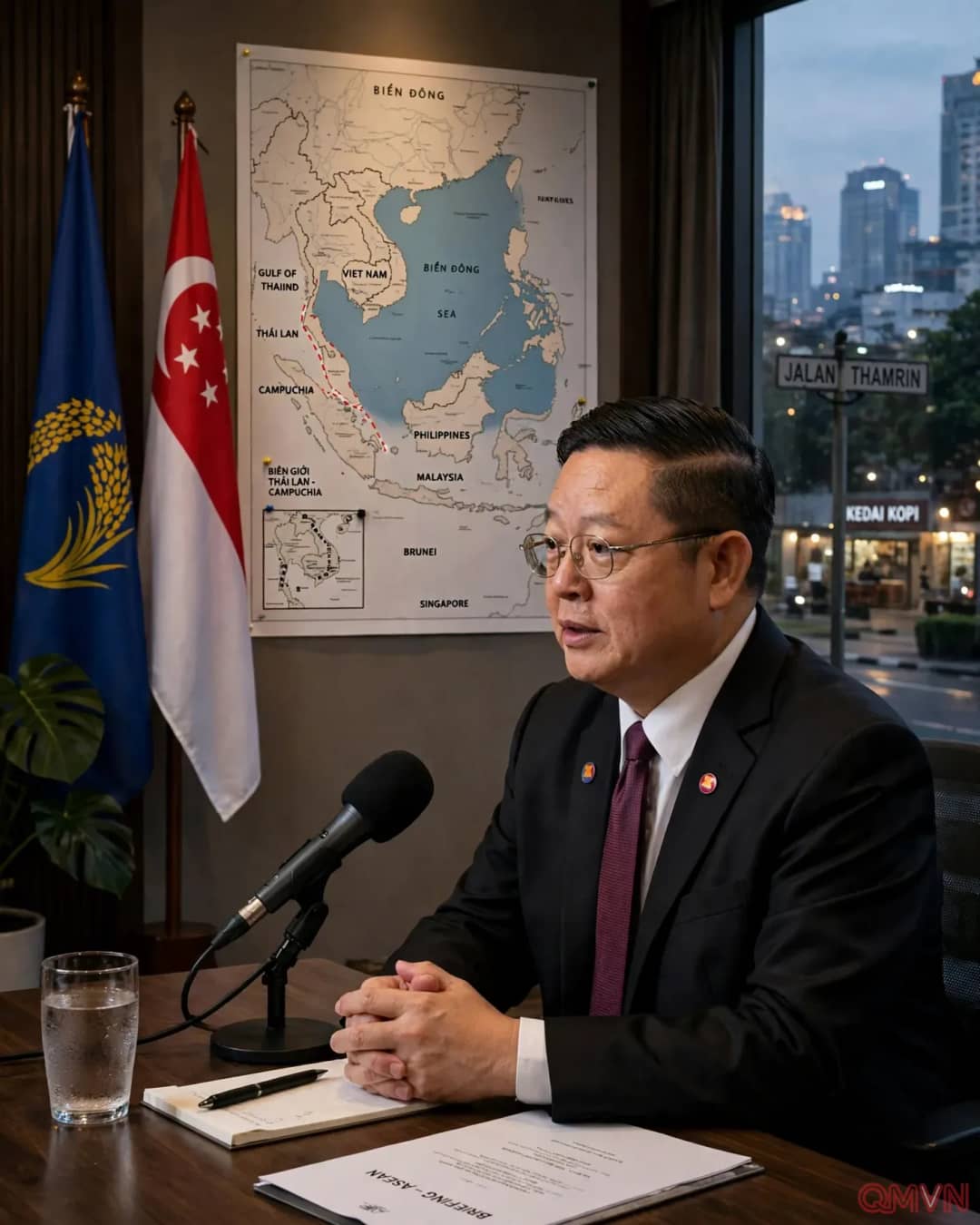
The Thai-Cambodian frontier remains a priority. Fighting in July and December 2025 demonstrated how quickly a longstanding territorial disagreement can disrupt ordinary life. According to the International Crisis Group figures cited in the interview, at least 150 people died and around one million were displaced. The December 27 ceasefire has largely endured, but accusations of violations underline the absence of a durable settlement.
Malaysia supported mediation in 2025, followed by the Philippines in 2026. Singapore is expected to assume leadership of the ASEAN Observer Team in 2027. Monitoring can help clarify disputed incidents, but it cannot replace negotiations between the governments. Kao wants the two countries to use their existing diplomatic, defence and border channels more actively. Regular contact can help prevent misunderstandings from escalating and create conditions for displaced residents to return safely.
The difficult final stage of maritime negotiations
The South China Sea is another measure of ASEAN's diplomatic effectiveness. Reuters reported on November 18 that Kao expected negotiations on the COC to finish during Singapore's chairmanship.
Philippine Foreign Secretary Theresa Lazaro had previously indicated that provisional agreement covered approximately 80 percent of the draft paragraphs. That figure should not be confused with agreement on the most contentious provisions.
CNA reported that the proposed code's geographic coverage remained unsettled. Its legal character and implementation are also important questions. A credible agreement needs clarity about the conduct it regulates and how disagreements will be handled. The official 2002 Declaration on the Conduct of Parties already reaffirmed international law, including the 1982 United Nations Convention on the Law of the Sea, and peaceful dispute resolution. A new code would have to build on those principles rather than merely repeat diplomatic aspirations. Singapore can facilitate compromise, but ASEAN members and China must ultimately accept the text themselves.
Myanmar and the limits of engagement
Myanmar presents a different challenge because the violence is internal and involves multiple actors. The Five-Point Consensus adopted in April 2021 envisages an end to violence, dialogue, humanitarian assistance and mediation through a special envoy. Progress remains limited despite continuing contacts between ASEAN governments and Myanmar's leadership.
Kao advocates engagement that is adjusted to circumstances, while maintaining that normal high-level political participation has not yet resumed. The distinction matters: communication can support humanitarian access without automatically implying political endorsement. ASEAN's priorities include reducing violence, providing assistance impartially and encouraging an inclusive process owned by Myanmar. The November 2026 leaders' review of the Five-Point Consensus provides an institutional basis for further engagement. Ultimately, the credibility of these efforts depends on measurable improvements for civilians, not simply the number of official meetings.
Economic integration alongside security
Singapore's announced theme links stronger internal integration with broader external partnerships. The digital economy framework agreement (DEFA), reported as signed at the Manila summit, will require ratification and implementation. Kao described a target of 180 days for ratification, while acknowledging differing levels of regulatory and technological readiness among members.
For small businesses, compatible digital rules could reduce barriers to cross-border commerce. But these opportunities depend on affordable connectivity, consumer protection and practical implementation. The ASEAN Power Grid is another priority: cross-border electricity connections can diversify supply and help countries share resources. These projects require sustained technical cooperation beyond any single chairmanship. Singapore's task is therefore not only to host negotiations, but also to keep implementation moving while managing crises that could undermine mutual confidence.