Main body
A new window onto the young universe
The object, also known as J1504+6252, has a measured redshift of 8.13, according to ESA. It is the first confirmed quasar beyond redshift eight. Redshift describes the stretching of light wavelengths as the universe expands. By identifying characteristic spectral features and measuring their displacement, astronomers can estimate the epoch from which the light originated. The age inferred for Dún Aonghasa is less than five percent of the universe's present age.
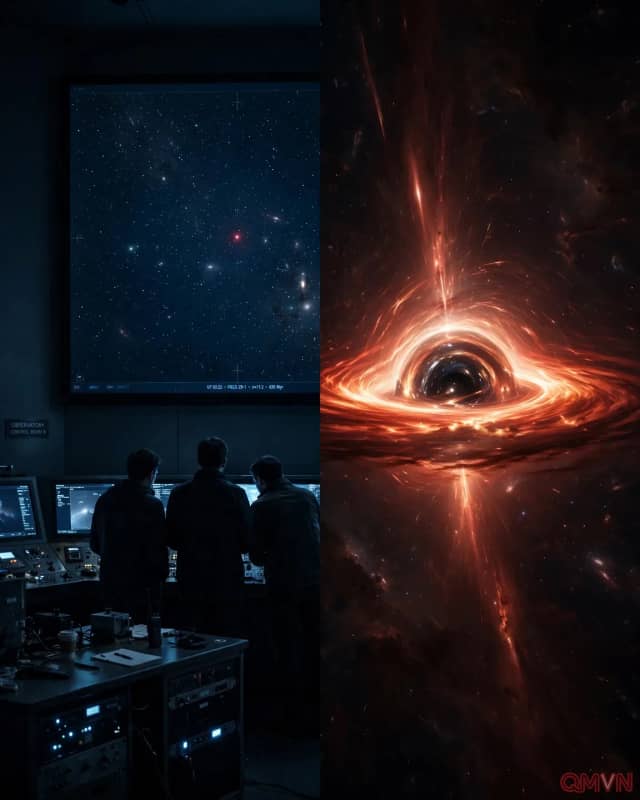
A quasar is not a star, despite its pointlike appearance in distant images. It is an exceptionally luminous active galactic nucleus. Gas falling toward a central black hole heats up and emits radiation before crossing the event horizon. The black hole itself does not produce the observed light from inside that boundary. This distinction explains why studying luminous nuclei can reveal otherwise invisible gravitational objects.
A discovery built on complementary observations
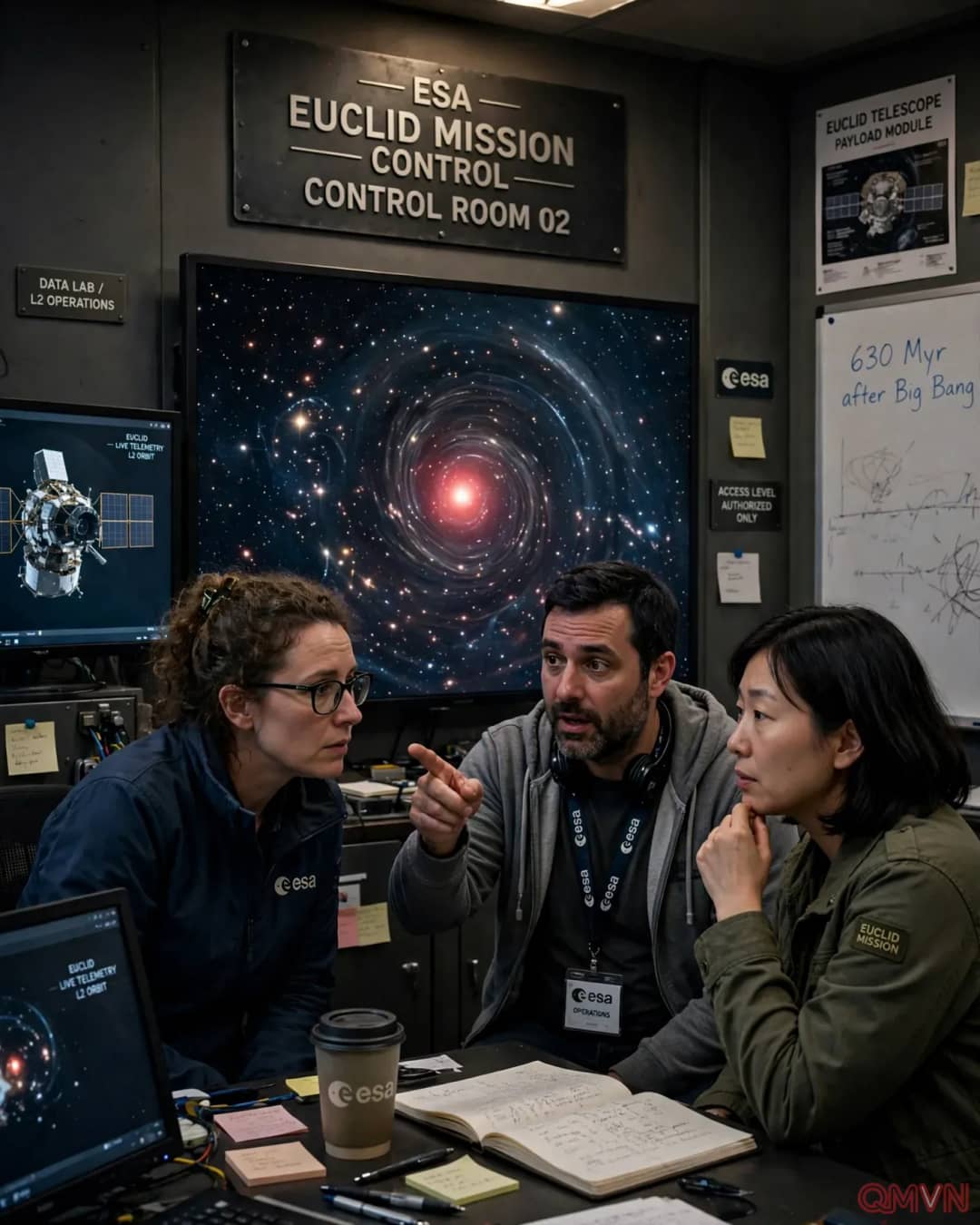
Euclid's wide survey enables researchers to search large areas of sky rather than concentrate exclusively on small fields. The candidate was selected from an enormous collection of observations.