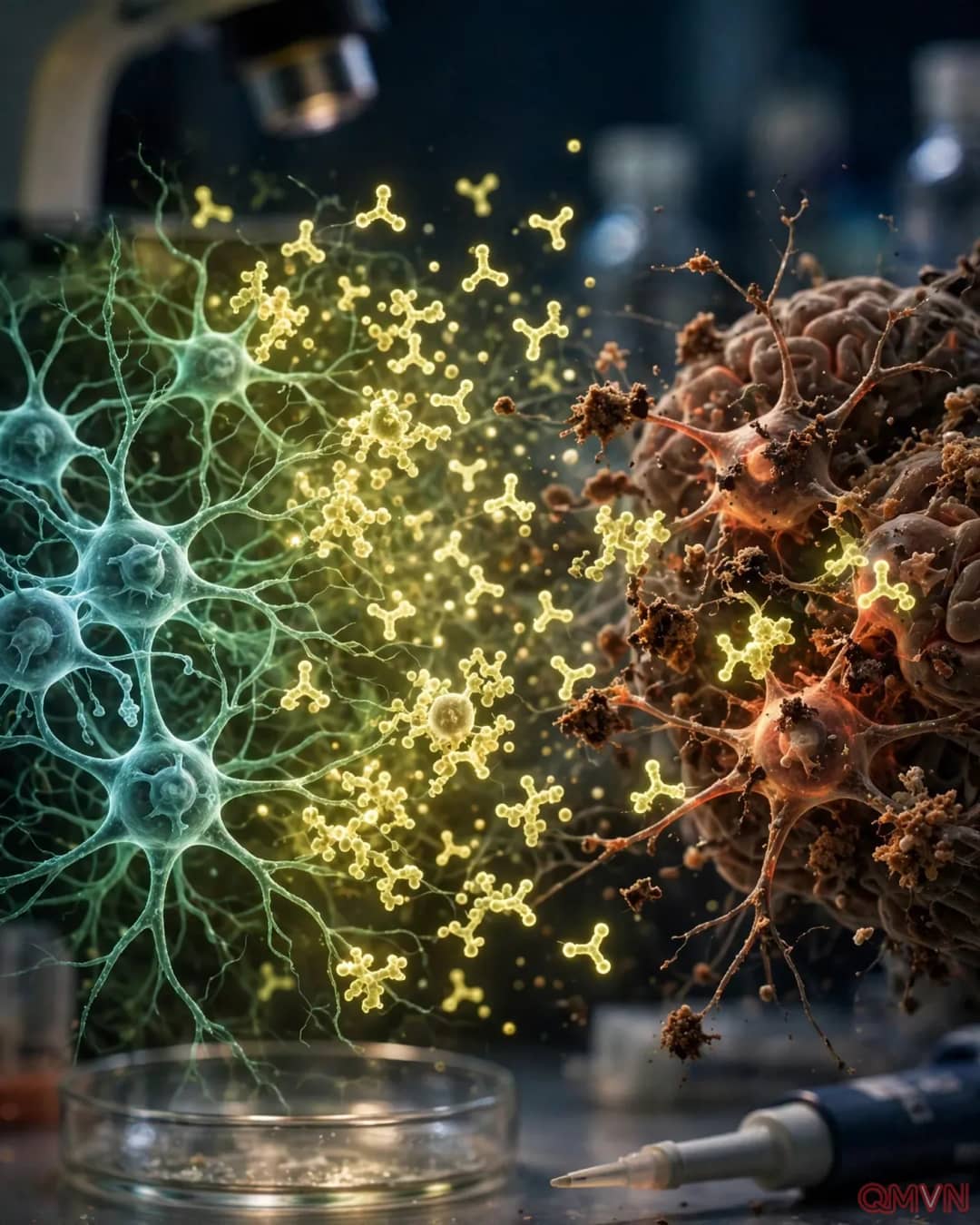
A protein protecting the brain’s “gatekeepers”
Microglia are immune cells resident in the brain, tasked with clearing cellular waste and helping maintain the networks through which neurons communicate. With age, they can lose some of their ability to perform these essential tasks and shift into states that promote inflammation and interfere with normal brain function. A growing body of research focuses on the link between microglia and Alzheimer’s disease.
The Mount Sinai team’s study suggests TIMP2 sits at the intersection of several processes critical to normal brain function and helps prevent microglia from shifting into harmful states.
TIMP2 facilitates healthy function for the brain’s immune cells.
When TIMP2 disappears
The scientists used several advanced techniques to assess mice genetically modified to lack TIMP2 throughout their bodies. They found striking changes: the microglia in these mice developed many features typically associated with ageing and brain injury.